Fractional Real Estate Ownership: What It Takes to Work
What fractional ownership of real estate really means, why it widens access, and the structure, compliance and administration it needs to work at scale.

What if you could own 1% of a building—without being a developer?
For decades, real estate investing worked like a velvet-rope club.
To get in, you needed a big check, a strong network, and the patience to park your money for years. Even if you found a “great deal,” the experience was usually the same: paperwork, intermediaries, slow reporting, and limited options if you needed liquidity.
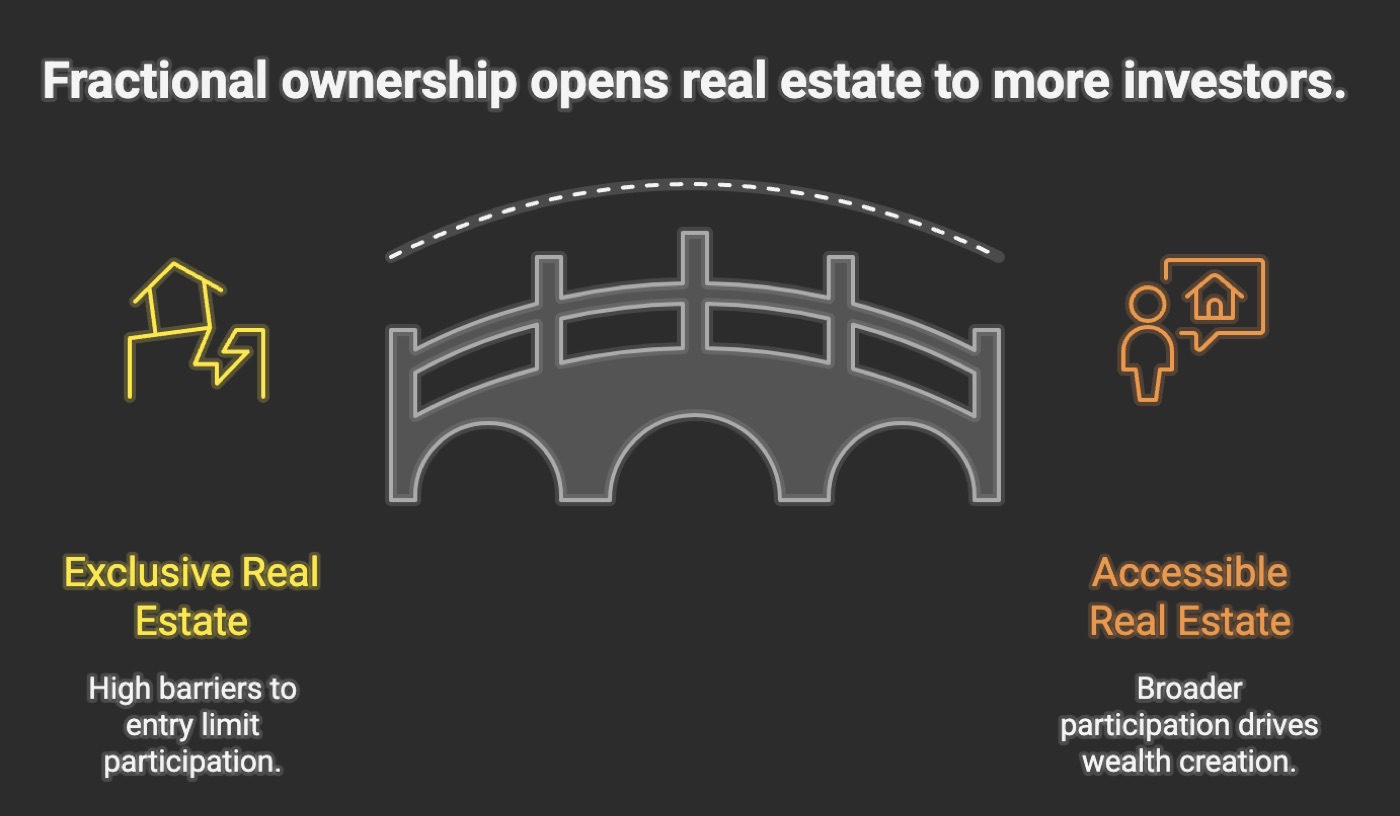
That model created wealth for many—but it also kept a huge number of people out
Now, that’s changing.
Fractional ownership—built on clear legal structures and modern digital recordkeeping—is turning single-asset, single-owner investing into something far more accessible, trackable, and scalable. Not because real estate is suddenly “easy,” but because ownership itself is being upgraded.
Here’s why that matters, what fractional ownership really means, and what has to exist behind the scenes for it to work in the real world.
The problem with traditional real estate investing
Real estate has always had two realities:
- It’s one of the best long-term wealth builders.
- It’s operationally painful and capital-heavy.
If you’re investing privately, you usually face:
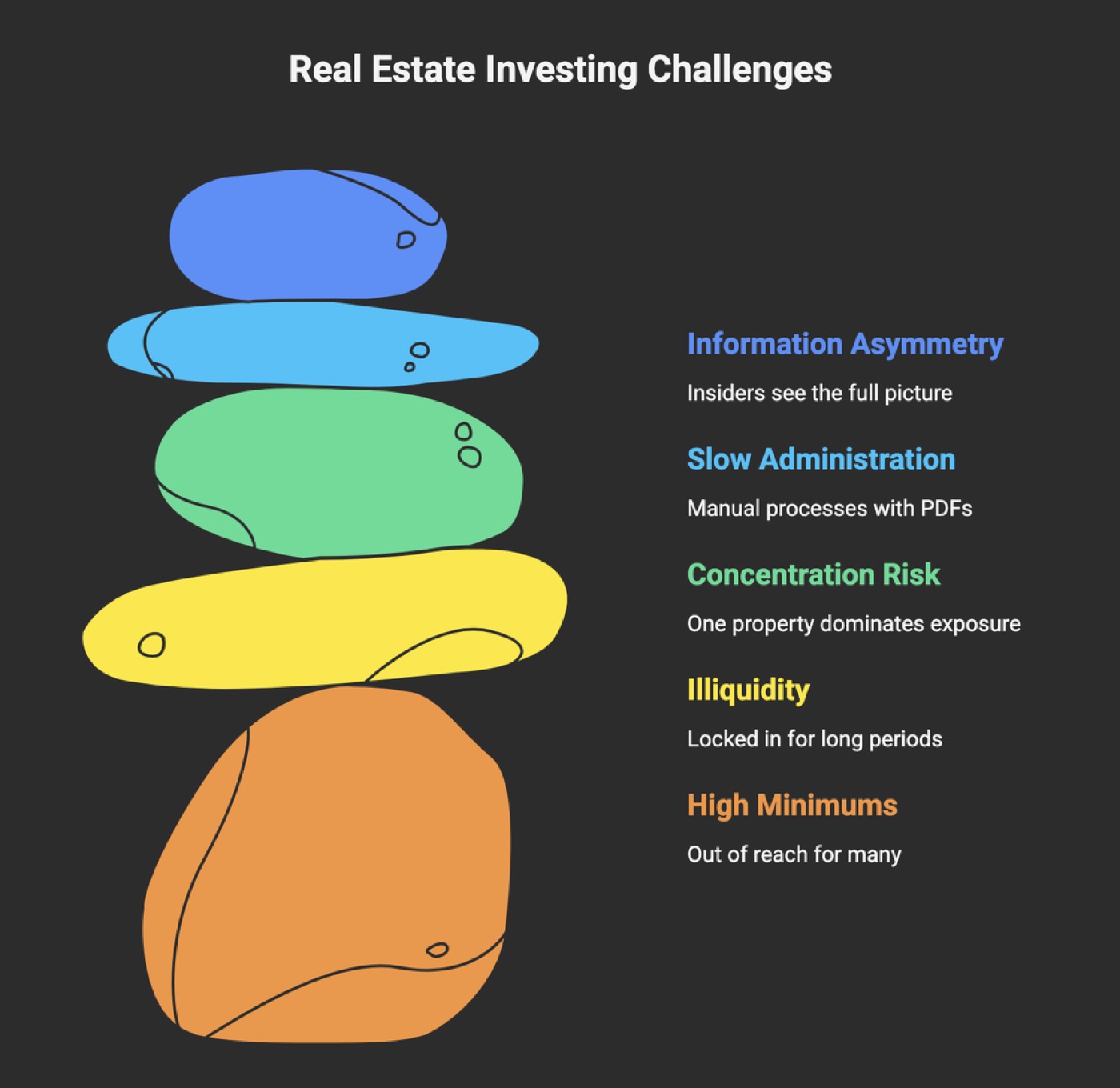
- High minimums: Many deals are out of reach unless you can write six- or seven-figure checks.
- Illiquidity: You’re locked in for long periods, often with no clean way to exit early.
- Concentration risk: One property (or one region) can dominate your exposure.
- Slow, manual administration: Cap tables, transfers, reporting, distributions—often managed with PDFs and spreadsheets.
- Information asymmetry: Sponsors and insiders see the full picture; most investors see periodic updates.
This excludes a massive group of investors—retail, emerging HNWIs, family offices, and smaller institutions—who want real estate exposure but don’t want to go all-in on a single asset or navigate a maze of admin.
What fractional ownership actually means
Fractional ownership is simple in concept:
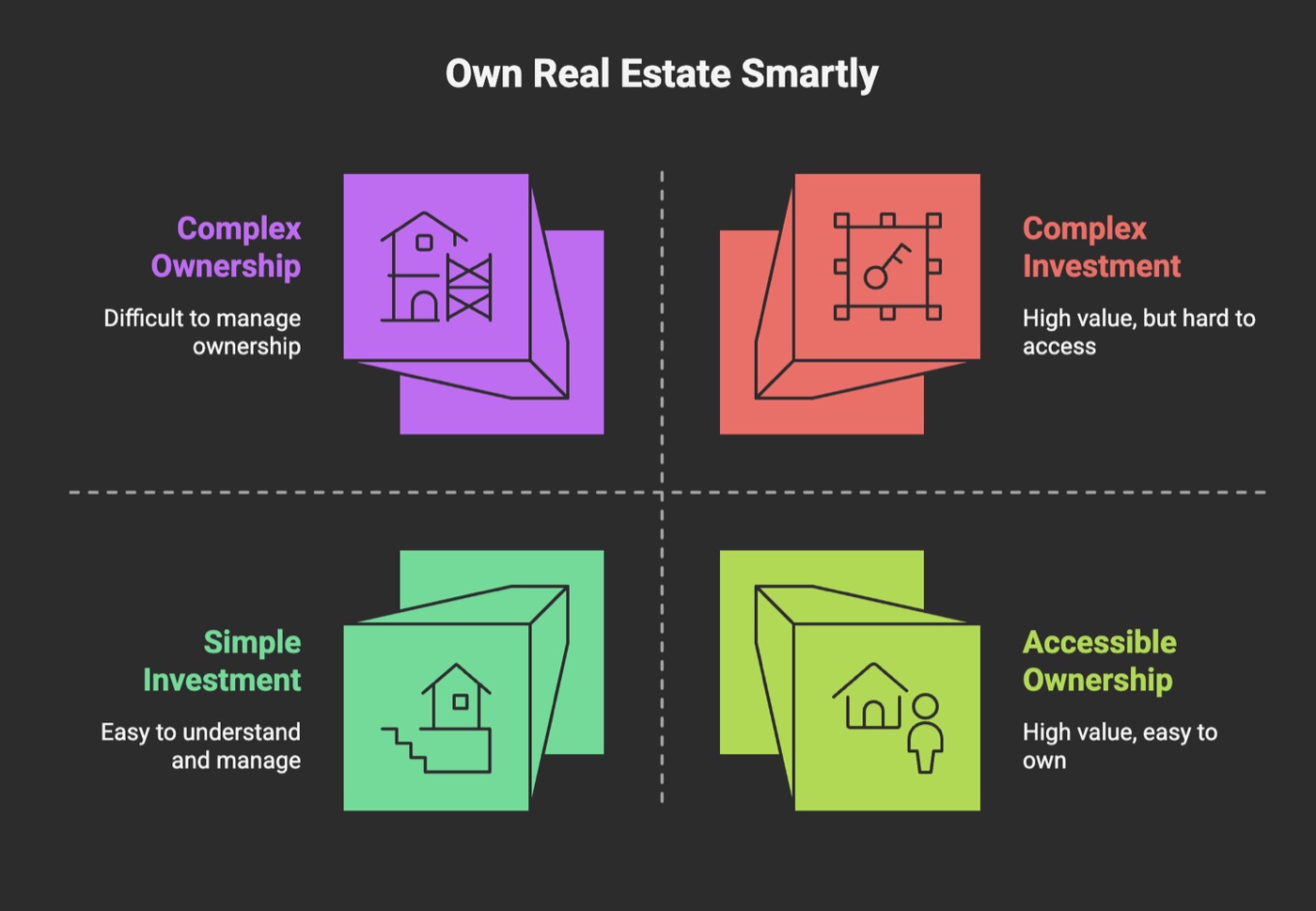
One asset, many owners—each holding a defined share with real rights.
Instead of one buyer owning a building (or a small group behind a private SPV), the ownership can be divided into units—where:
- Each unit represents a percentage claim (economic + legal)
- Ownership is tracked clearly
- Transfers are possible where legally allowed
- Rights and obligations are explicit (distributions, voting, redemption rules, restrictions)
You’ll often hear the word “token” used here, but the key point is this:
A token is just a unit of ownership representation—not automatically “crypto.”
What matters is that ownership is:
- Legally anchored (not just a digital receipt)
- Economically real (linked to distributions and value)
- Administratively clean (cap table accuracy, auditability, fewer manual errors)
- Transfer-aware (restrictions, eligibility, compliance baked in)
If those conditions aren’t met, it’s not fractional ownership—it’s just marketing.
Why “fractional” changes the game
When you can divide ownership cleanly, a few powerful things happen:
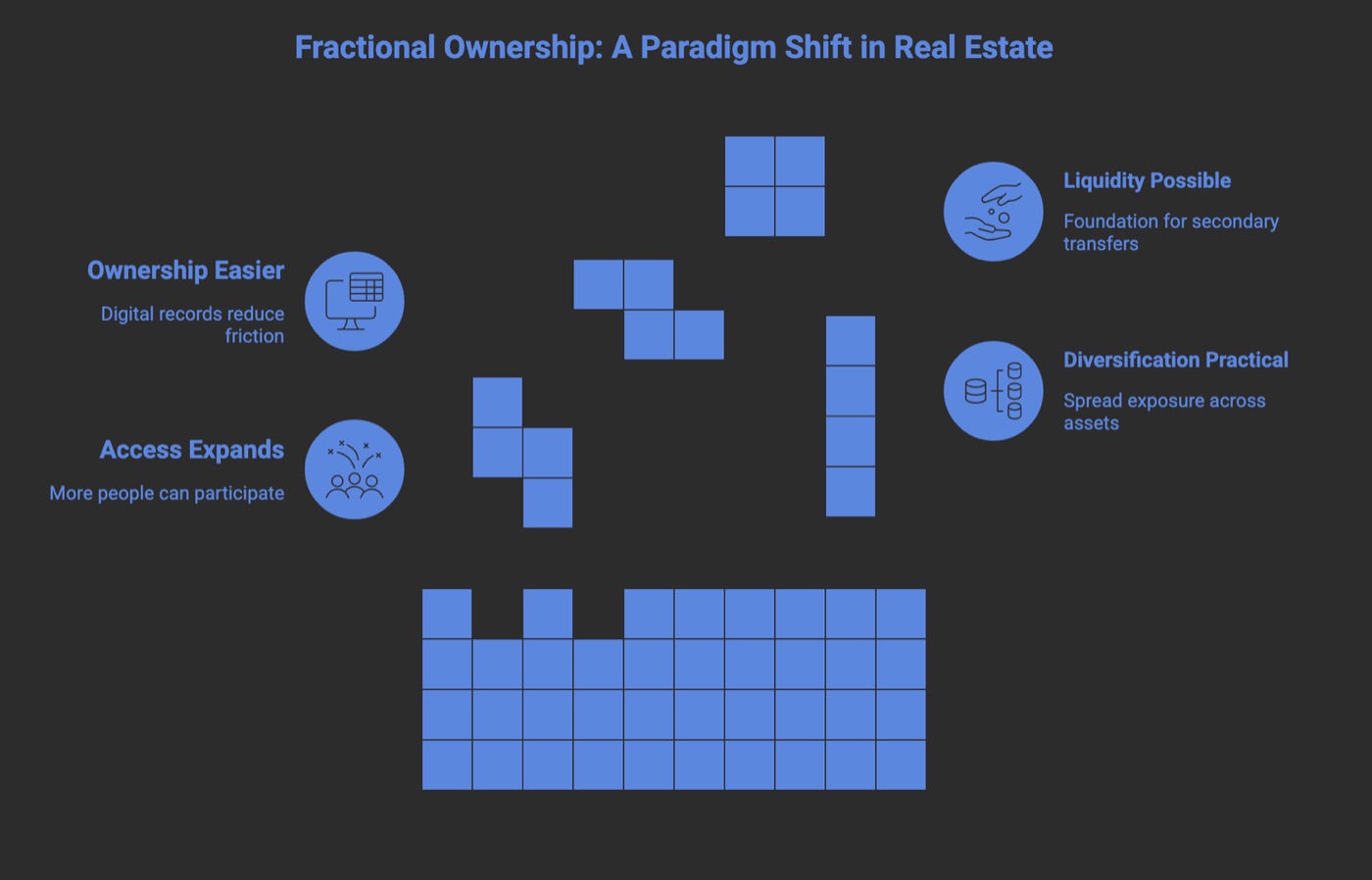
1) Access expands
Smaller ticket sizes mean more people can participate—without sacrificing structure.
2) Diversification becomes practical
Instead of putting $200k into one property, you can spread exposure across multiple assets, geographies, and risk profiles.
3) Ownership becomes easier to manage
Digital records reduce friction in tracking holders, distributions, and reporting—especially as investor counts grow.
4) Liquidity becomes possible later
You can’t promise liquidity (and shouldn’t), but you can design the foundation for secondary transfers when rules allow.
The big shift is this:
Real estate stops being “a deal you enter” and starts being “an allocation you manage.”
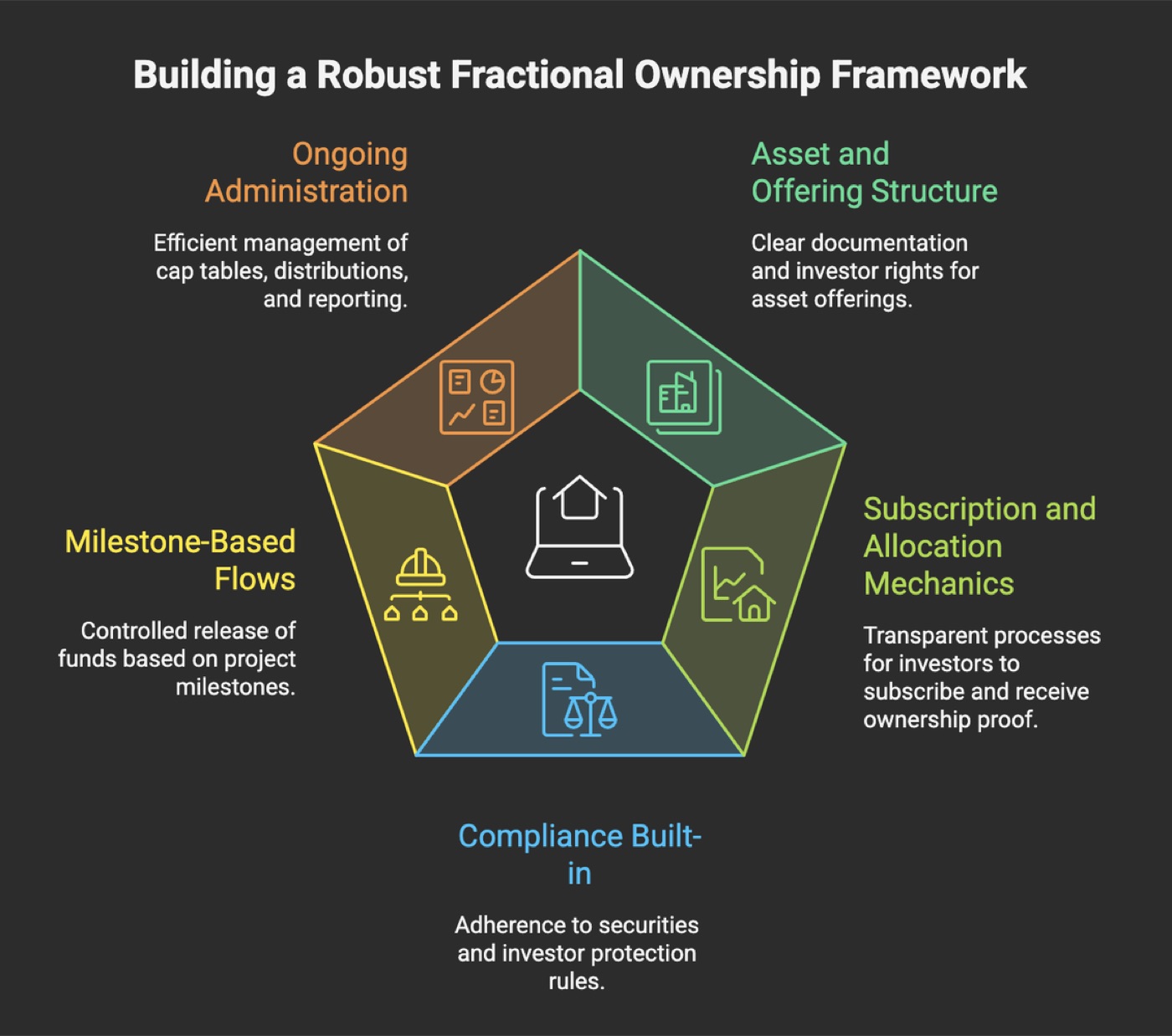
What has to be in place for it to work (and stay compliant)
Fractional ownership doesn’t succeed because of a slick UI. It succeeds because the market infrastructure is built correctly.
That means a proper primary market—where the asset is structured, offered, subscribed to, and managed with compliance and controls.
Here’s what “doing it right” really requires:
1) Clear asset and offering structure
Before anything is sold, the platform must support:
- Asset/SPV setup and documentation
- Token/class design (common vs preferred, income vs growth, etc.)
- Investor rights (economic + governance)
- Transfer rules (who can hold, how transfers work, lockups)
2) Subscription and allocation mechanics
Investors need a clean way to:
- Review the offering terms
- Subscribe within allowed jurisdictions
- Commit capital with transparent allocation rules
- Receive proof of ownership tied to real records
3) Compliance built-in (not bolted on)
Fractional ownership must respect securities and investor protection rules, which typically implies:
- KYC/KYB
- AML screening
- Accreditation/eligibility checks (where required)
- Jurisdiction restrictions and transfer controls
- Audit trails for regulators and counterparties
4) Milestone-based flows (especially for development)
If capital is funding a project over time, the system needs controlled release.
Instead of “wire everything up front,” you can structure:
- Commitments at subscription
- Funds released only when milestones are met (permits → foundation → structure → completion, etc.)
- Investor transparency around progress and drawdowns
This protects investors and gives issuers clarity—reducing disputes and increasing trust.
5) Ongoing administration at scale
After issuance, the platform must handle:
- Cap table management
- Distributions
- Reporting
- Corporate actions
- Investor communications
- Tax document support (where applicable)
Without this, fractional ownership collapses under admin weight the moment you onboard real volume.
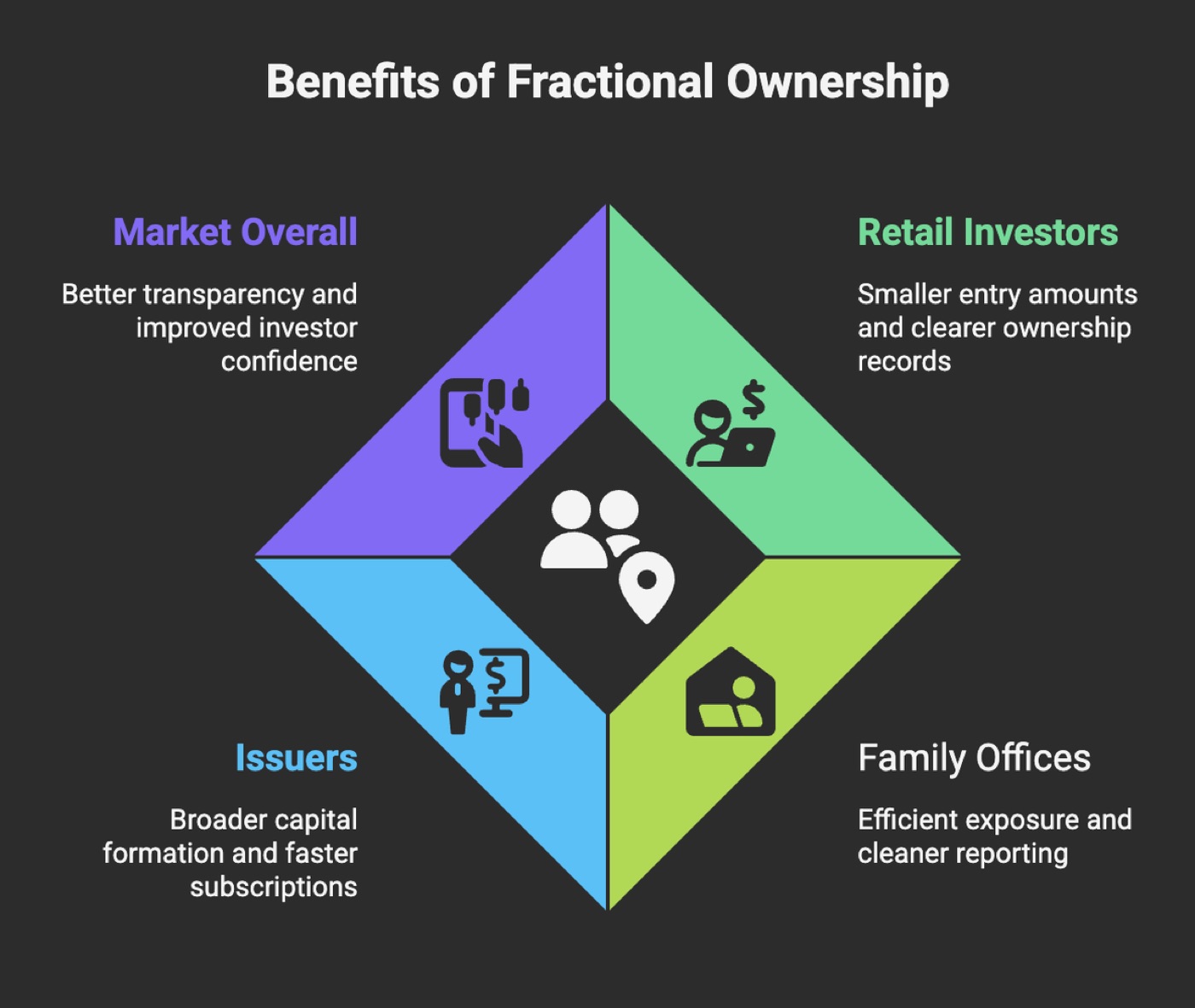
Who benefits (and why each group cares)
Retail investors
- Smaller entry amounts
- Clearer terms and ownership records
- Ability to diversify earlier in life
Family offices & allocators
- More efficient exposure across assets
- Cleaner reporting and governance
- Operational leverage (less manual processing)
Issuers / sponsors
- Broader capital formation
- Faster and more structured subscriptions
- Digital cap table from day one
- A path toward future liquidity options
The market overall
- Better transparency
- More standardization
- Fewer paper-heavy processes
- Improved investor confidence
Where this is going
In 2026, the question is no longer “can we tokenize real estate?”
The real question is:
Can you issue, manage, and scale fractional ownership in a compliant way—without turning it into a legal and operational mess?
Regulation is catching up. Technology is mature. Investor demand for alternative assets is rising.
The winners won’t be the platforms that merely “mint tokens.” The winners will be the platforms that build the full lifecycle:
issuance → subscriptions → milestones → administration → secondary pathways → custody
Because fractional ownership isn’t a feature.
It’s a market upgrade.
For the infrastructure behind each step, see Structuring tokenized real estate and Compliance for tokenized securities.
Further reading: VARA inspection readiness · Supervisors want evidence, not policies