Tokenized Real Estate in Dubai: Fractional Ownership Arrives
How tokenization is opening Dubai real estate to smaller investors: fractional ownership, on-chain liquidity, lifestyle assets and Dubai’s regulatory push.

For decades, the world’s most lucrative asset class has been a "billionaire’s monopoly." To own a piece of a premium skyline like Dubai’s, an investor traditionally required massive capital reserves, a phalanx of legal advisors, and a high tolerance for "exit friction"—the grueling reality that your capital could be locked away for months or years in an illiquid market. These barriers haven't just kept people out; they have institutionalized a lack of capital efficiency that is increasingly at odds with our digital-first global economy.
However, a fundamental disruption is unfolding. Tokenization is stripping away the archaic gatekeeping of the property market, transforming "lumpy assets" into agile, digital instruments. Leading this charge is Blocks Estate, a Dubai-based platform engineered to bridge the chasm between traditional bricks-and-mortar and digital asset innovation. This isn't merely a technological upgrade; it is a total reconstruction of the real estate playground.
1. Ownership for the "Rest of Us": Erasing the High-Capital Barrier
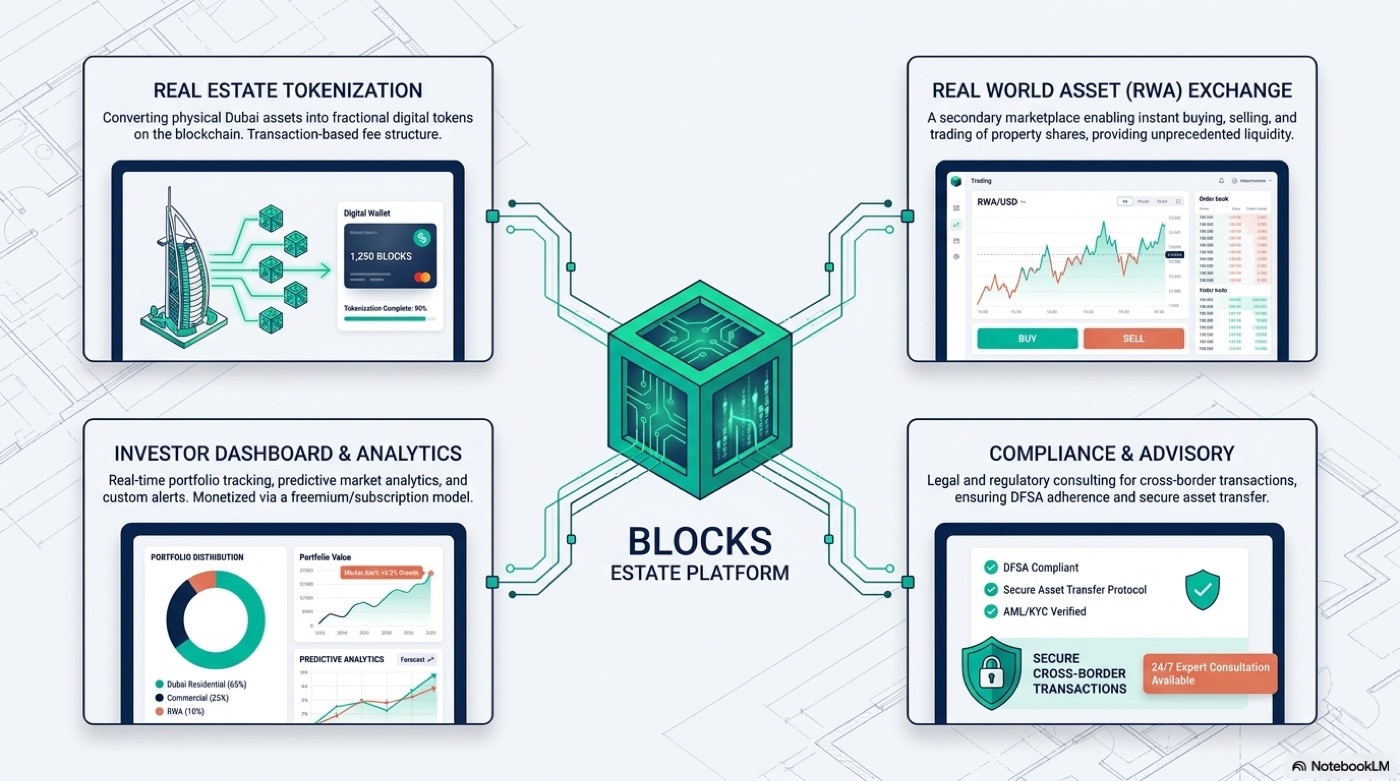
Real estate has historically been the ultimate "lumpy asset"—you either buy the entire unit or you are priced out completely. This binary choice has effectively walled off the market's most stable gains from the "mid-market" segment, which represents 47% of prospective buyers. Blocks Estate shatters this fortress through fractionalization, the process of slicing physical property into digital tokens on a secure blockchain.
This is the democratization of wealth. By moving real estate onto Web3 rails, we are seeing a shift where the 47% of mid-market professionals can finally compete in the same arena as the 40% luxury elite. Fractional ownership allows an investor to hold a diversified stake in multiple high-yield properties for a fraction of the cost of a single studio apartment.
"Blocks Estate serves to bridge traditional real estate investment with digital asset innovation, offering liquidity and transparency that are traditionally lacking in this sector."
2. Killing the "Waiting Game": The Era of On-Chain Liquidity
In the traditional world, real estate is synonymous with illiquidity. Selling a property is a marathon of inspections, appraisals, and legal bottlenecks. Blocks Estate solves this through its Real-World Asset Exchange, a marketplace that introduces the concept of "instant liquidity" to the property sector.
The ability to trade property shares with the same speed and ease as a blue-chip stock represents a revolutionary psychological and strategic shift. For the strategist, this means unparalleled capital efficiency. You are no longer "stuck" in a physical location; the ability to rebalance a global property portfolio on your phone at a moment's notice eliminates the historical risk of capital stagnation.
3. The $4 Trillion Gold Rush: A Global Financial Migration
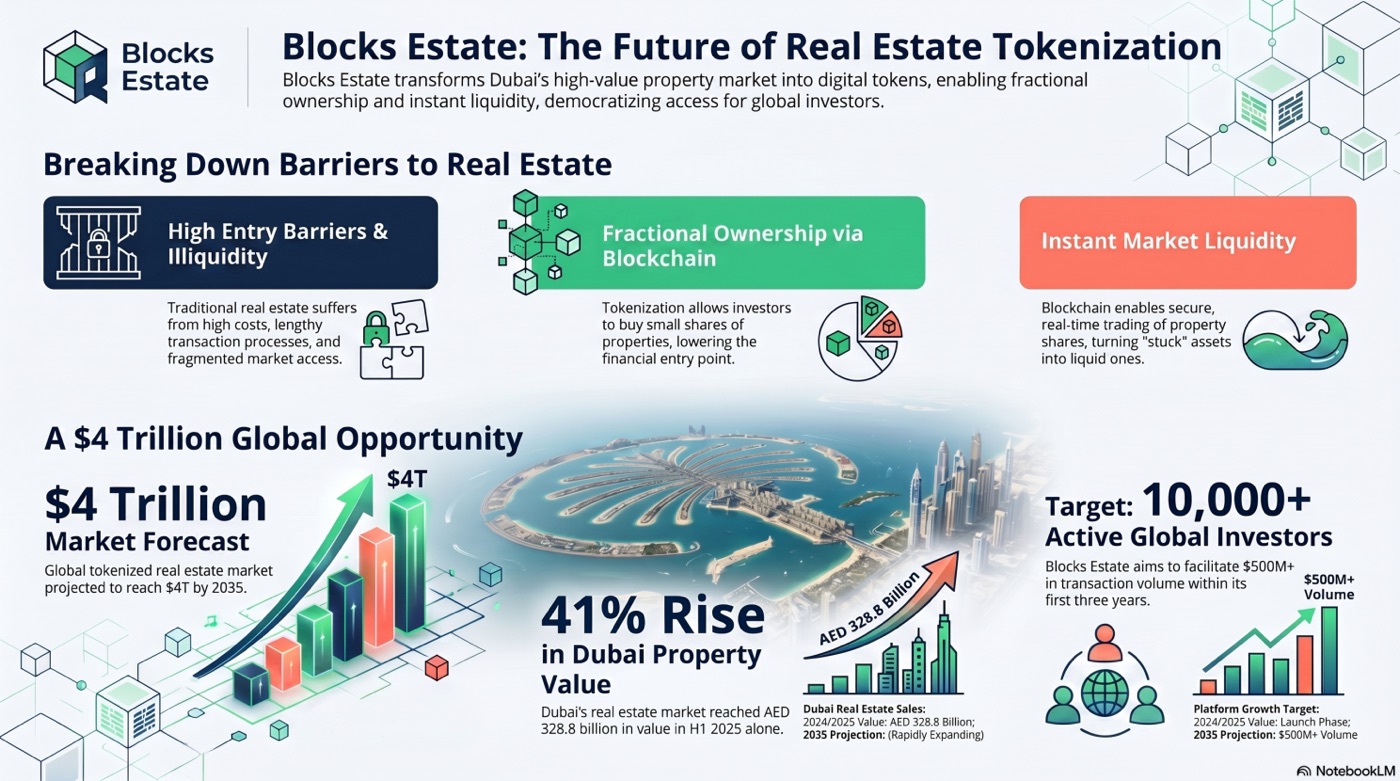
This is not a niche experiment; it is a global financial migration. The data is undeniable: the tokenized real estate market is projected to skyrocket to $4 trillion by 2035, up from less than $300 billion today.
At a compound annual growth rate (CAGR) of 27%, this sector is vastly outpacing the returns and sales cycles of the traditional market. While conventional real estate remains tethered to slow, paper-based processes, tokenization is benefiting from the 24/7 nature of digital markets. We are witnessing the birth of a new standard where digital transparency is the baseline, and those still relying on physical deeds are being left behind in a "stagnant" past.
4. Beyond Bricks and Mortar: Lifestyle Assets and Virtual Access
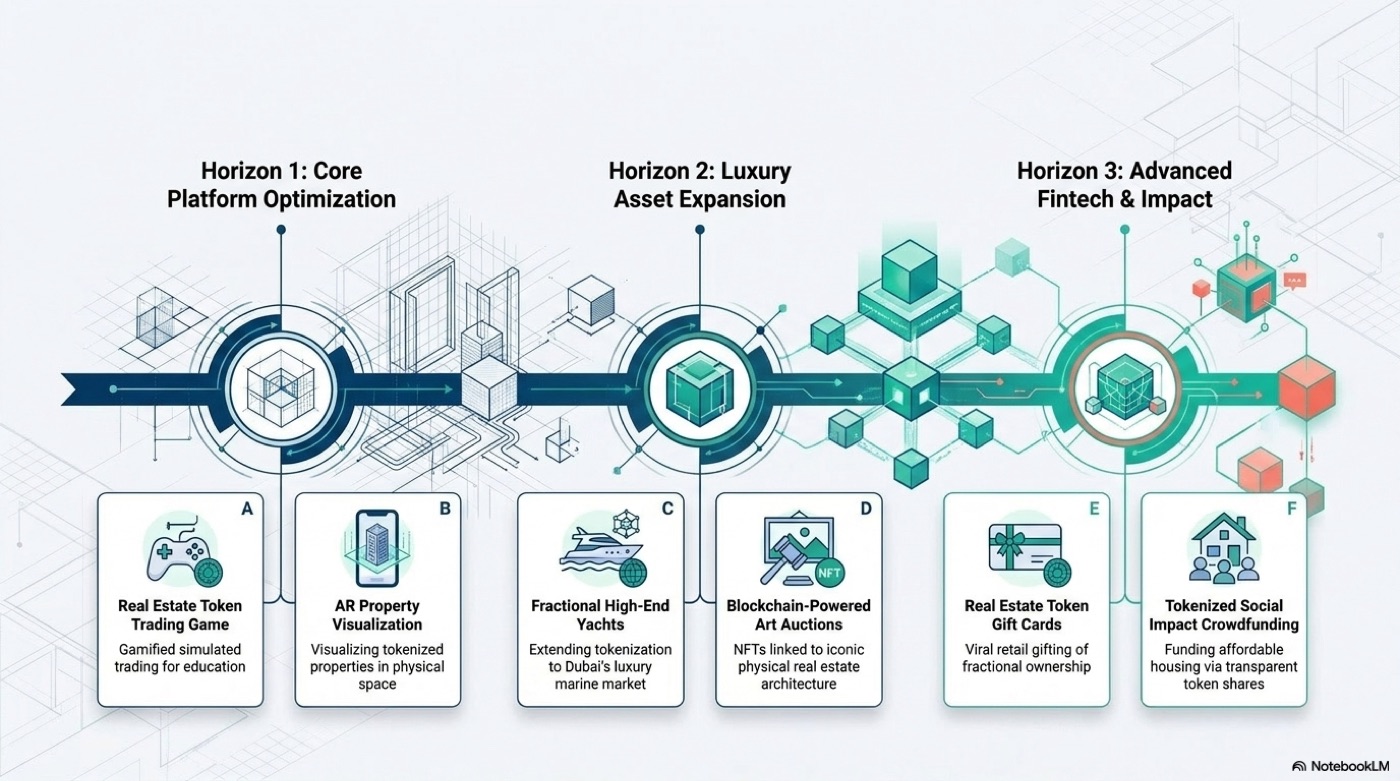
Tokenization is detaching the concept of "real estate" from the ground and turning it into a lifestyle asset. Blocks Estate is moving beyond traditional residential units to capture the imagination of a younger, tech-savvy demographic through counter-intuitive expansion:
- Fractional Ownership of High-End Yachts: Bringing on-chain liquidity to the maritime luxury market, allowing investors to own and trade shares in elite vessels.
- Virtual Real Estate Theme Parks: Creating high-fidelity VR replicas of Dubai’s architectural landmarks, where ownership provides digital rights to exclusive entertainment and social experiences.
By tokenizing these assets, Blocks Estate isn't just selling "space"—it's selling access. It is a strategic move to capture the "lifestyle" economy, turning luxury experiences into tradable, liquid wealth.
5. Dubai: The Regulatory Epicenter
Dubai is not just a participant in this shift; it is the global laboratory. The market is currently experiencing a historic surge: in the first half of 2025 alone, Dubai recorded approximately 99,000 sales transactions totaling AED 328.8 billion. This represents a 41% rise in value and a 23.7% rise in volume year-over-year.
Crucially, Dubai is building the "legal rails" necessary for institutional adoption. Supported by the Dubai Financial Services Authority (DFSA), the region provides the regulatory certainty that makes tokenization safe for global capital.
"Dubai, as a dynamic real estate hub, offers significant investment opportunities fueled by regulatory support for innovative financial technologies."
The 2030 Outlook: A Strategic Crossroads
The next five years will see Blocks Estate push even further into the future, with a roadmap that includes a pivot into commercial real estate and the integration of Augmented Reality (AR) for property visualization. Imagine standing on a street corner in Dubai, pointing your phone at a skyscraper, and instantly seeing your fractional ownership percentage and current yield in an AR overlay.
The promise of Blocks Estate is simple: seamless, secure, and transparent transactions that remove the friction from the world's most valuable asset class.
As we move toward the turn of the decade, the question for the modern investor is no longer about the location of the property, but the nature of the deed. In 2030, will you be the landlord holding a stagnant paper deed, or the strategist holding a liquid, global portfolio of on-chain assets? The skyline of the future is being tokenized today.
Further reading: VARA inspection readiness · Supervisors want evidence, not policies