Tokenized Securities Compliance: KYC, Transfers, Identity
What institutions check before allocating to tokenized real estate: KYC and accreditation, Rule 144 and lock-ups, transfer agents, multi-issuer compliance, identity.

Tokenization doesn’t remove securities regulation; it makes enforcement programmable. Institutions will not allocate until a platform can show who is allowed to hold a token, when it can be transferred and that every action is tied to a verified identity. This guide starts with what institutions ask for, then covers KYC and accreditation at scale, transfer restrictions and the transfer agent, compliance across many issuers on one platform, and the identity layer underneath. In the UAE the same controls map to VARA’s rulebooks for virtual assets and to SCA, DFSA or FSRA rules for tokenized securities; the principles do not change.
What institutions check before they allocate
What institutions actually ask for before they allocate.
Family offices, funds, and institutional allocators don’t adopt tokenized real estate on hype. They run due diligence. They want to see custody, compliance, transfer agent, settlement, and risk controls in place. Here’s the checklist that comes up again and again—and what “production-ready” means for each.
Custody
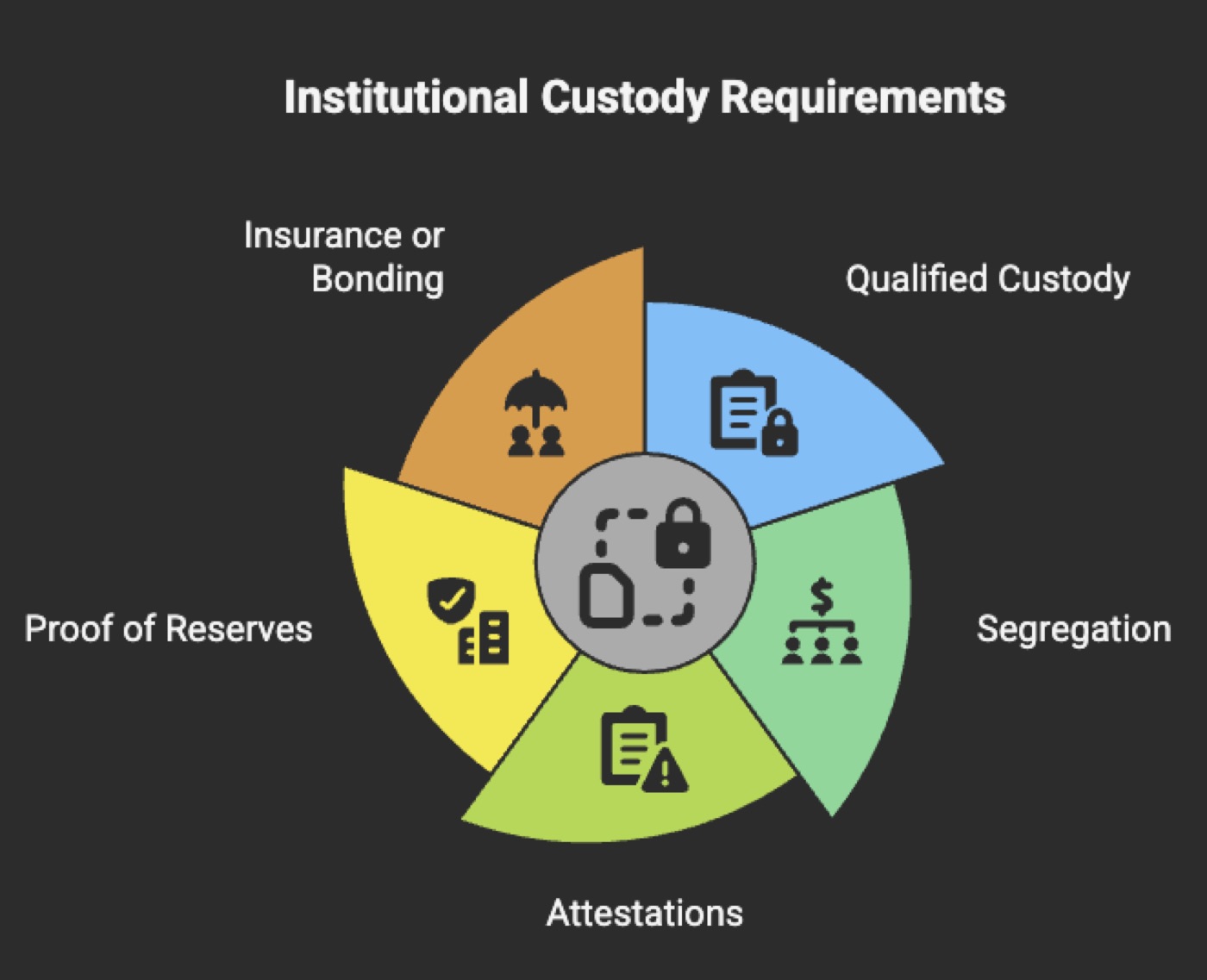
Qualified custody (or a clear path to it): licensed custodian or equivalent, with segregation (or clearly allocated omnibus), attestations and proof of reserves, and insurance or bonding. Institutions need to know that assets are held safely and that they can prove it. Self-custody alone is rarely enough for regulated or institutional capital.
KYC and accreditation
Robust workflows: case creation, review, decisioning, and audit trail. Multi-jurisdiction support: different rules for different countries and product types. Whitelist enforcement: only KYC’d and accredited (where required) accounts can hold or trade. Compliance isn’t a checkbox; it’s a repeatable, auditable process that the platform enforces at the gate.
Transfer agent
Registry of record: one cap table; no “blockchain says X, spreadsheet says Y.” Transfer restrictions: Rule 144, lock-ups, eligibility enforced at subscription, order, settlement, and withdrawal. Corporate actions: splits, dividends, and reporting processed on the same registry. Reporting: prompt posting and regulatory filing where required. Institutions want to know that ownership and restrictions are managed like traditional securities.
Settlement and audit
Clear lifecycle: trade → settlement → custody/registry update, with no gaps. Reconciliation: positions and movements match across exchange, settlement, custody, and transfer agent. Audit trail: who did what, when, and with what outcome. Settlement and audit are how institutions verify that the platform isn’t just recording trades—it’s settling them correctly and provably.
Risk and compliance
Pre-trade checks: position limits, exposure limits, and eligibility (KYC, whitelist, transfer restrictions) enforced before execution. Configurable limits and compliance rules (e.g. country, product type) so that risk and policy are explicit. Institutions want to see that risk is controlled and that breaches are prevented, not just reported.
KYC and accreditation at scale
You can’t tokenize without knowing who’s allowed to hold.
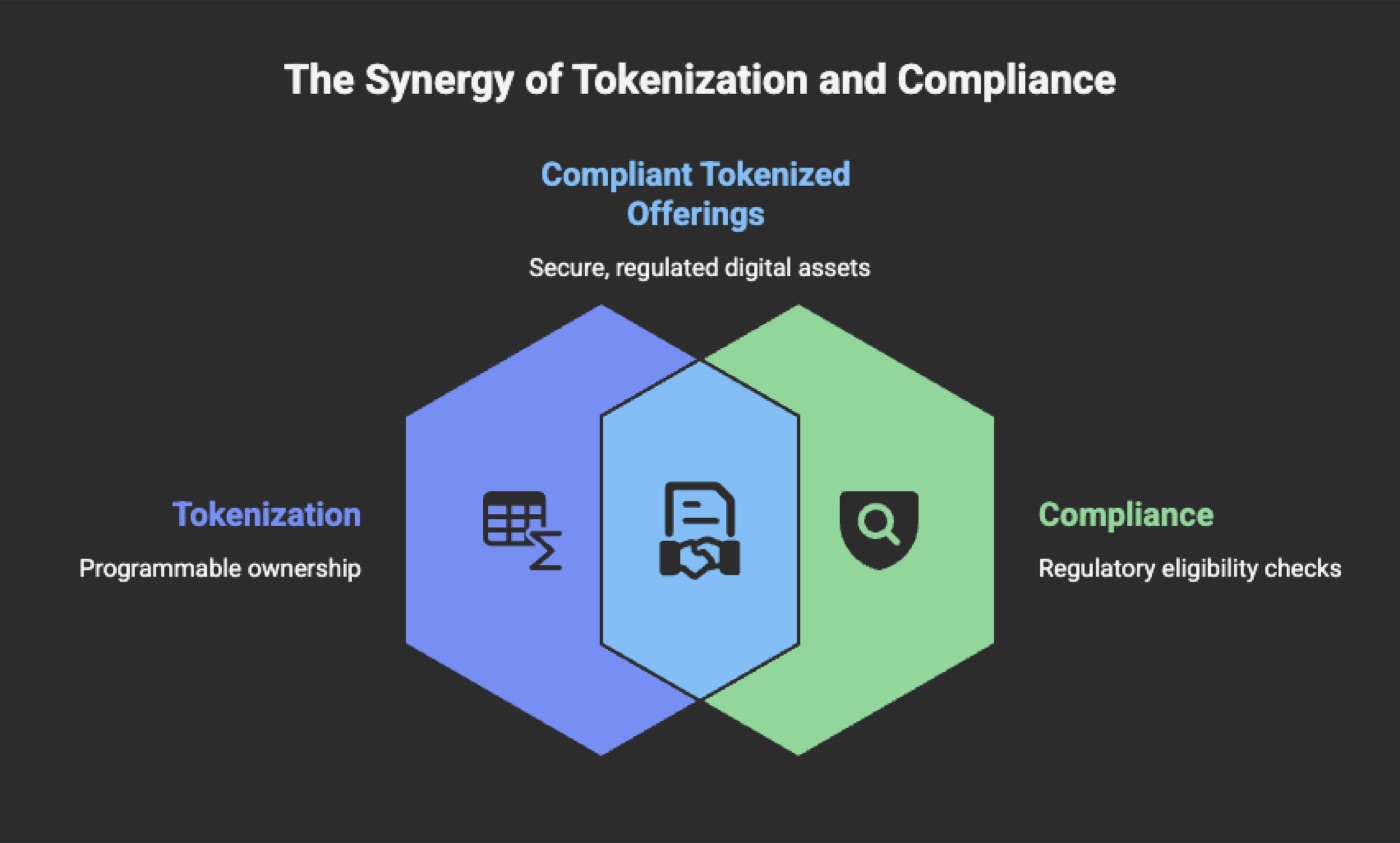
Tokenization makes ownership programmable—but regulation still decides who can buy, hold, and transfer. KYC (Know Your Customer), KYB (Know Your Business), and investor accreditation are non-negotiable. Doing them at scale, across jurisdictions and product types, is what separates a compliant platform from a demo. Here’s how to think about compliance as a first-class capability for tokenized offerings.
Why KYC/KYB is non-negotiable
Regulation demands it: anti-money laundering, sanctions screening, and investor protection. Issuers and platforms are responsible for ensuring that only eligible investors hold restricted or accredited-only securities. That means case creation (submit documents and data), review (human or automated), and decisioning (approve, reject, or request more). Without a clear workflow and audit trail, you can’t prove you did the right thing.
Accreditation in multiple regimes
Accreditation rules differ by jurisdiction and product. US Regulation D, EU MiFID, and local regimes each have their own definitions and evidence requirements. A platform that serves multiple issuers and geographies needs to support multiple accreditation types and link them to products (e.g. this offering is accredited-only in the US, professional-only in the EU). Compliance is then a matter of configuration and evaluation, not one-off manual checks.
Token whitelist
Once KYC and accreditation are satisfied, the platform must whitelist the account or wallet for the relevant token or product. The whitelist is the gate: primary market (subscription), exchange (order), and custody (withdrawal) all check it. No whitelist, no trade, no transfer. Enforcing at the gate—via APIs that other domains call—keeps compliance consistent and auditable.
Scale and automation
Compliance at scale needs workflows (status, reassignment, SLAs), audit logging (who decided what, when), and org-scoped segregation so that Issuer A’s KYC data and rules never mix with Issuer B’s. Multi-issuer platforms must treat each org as a separate compliance tenant: same infrastructure, strict data and logic boundaries. That’s how you get both efficiency and trust.
Compliance as a feature
When compliance is exposed as APIs—cases, evaluations, rules (e.g. country, property type, investor type)—issuers and partners can integrate it into their flows. Rules can be configured per offering or per org; evaluations can be automated where possible and escalated when not. Compliance becomes a feature of the platform, not a back-office afterthought.
Rule 144, lock-ups and transfer restrictions
Tokenization doesn’t remove regulation—it makes enforcement programmable.
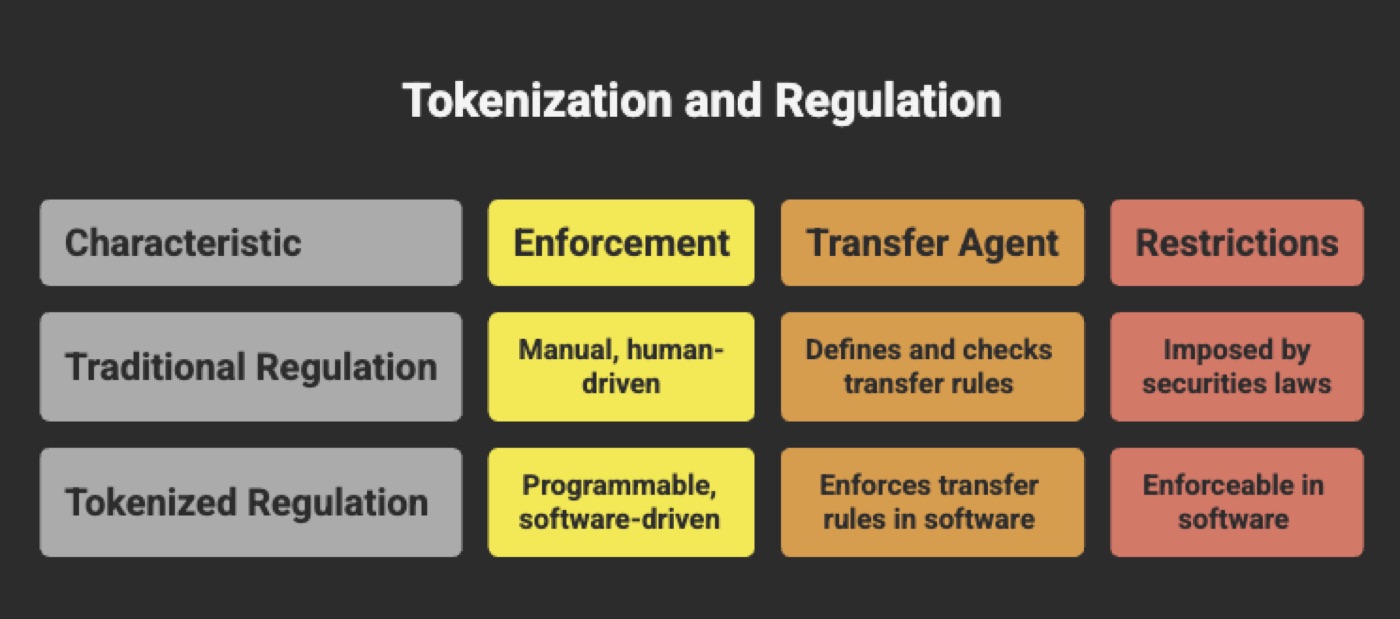
Securities laws impose transfer restrictions: holding periods (e.g. Rule 144), lock-ups, and eligibility rules (accredited only, no transfer to non-accredited). Tokenization doesn’t erase those rules—it makes them enforceable in software. The transfer agent is the place where “who can transfer what, when, and to whom” is defined and checked. Here’s how it works and where enforcement has to happen.
Why transfer restrictions exist
Rule 144 and similar rules limit when and how restricted securities can be resold. Lock-ups (contractual or regulatory) prevent transfer for a period after issuance or listing. Investor eligibility (accredited, qualified purchaser) often restricts who can hold or receive certain tokens. These exist to protect issuers and comply with law; the platform’s job is to enforce them consistently.
What a transfer agent does
The transfer agent maintains the registry of record: who owns what, with what restrictions attached to each position. When someone wants to transfer, the agent checks: Is the holding period satisfied? Is the buyer eligible? Is the token whitelisted for this account? Transfer requests go through the agent; restriction checks happen before any trade or settlement is finalized. The agent is the single source of truth for “can this transfer happen?”
Enforcement points
Restrictions must be enforced at every gate: primary market (subscription—can this investor subscribe?), exchange (order—can this account sell or buy?), settlement (can this transfer settle?), and custody (can this withdrawal go through?). If any gate skips the check, you have a compliance gap. So the transfer agent isn’t just a registry—it’s a service that other domains query before allowing an action. Refuse or flag invalid transfers; never guess.
Certificate and corporate actions
Certificates (digital or otherwise) can represent a position; issuance and cancellation are part of the transfer agent’s scope. Restrictions attach to positions and certificates (e.g. “Rule 144, 6 months remaining”). Corporate actions (splits, dividends) are processed by the agent and update the registry; they have to respect the same restriction model. So the agent isn’t only “transfer in/out”—it’s the full lifecycle of ownership and restrictions.
Platform design
The transfer agent API should be the single place where restrictions are defined and checked. Other domains (primary market, exchange, settlement, custody) call it: “Can account A transfer X tokens to account B?” The agent returns yes or no (and optionally why). One source of truth, one implementation of the rules—that’s how you get compliant secondary trading without duplication and drift.
One platform, many issuers
One platform, many issuers—how compliance stays clean and separated.
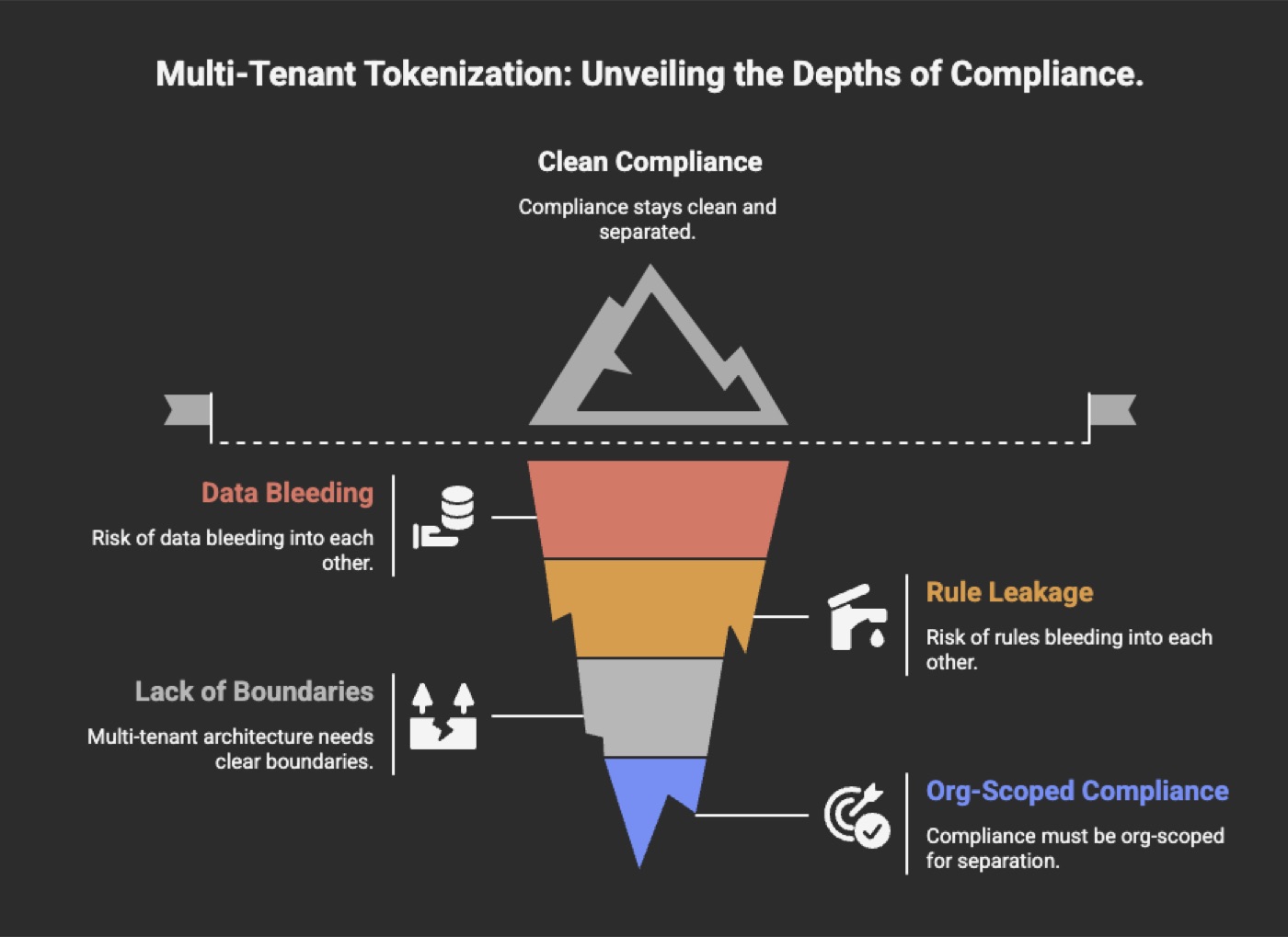
The power of a tokenization platform is serving many issuers and sponsors on one stack. The risk is that their data and rules bleed into each other. Multi-tenant architecture isn’t just about scaling—it’s about boundaries. Here’s why compliance must be org-scoped and how to build it so that one infrastructure supports many regimes without cross-leakage.
What multi-tenant means here
Multi-tenant means many organizations (issuers, sponsors, fund managers) on one infrastructure. Each org has its own data, its own users, and its own compliance rules. Data and logic are scoped by org: when you query KYC cases, evaluations, or rules, you’re always in the context of an org. That’s the only way to get both cost efficiency and regulatory clarity.
Why compliance must be org-scoped
Different issuers operate in different jurisdictions, offer different product types, and have different policies. Issuer A might allow only accredited US investors; Issuer B might target EU professionals. Their KYC cases, accreditation logic, and whitelists must never mix. No cross-org leakage of PII, decisions, or rules. Org-scoping isn’t optional—it’s the condition for a compliant multi-issuer platform.
Building blocks
You need org-scoped KYC cases (each case belongs to an org), evaluations (decisions tied to that org’s rules), and rules (country, product type, investor type) that are defined and applied per org. Audit logging and reporting must also be org-scoped so that each issuer can demonstrate compliance without seeing anyone else’s data. When these building blocks are in place, “multi-tenant” is real, not just a label.
Multi-jurisdiction
One compliance API can support many regimes: country-specific rules, product-specific rules, and different accreditation types. The platform doesn’t hard-code one jurisdiction; it lets each org configure rules and workflows. That’s how you get one codebase and one API surface serving issuers in multiple countries and asset classes.
Operational benefits
Issuers get compliance without building it: they plug into the platform’s KYC, accreditation, and whitelist. The platform gets consistency and auditability: every org is subject to the same quality of controls and the same ability to prove what was done. Multi-tenant compliance, done right, is a win for both sides.
Identity and access
The smart contract is secure—but who can call it?
Tokenization runs on code: smart contracts, APIs, and automated flows. The code can be correct and still be abused if the wrong actor can invoke it. Identity and access management (IAM) is what ties every action to a who—user, service account, or API key—and enforces what they’re allowed to do. Without IAM, you can’t audit, comply, or protect assets. Here’s what you need and why it’s the base layer.
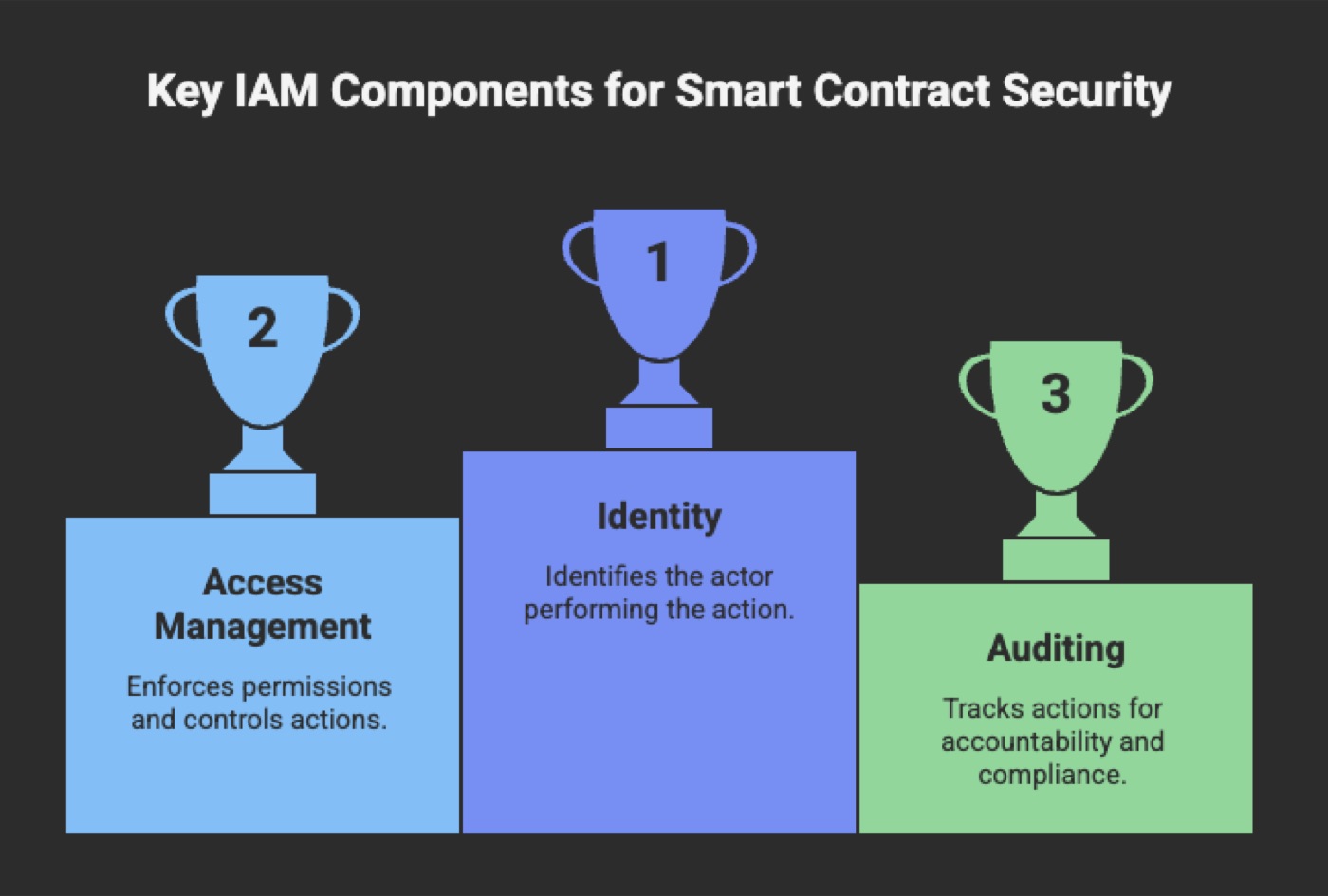
Identity as the foundation
Every action in the platform is performed by someone or something: a user in a UI, a backend service, or an integration via API. If you can’t answer “who did this?” you can’t enforce policy, pass an audit, or revoke access when needed. Identity is the foundation: organizations, accounts, members, and the roles and permissions that govern what they can do. Build it first; everything else sits on top.
What you need
Organizations and tenancy: each issuer or client is an org; data and actions are scoped to org. Accounts and members: users belong to orgs and have accounts; membership and roles define access. RBAC (role-based access control): roles like “issuer admin,” “investor,” “compliance reviewer” map to permissions (e.g. read:primary-market, write:compliance). MFA, SSO, sessions: strong auth and session management so that “identity” is verifiable. API keys: for machine-to-machine and server-to-server access, with rotation and scoping so that a key can’t do more than it should.
API keys and service accounts
Integrations and backend services don’t log in as humans. They use API keys or service accounts. Keys should be scoped (e.g. read:marketplace, write:primary-market) and rotatable. That way, a partner can integrate without getting full admin access, and you can revoke or narrow access without changing code. Design for least privilege from day one.
Webhooks and domain verification
Webhooks let the platform push events to external systems (e.g. “subscription completed,” “trade settled”). Delivery must be trusted: correct endpoint, verified domain, and rotation of secrets. Domain verification (e.g. DNS-based) ensures that webhook callbacks go to systems the org controls. Trust and delivery are part of identity: “this org is allowed to receive this event at this endpoint.”
Trust and compliance
IAM feeds compliance (who did what, which account held what at which time) and custody (who can withdraw, under which approvals). Audit logs, transfer restrictions, and withdrawal policies all depend on a clear notion of identity. So the smart contract might enforce the rule—but IAM enforces who can trigger it. Both matter.
The common thread
Every control in this guide depends on two things: a single registry of record and a single verified identity for every participant. Get those right and KYC, transfer restrictions and audit trails become features of the platform rather than manual work around it.
Further reading: VARA inspection readiness · Supervisors want evidence, not policies