Building an NFT Marketplace: Strategies That Work
How to develop an NFT marketplace that stands out: user experience, choosing a blockchain, security, distinctive features and trust, and where the market is going.

TL;DR
The NFT market is booming. It's set to hit $211.7 billion by 2030. This explosive growth is creating huge opportunities for new NFT marketplaces. But success isn't guaranteed. You need smart strategies to stand out in this competitive space.
NFTs are digital assets that represent ownership of unique items. They've revolutionized how we buy and sell digital art, collectibles, and even virtual real estate. The market is growing fast, with a 34.5% compound annual growth rate expected from 2024 to 2030.
Key players like OpenSea and Rarible dominate the market. But there's room for newcomers with fresh ideas. The key is to offer something unique.
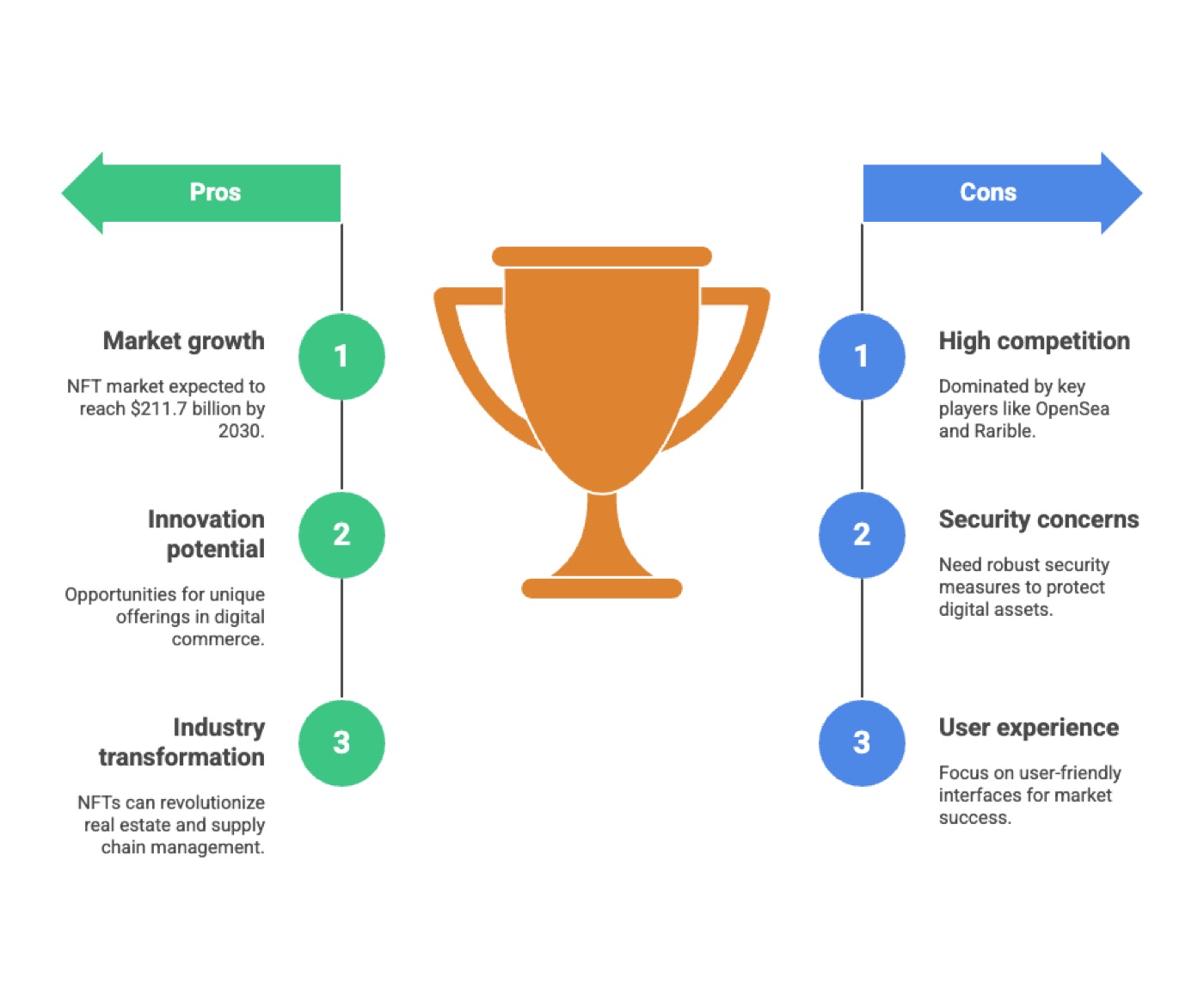
The most successful NFT marketplaces will be those that solve real problems for users. Think beyond buying and selling: consider how NFTs can transform industries like real estate or supply chain management.
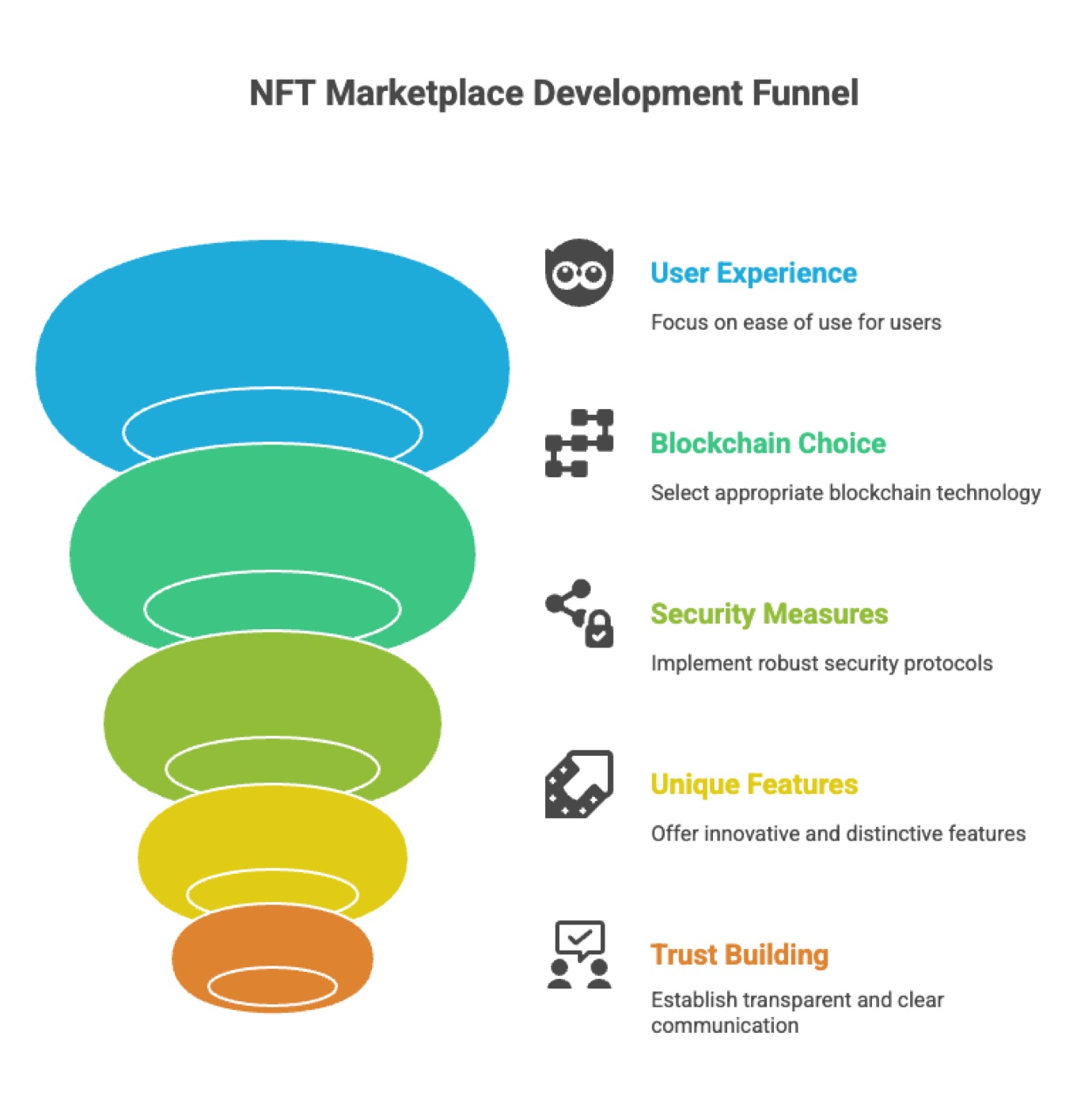
To build a winning NFT marketplace, you need to:
- Prioritize user experience. Make it easy for people to buy, sell, and trade NFTs.
- Choose the right blockchain. Consider factors like speed, cost, and scalability.
- Implement robust security measures. Protect users' assets and data.
- Offer unique features. Stand out with innovative auction formats or AI-powered recommendations.
- Build trust. Use transparent practices and clear communication.
The future of NFT marketplaces is bright. We're seeing new applications in gaming, music, and even physical asset ownership. As the technology evolves, so will the opportunities.
Are you ready to dive into the NFT marketplace world? With the right strategy, you can turn your concept into a thriving reality. The time to act is now.
From Concept to Reality: Effective Strategies for Developing NFT Marketplaces
The NFT market is booming. With a projected size of $211.7 billion by 2030, it's attracting entrepreneurs and investors alike. But success in this space isn't guaranteed. You need smart strategies to develop an NFT marketplace that stands out.
NFTs are changing how we think about digital ownership. They're not just for art anymore. From real estate to music rights, NFTs are reshaping industries. This growth is driving demand for new, innovative marketplaces.
The market is growing at a staggering 34.5% annually. This rapid expansion creates opportunities and challenges. You must act fast, but also build smart. Your marketplace needs to be user-friendly, secure, and scalable.
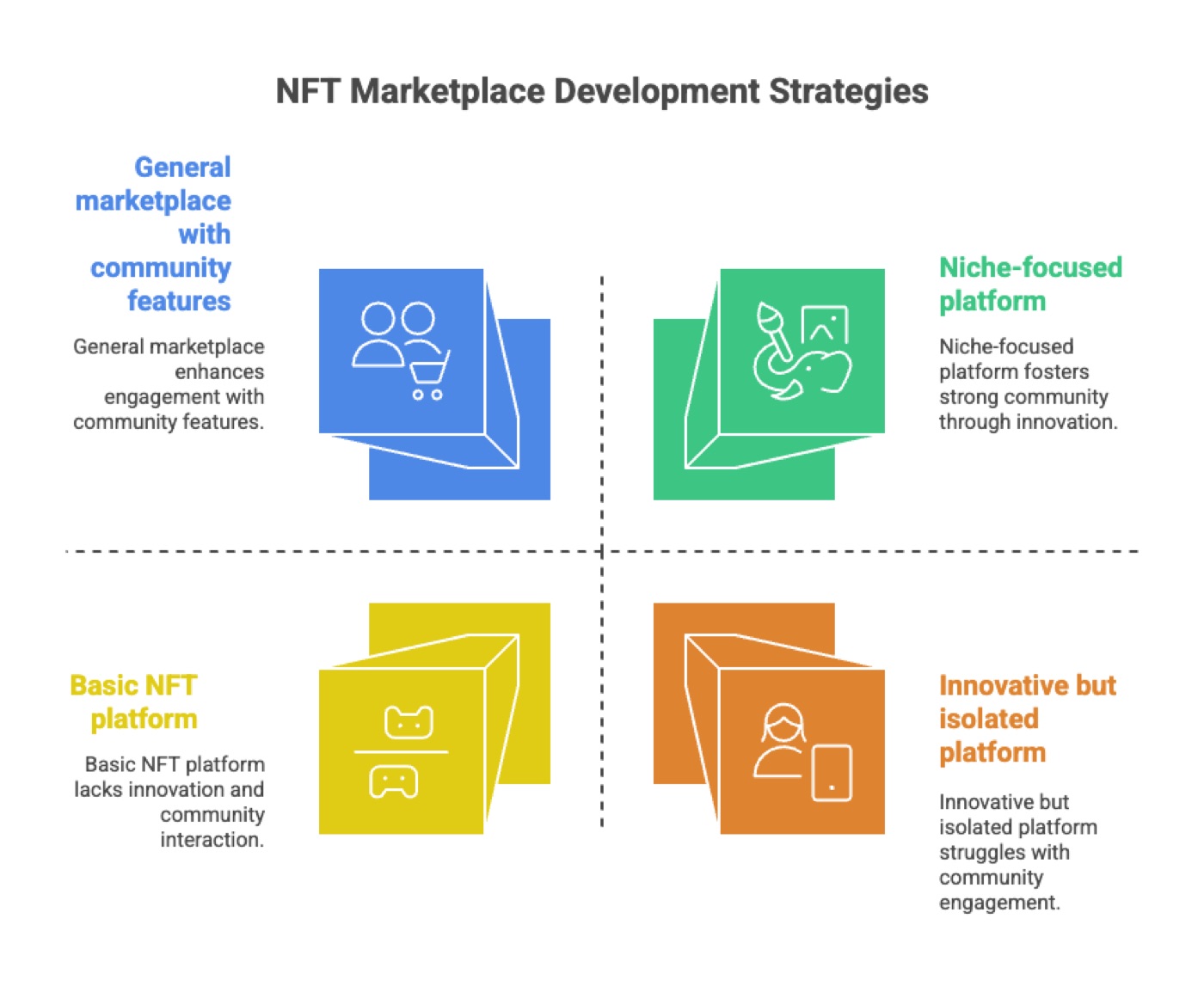
Existing platforms like OpenSea dominate the market. But there's room for new players. The key? Offering unique features and targeting niche markets. Think beyond general marketplaces. Consider specialized platforms for specific industries or types of NFTs.
Building an NFT marketplace isn't just about technology. It's about creating a community. You need to understand your users' needs and pain points. This insight will guide your development strategy and set you apart from competitors.
Background Information
NFTs, or Non-Fungible Tokens, have taken the digital world by storm. These unique digital assets represent ownership of specific items on the blockchain. The NFT market has seen explosive growth, with a projected size of $211.7 billion by 2030.
Currently, the NFT marketplace landscape is dominated by platforms like OpenSea and Rarible. These marketplaces allow users to buy, sell, and trade various digital assets, from art to music and even virtual real estate.
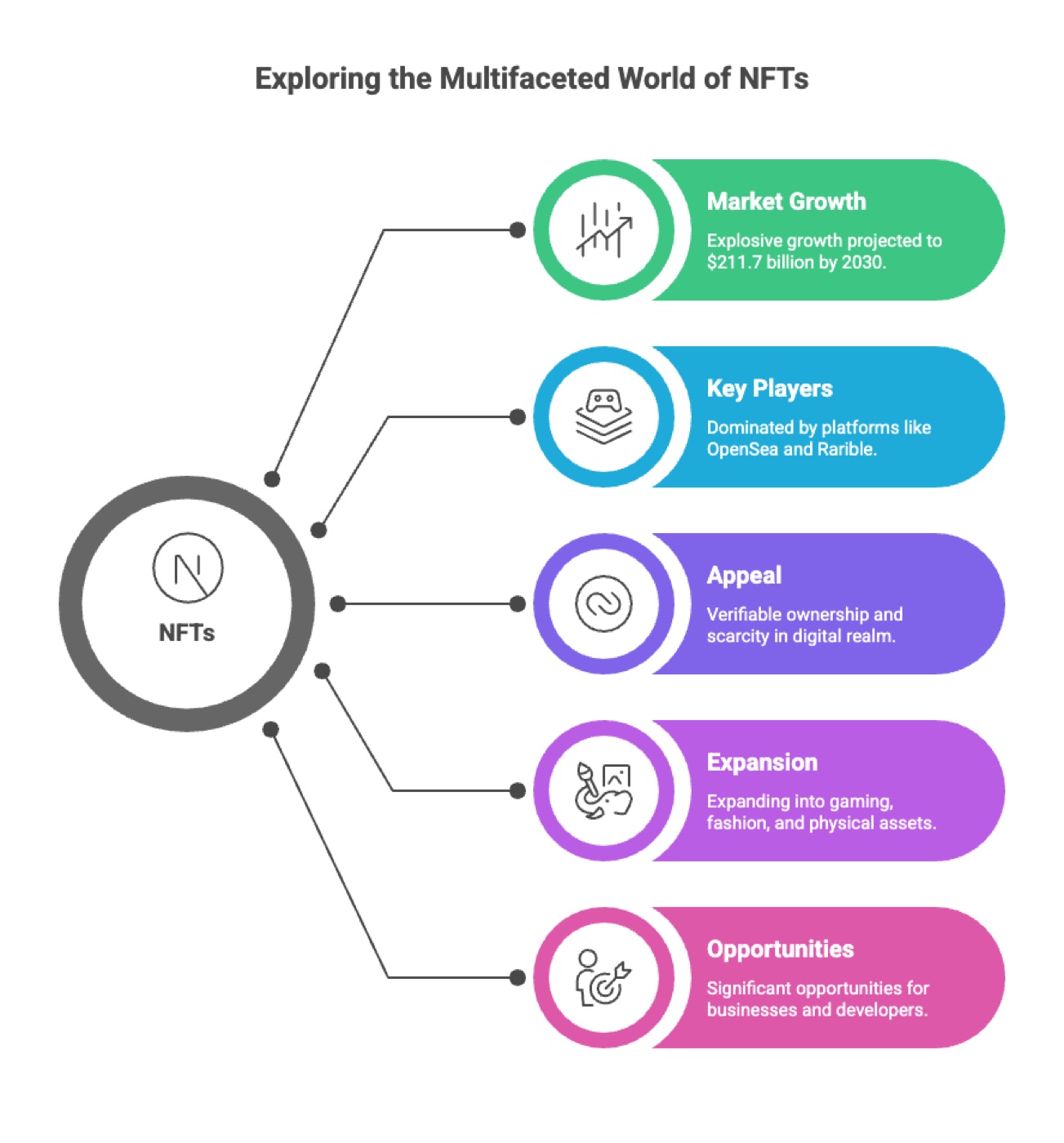
The appeal of NFTs lies in their ability to provide verifiable ownership and scarcity in the digital realm. This has opened up new possibilities for creators, collectors, and investors alike. As the market continues to evolve, we're seeing NFTs expand beyond digital art into areas like gaming, fashion, and even physical asset representation.
With a compound annual growth rate of 34.5% expected from 2024 to 2030, the NFT market presents significant opportunities for businesses and developers. However, success in this rapidly changing landscape requires strategic planning and innovative approaches to marketplace development.
NFT Marketplace Success Factors
Multifaceted Growth of the NFT Market
The NFT market is booming. Recent data shows it's set to reach $211.7 billion by 2030. That's a massive jump from its $26.9 billion value in 2023. The market is growing at a breakneck pace of 34.5% yearly from 2024 to 2030.
North America leads the charge. It held 31.6% of the global market share in 2023. Some reports even put this figure as high as 43%. This dominance is likely to continue in the coming years.
Physical NFTs are gaining traction. They're expected to grow faster than any other segment. These tokens represent real-world assets like houses, art, and cars. They're changing how we prove ownership and fight fraud.
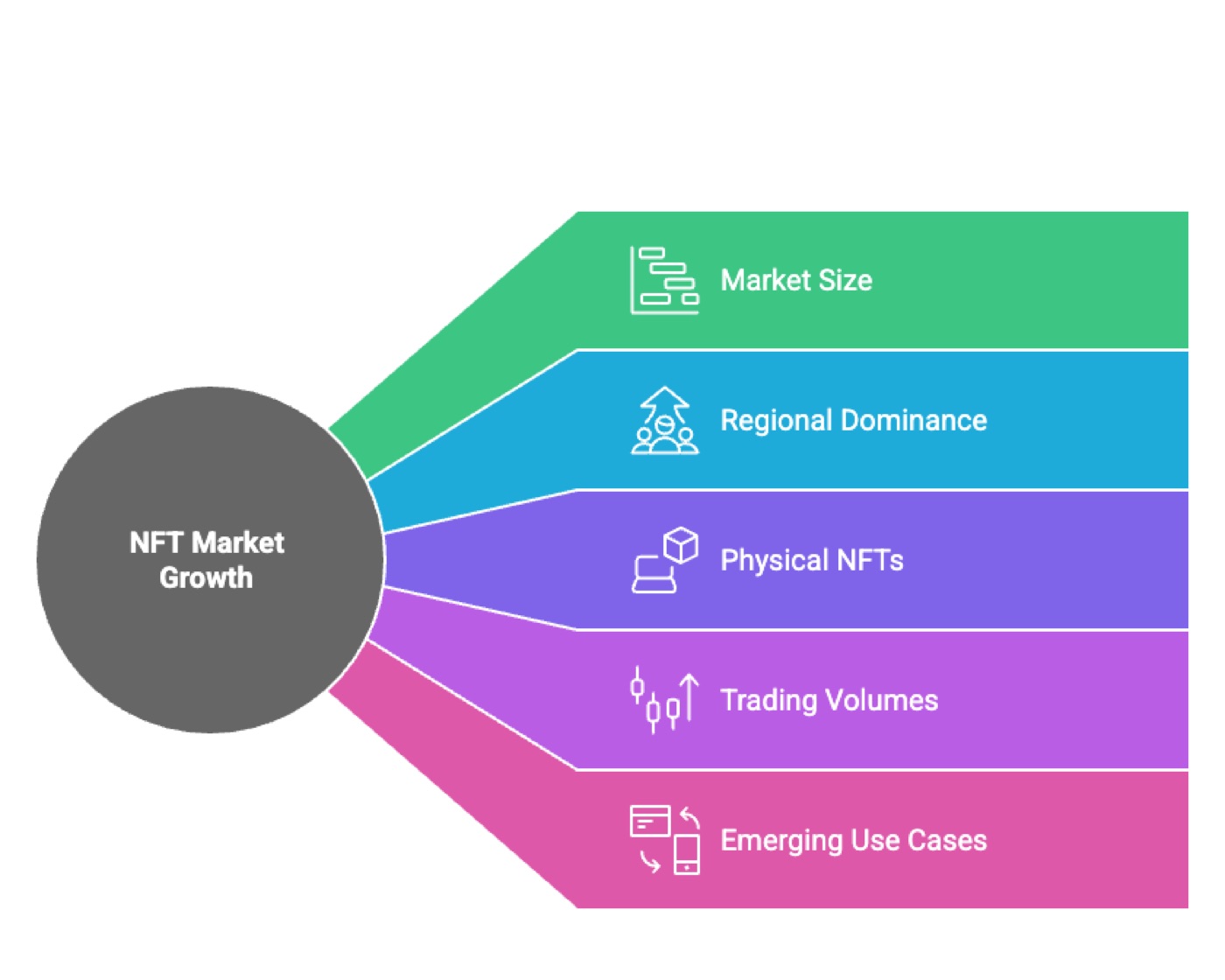
Trading volumes are skyrocketing. In February 2023, NFT marketplaces saw $1.9 billion in trades. That's up from $573 million just three months earlier. This surge shows the market's resilience and growing appeal.
New use cases are emerging beyond digital art. Gaming, music, and even real estate are adopting NFTs. This expansion is driving innovation in marketplace development and attracting diverse users.
Key Strategies for NFT Marketplace Development
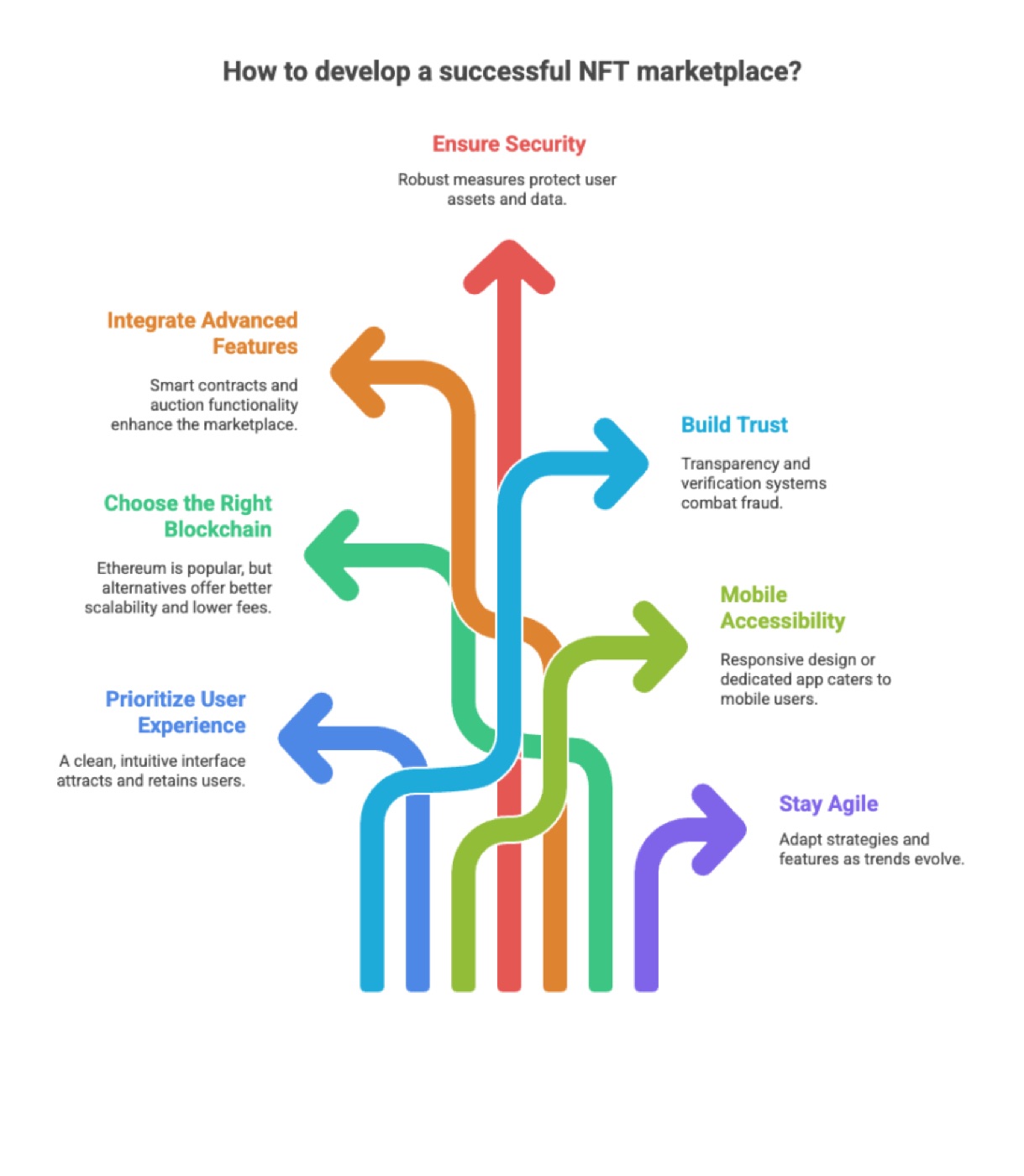
Developing a successful NFT marketplace requires a mix of technical know-how and user-focused design. You need to prioritize user experience above all else. A clean, intuitive interface will attract and retain users in this competitive space.
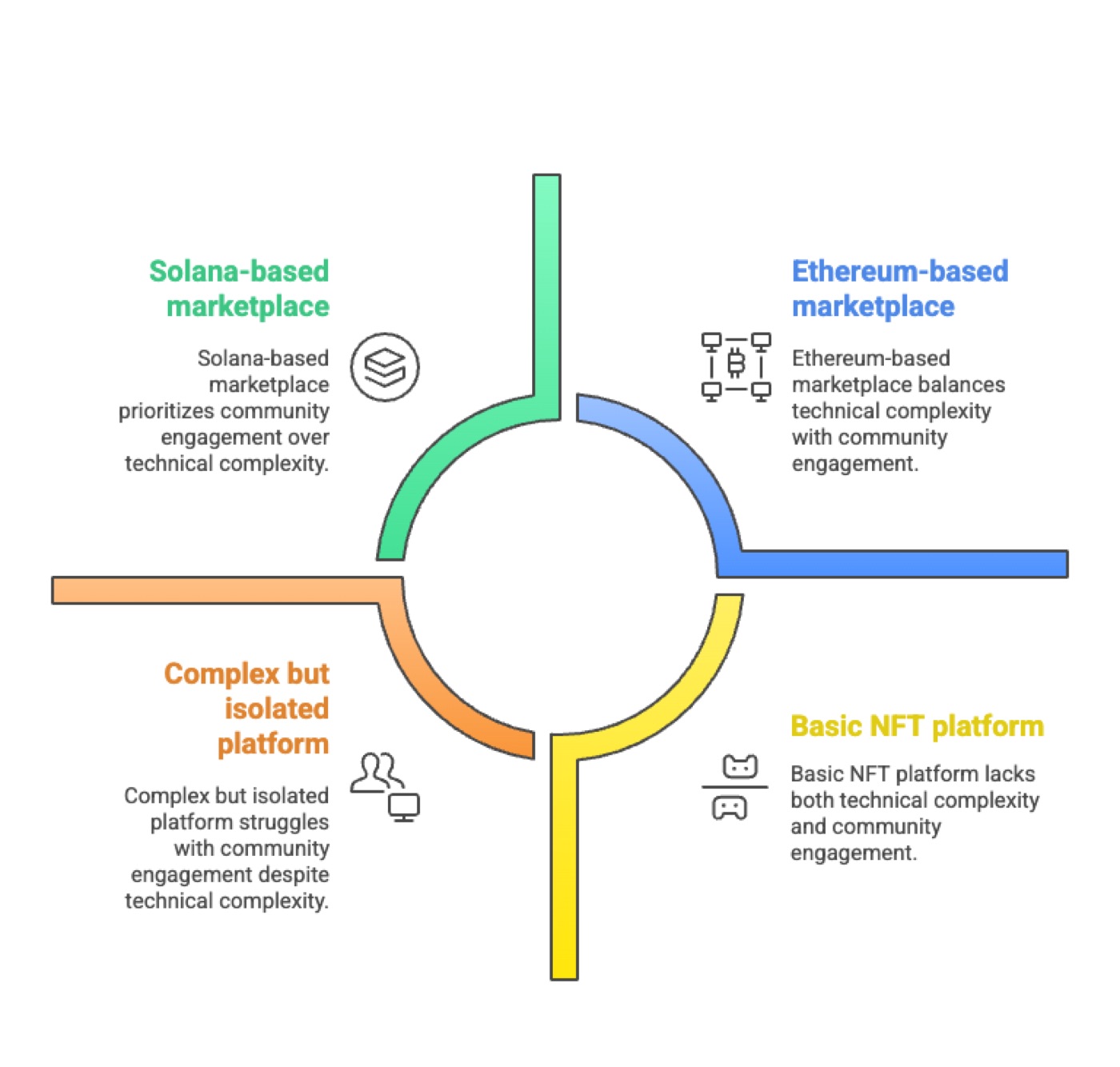
Choosing the right blockchain is crucial. Ethereum remains popular, but alternatives like Solana or Flow offer better scalability and lower fees. Consider your target audience and their preferences when making this decision.
Integrate advanced features to stand out. Smart contracts enable automatic royalties and ownership transfers. Auction functionality adds excitement and can drive higher prices for rare NFTs.
Security is non-negotiable. Implement robust measures to protect user assets and data. Multi-factor authentication, cold storage for high-value NFTs, and regular security audits are essential.
Build trust through transparency. Clearly explain fees, provide detailed item histories, and offer reliable customer support. Consider implementing a verification system for creators to combat fraud.
Don't forget about mobile users. A responsive design or dedicated app ensures your marketplace is accessible on the go. This is especially important as mobile NFT trading grows in popularity.
Finally, stay agile. The NFT space evolves rapidly. Be prepared to adapt your strategies and features as new trends and technologies emerge.
Future Developments
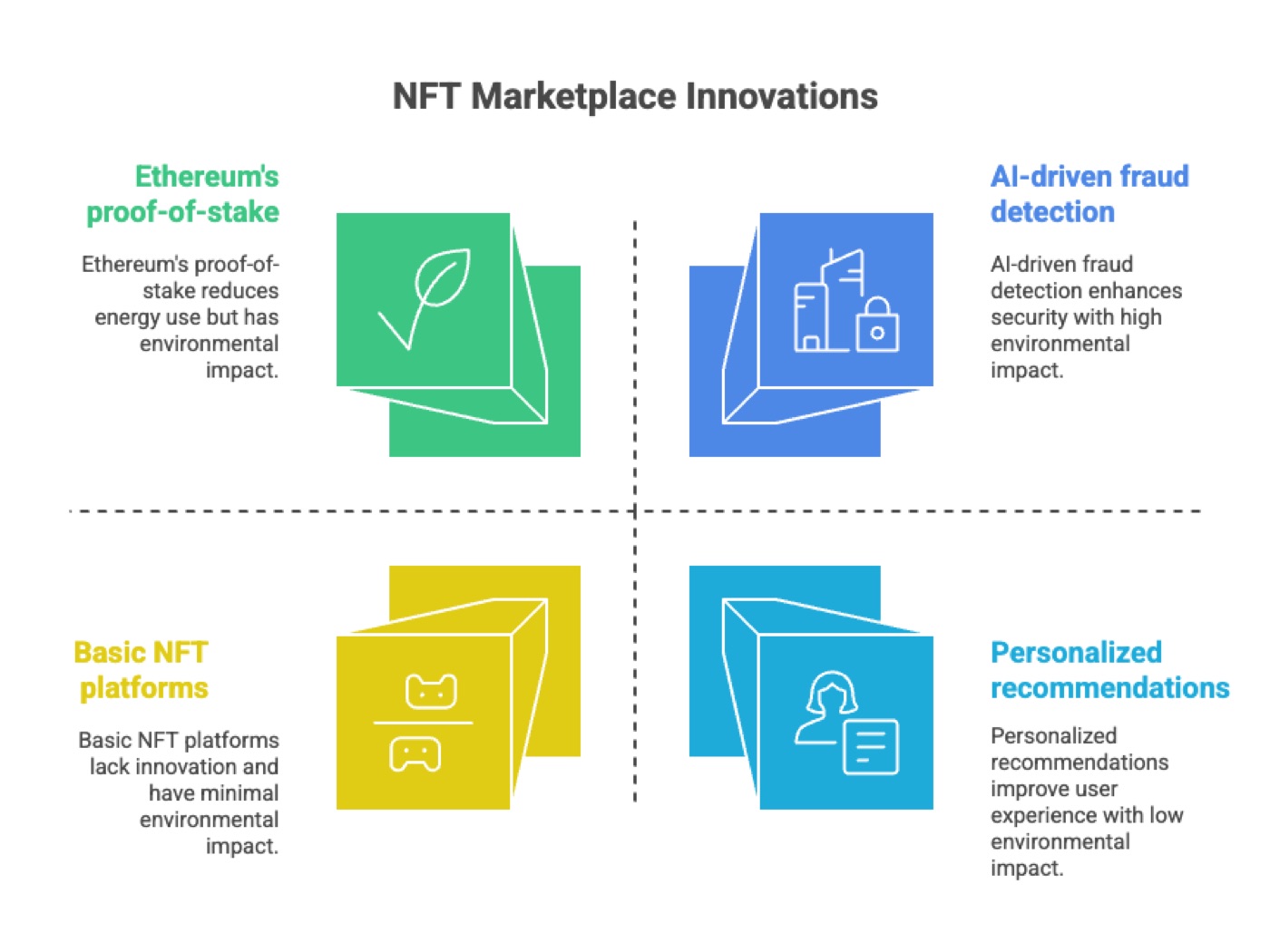
AI and machine learning are set to revolutionize NFT marketplaces. These technologies will enhance user experiences, improve fraud detection, and create more personalized recommendations. You'll see smarter pricing algorithms and automated content creation tools.
Eco-friendly blockchain options are gaining traction. As environmental concerns grow, NFT platforms will likely shift towards greener alternatives. Ethereum's move to proof-of-stake is just the beginning. You can expect more energy-efficient solutions to emerge, reducing the carbon footprint of NFT transactions.
NFTs are expanding beyond digital art. They're poised to disrupt various industries:
- Real estate: Tokenizing property ownership
- Supply chain: Verifying product authenticity
- Gaming: Enabling true ownership of in-game assets
- Education: Issuing verifiable credentials
The physical asset segment is projected to grow rapidly. NFTs will increasingly represent tangible items, from luxury goods to real estate. This trend will bridge the gap between digital and physical worlds, opening new possibilities for asset ownership and trading.
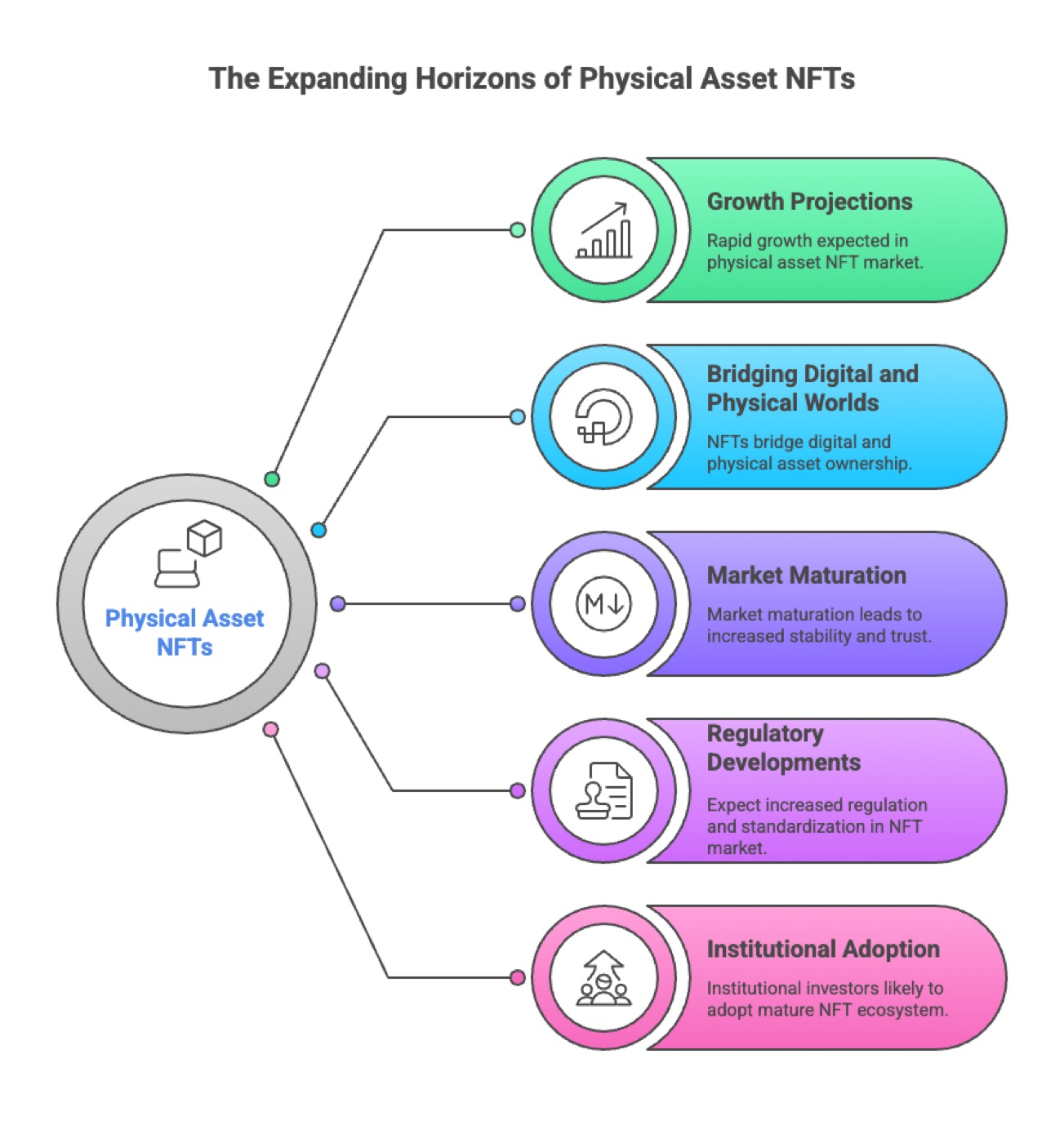
As the market matures, expect increased regulation and standardization. This will bring more stability and trust to the NFT ecosystem, potentially attracting institutional investors and mainstream adoption.
Conclusion
The NFT market is booming, with huge growth potential. By 2030, it could reach $211.7 billion. This presents a massive opportunity for businesses. But success requires smart strategies. Focus on user experience, choose the right blockchain, and prioritize security. The future of NFTs goes beyond digital art. New use cases are emerging across industries. To thrive in this space, stay innovative and adaptable. The time to act is now. If you're considering entering the NFT market, start planning your marketplace development today. With the right approach, you can tap into this lucrative and rapidly evolving sector.
Further reading: VARA inspection readiness · Supervisors want evidence, not policies