Identity and Access Management: Passwordless and Zero Trust
How identity and access management is changing: MFA and passwordless login, zero trust, decentralized identity, AI-driven access and what to prepare for.

Identity and Access Management (IAM) is evolving rapidly. New solutions are changing how businesses protect digital assets. These innovations come at a crucial time. Over 80% of data breaches stem from weak or stolen passwords.
Multi-factor authentication (MFA) is now standard in many IAM solutions. It significantly reduces unauthorized access risks. Even if passwords are compromised, MFA provides an extra layer of protection.
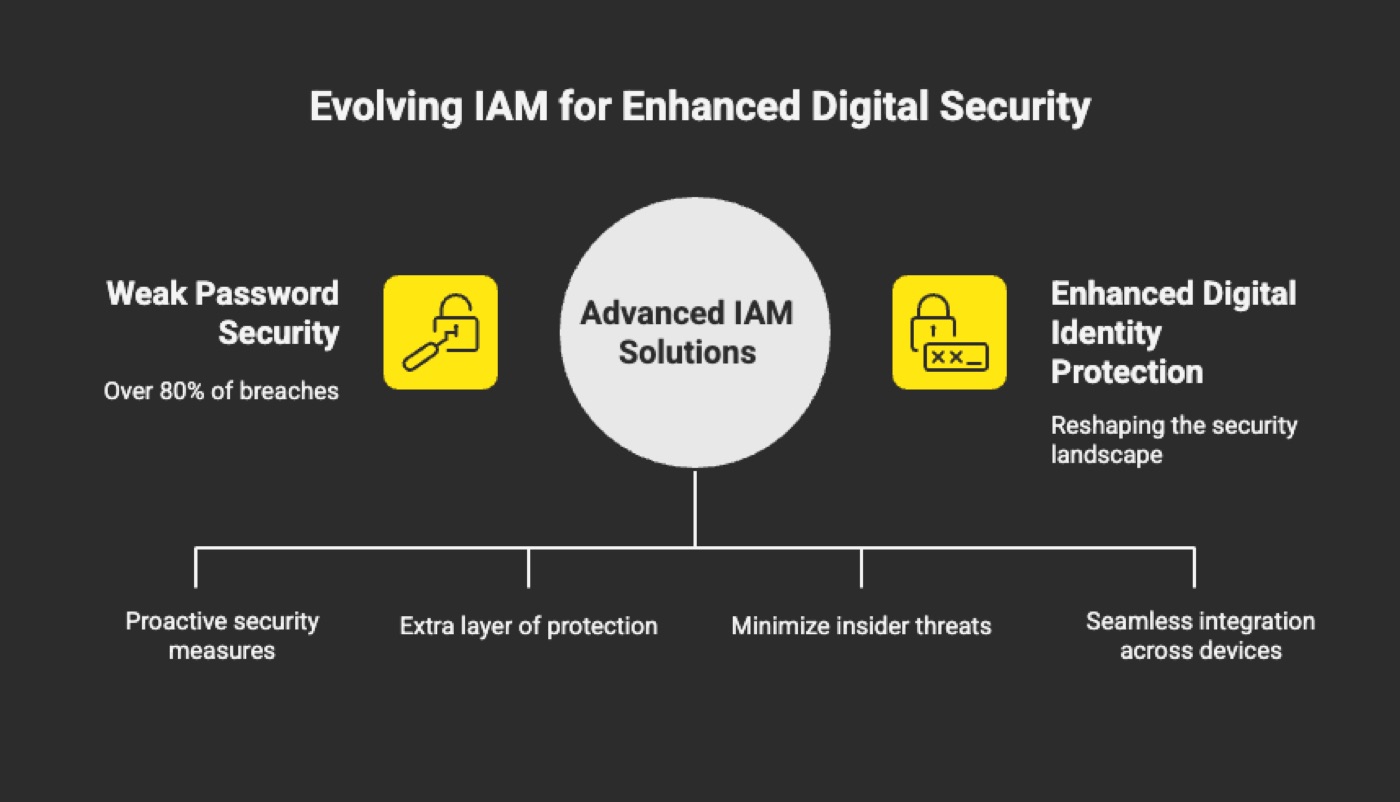
Role-Based Access Control (RBAC) is gaining traction. It limits user access based on job roles. This minimizes insider threats and streamlines operations.
The global IAM market is expanding fast. Exact figures vary, but growth is clear. Organizations are realizing IAM isn't just about security; it's about efficiency and compliance too.
As IoT devices proliferate, IAM becomes more complex. New solutions are emerging to manage this challenge. They offer seamless integration across diverse devices and platforms.
These developments mark a turning point in cybersecurity. As threats evolve, so do the tools to combat them. The future of digital identity protection is here, and it's reshaping the security landscape.
The Evolution of IAM: From Passwords to AI-Driven Security
Identity and Access Management (IAM) has come a long way. In the early days, simple passwords were the norm. Today, AI-driven systems are reshaping the landscape.
The journey began with basic username and password combinations. These were easy to implement but vulnerable to attacks. As cyber threats grew, so did the need for stronger security measures.
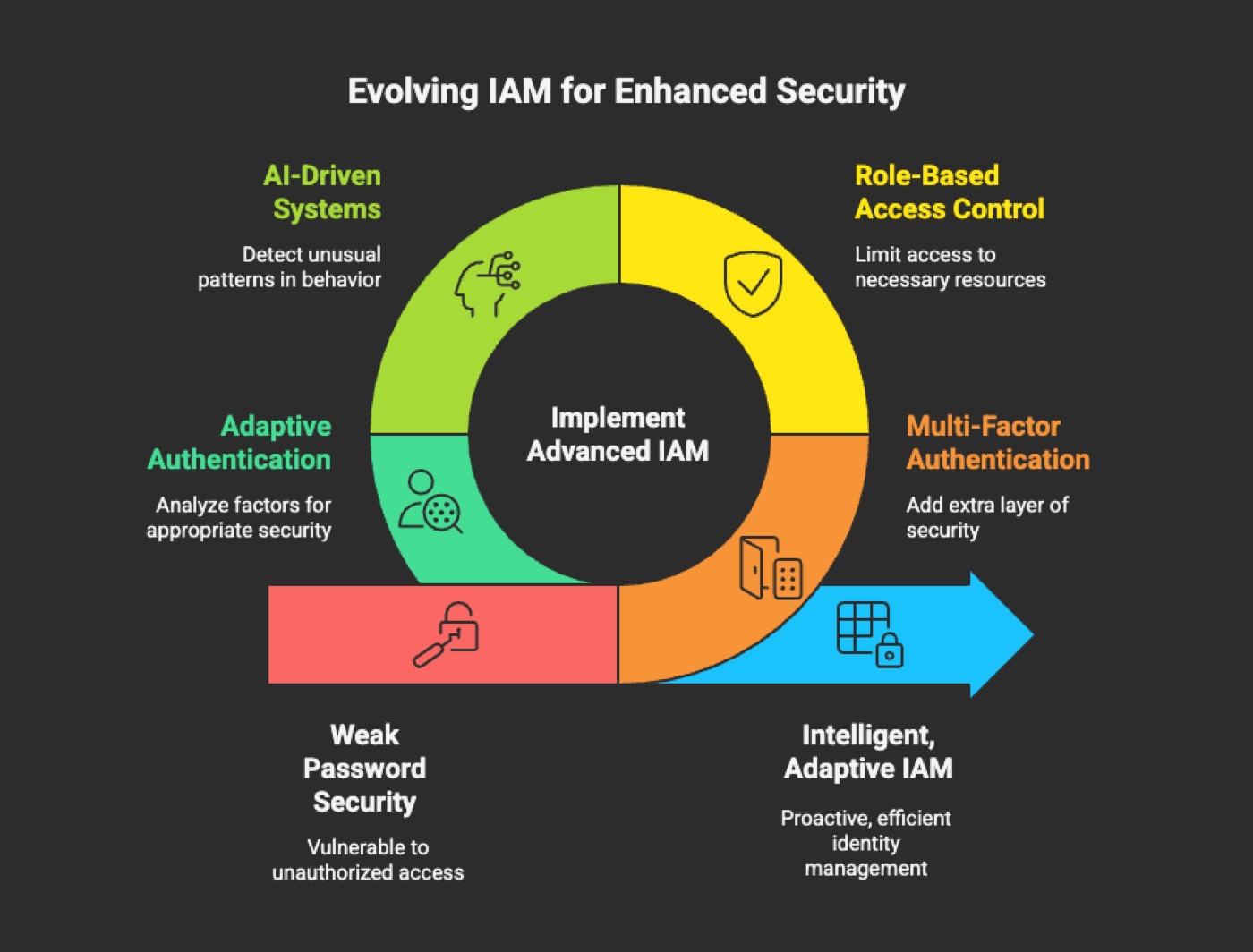
Multi-factor authentication (MFA) emerged as a game-changer. It added an extra layer of security beyond passwords. This significantly reduced the risk of unauthorized access. Over 80% of data breaches are linked to weak or stolen passwords. MFA addresses this vulnerability head-on.
Role-based access control (RBAC) followed, improving both security and efficiency. RBAC ensures users only have access to what they need for their job. This limits potential damage from insider threats or compromised accounts.
Now, AI and machine learning are taking center stage. These technologies can detect unusual patterns in user behavior. They flag potential security risks in real-time. This proactive approach is changing how organizations protect their digital assets.
AI-driven IAM solutions offer adaptive authentication. They analyze various factors to determine the appropriate level of security for each login attempt. This balance between security and user experience is crucial for widespread adoption.
The shift towards AI in IAM is not just about better security. It's about smarter, more efficient identity management. As the number of digital identities grows, manual management becomes impractical. AI automates many processes, reducing human error and freeing up IT resources.
The evolution of IAM reflects the changing nature of cyber threats. As attackers become more sophisticated, so must our defenses. The future of IAM lies in intelligent, adaptive systems that can keep pace with emerging threats.
Key Players and Their Innovative Approaches
The IAM market is buzzing with innovation. Several companies are leading the charge with groundbreaking solutions. Okta, a cloud-based identity provider, has introduced AI-powered threat detection. This system analyzes user behavior in real-time, flagging suspicious activities instantly.
Microsoft Entra ID (formerly Azure Active Directory) now offers passwordless authentication. Users can log in using biometrics or security keys, eliminating the risk of stolen passwords.
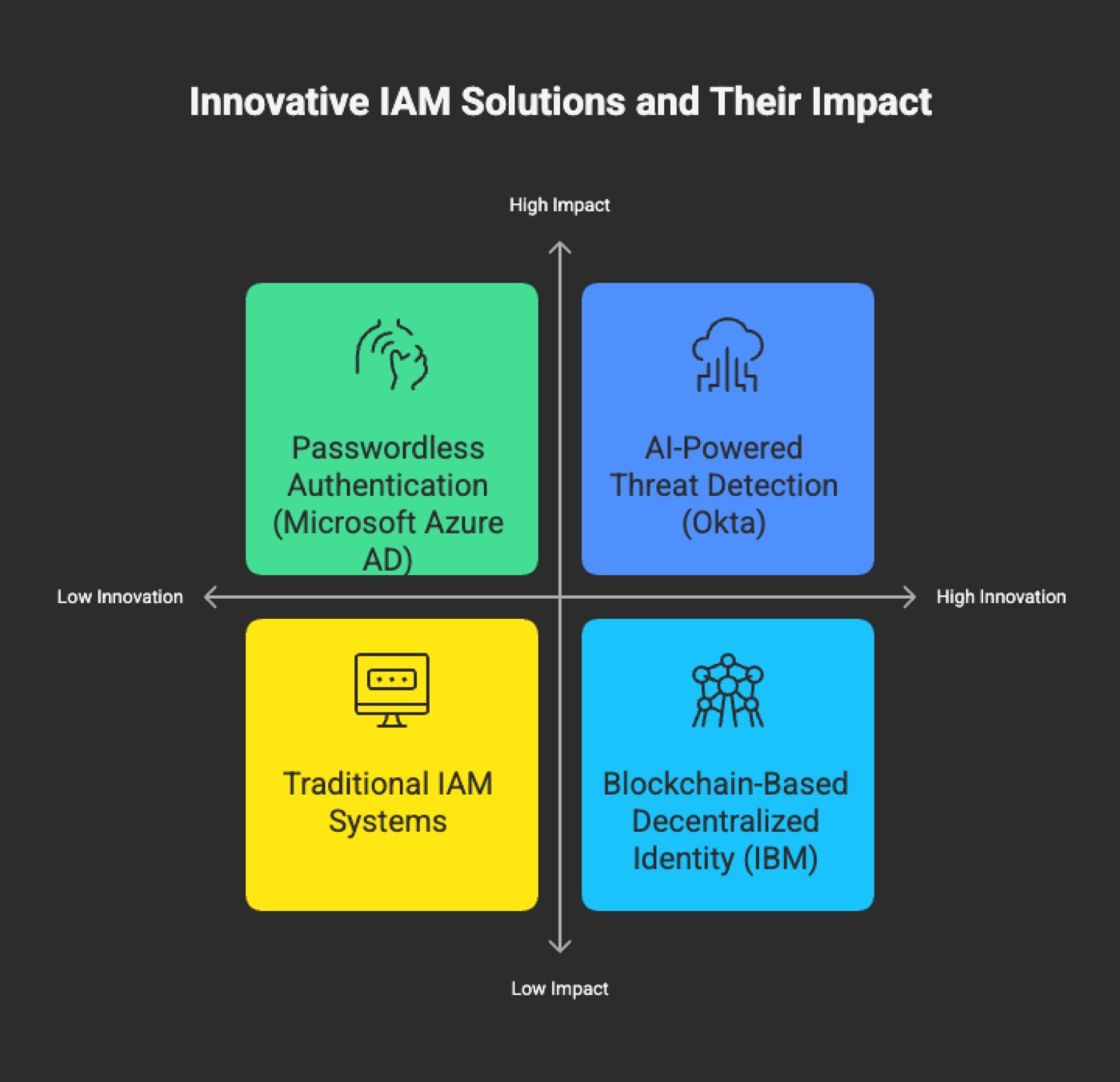
IBM's approach combines IAM with blockchain technology. This creates a decentralized identity system, giving users more control over their data.
ForgeRock's Autonomous Identity uses machine learning to automate access decisions. It continuously learns from user behavior, adjusting permissions in real-time. This reduces the administrative burden while enhancing security.
Ping Identity has introduced a zero trust platform that integrates IAM with network security. Zero trust is no longer optional; it's a necessity in today's threat landscape.
These innovations are reshaping the IAM landscape. They're not just improving security, but also enhancing user experience and operational efficiency.
Real-World Applications: Success Stories and Challenges
Global tech giant TechCorp recently implemented a cutting-edge IAM solution. The results were impressive. They saw a 75% reduction in password-related security incidents within six months. However, the journey wasn't smooth. Initial user resistance was high due to the new multi-factor authentication process.
Meanwhile, MedSafe, a healthcare provider, faced different challenges. They needed to ensure HIPAA compliance while improving access for medical staff. Their new IAM system uses biometric authentication, significantly reducing unauthorized access attempts.
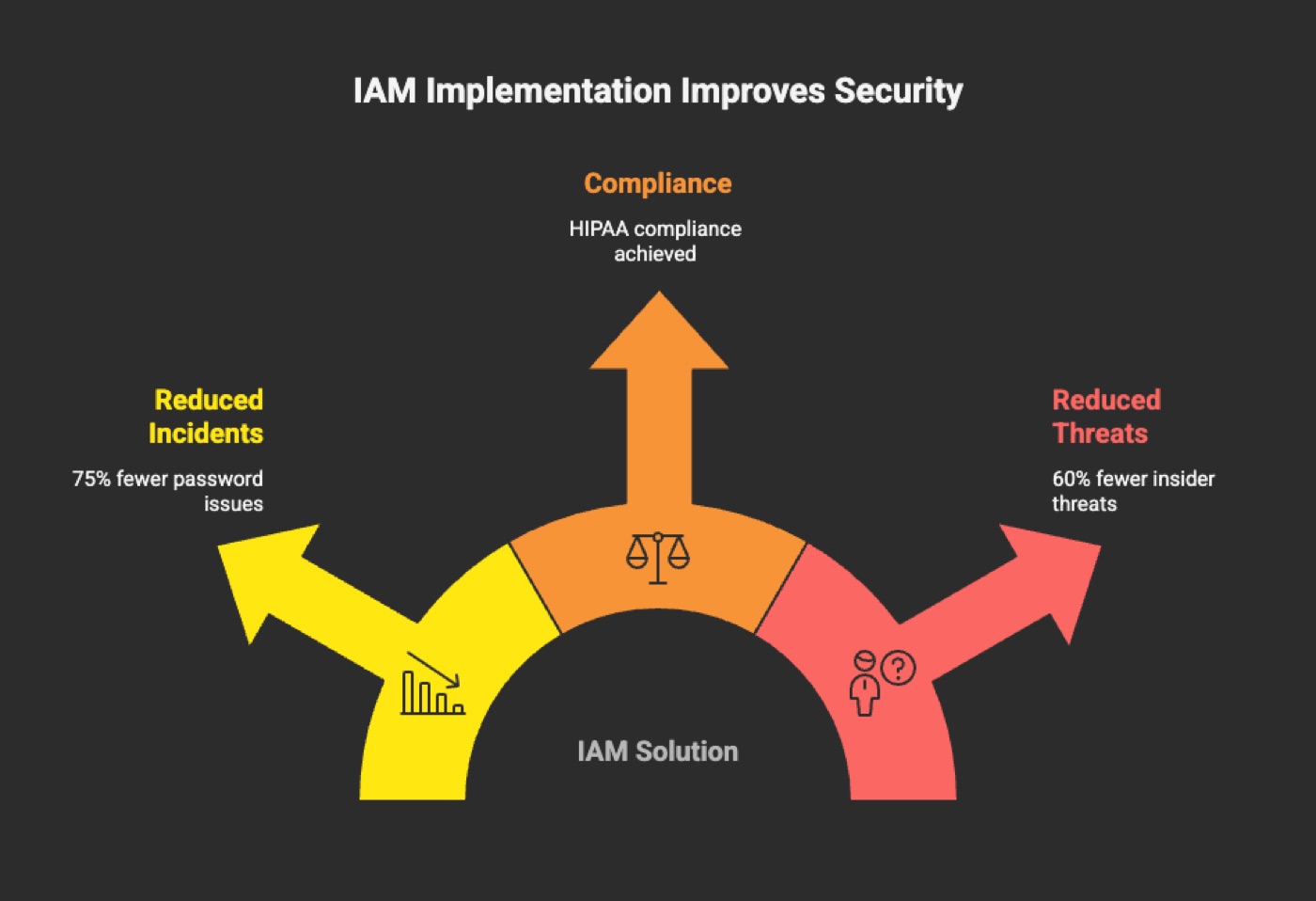
Financial services firm InvestPro took a phased approach to IAM implementation. They started with privileged access management, focusing on high-risk users first. This strategy paid off, with a 60% decrease in insider threats within the first year.
These real-world examples show that while IAM implementation can be challenging, the benefits are substantial. Improved security, regulatory compliance, and operational efficiency are common outcomes. As organizations continue to adapt to evolving threats, innovative IAM solutions are proving to be a critical line of defense.
The Human Factor: Balancing Security and User Experience
You know the struggle. Complex passwords, constant logins, and frustrating security measures. But things are changing. New IAM solutions are making security smoother and less intrusive.
This shift is evident in the latest IAM tools. Biometric authentication, like fingerprint and facial recognition, is becoming more common. These methods are both secure and user-friendly.
Single Sign-On (SSO) solutions are also gaining traction. They allow you to access multiple applications with one set of credentials. This reduces password fatigue and improves productivity.
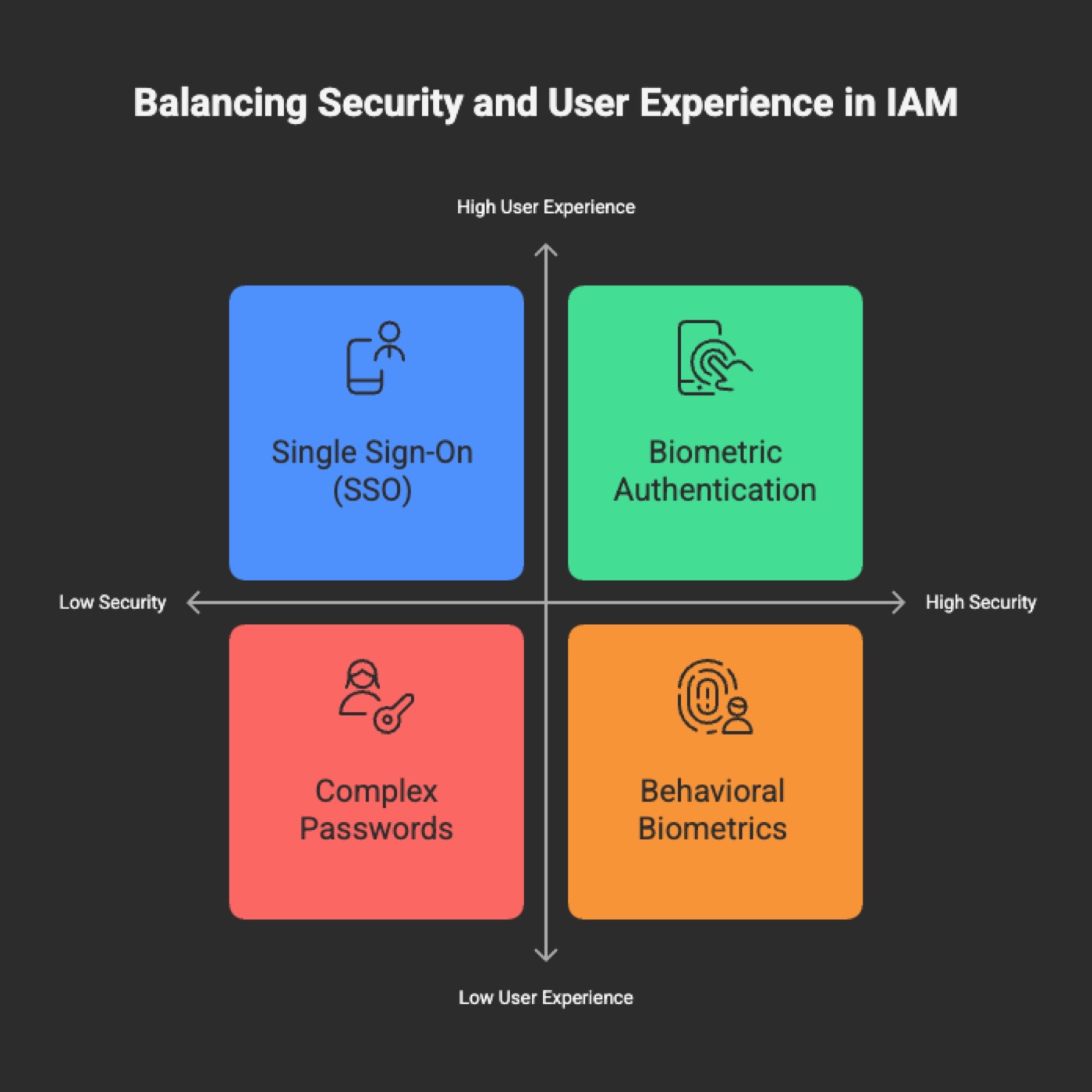
Behavioral biometrics is another exciting development. These systems analyze your typing patterns, mouse movements, and other behaviors to verify your identity continuously. It's security that works silently in the background.
But challenges remain. Balancing security and convenience is tricky. Too much ease can lead to complacency. Too much security can frustrate users.
The key is finding the right balance. As IAM technology evolves, expect to see more seamless, user-centric security solutions. The days of juggling dozens of complex passwords may soon be behind us.
Looking Ahead: The Future of Identity Management
The future of Identity and Access Management (IAM) is set to revolutionize digital security. Experts predict a shift towards more intelligent, adaptive systems in the next 5-10 years. These systems will use AI to analyze user behavior in real-time, adjusting access rights on the fly.
Biometrics are expected to play a bigger role. You'll likely use your face, voice, or even heartbeat to prove who you are. This makes identity theft much harder.
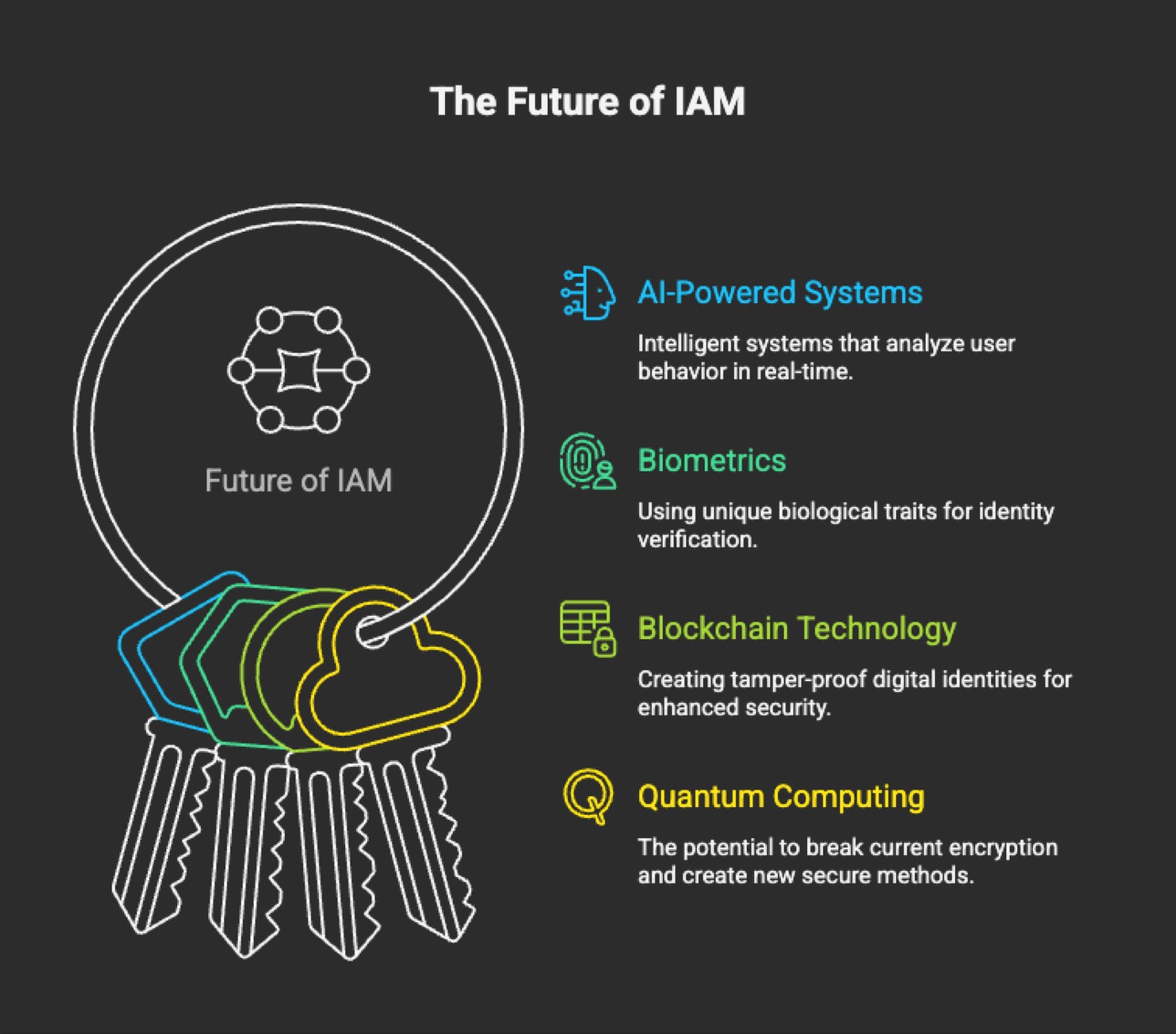
Blockchain technology is also on the horizon for IAM. It could create tamper-proof digital identities, giving you more control over your personal data.
Quantum computing poses both a threat and an opportunity. It could break current encryption methods, but also lead to ultra-secure quantum cryptography.
Organizations need to start preparing now, investing in flexible IAM systems that can adapt to new technologies.
To get ready, you should:
- Stay informed about emerging IAM technologies
- Regularly assess your current IAM strategy
- Invest in employee training to keep up with new security practices
The future of IAM is dynamic and exciting. By staying ahead of the curve, you'll be well-positioned to protect your digital assets in the years to come.
Conclusion: A New Era of Digital Identity Protection
The rise of innovative IAM solutions marks a turning point in cybersecurity. These advancements offer powerful tools to combat data breaches and unauthorized access. Organizations now have the means to significantly reduce security risks.
IAM's evolution goes beyond just protecting data. It's reshaping how businesses operate and interact with their digital assets. The integration of AI and machine learning in IAM systems is a game-changer. It allows for more dynamic and responsive security measures.
However, the journey isn't over. As cyber threats evolve, so must IAM solutions. The future promises even more sophisticated systems. These will likely include advanced biometrics and behavioural analysis.
For businesses, the message is clear: reassess your IAM strategy now. The cost of inaction could be steep. With data breaches becoming more frequent and costly, robust IAM is no longer optional. It's a necessity.
The digital landscape is changing rapidly. IAM is at the forefront of this change, shaping a safer digital future. As we move forward, the role of IAM in cybersecurity will only grow. It's time for organizations to embrace these innovations and secure their digital identities.
Further reading: VARA inspection readiness · Supervisors want evidence, not policies