Edge AI: Faster Decisions by Processing Data Locally
What edge AI is, how model optimization makes it run on small devices, where it is used, and the market, security and privacy trade-offs.

Deploying AI algorithms on edge devices is reshaping how we process data. This trend is crucial for real-time decision-making. By processing data directly on local devices, edge AI reduces the time it takes to analyze information. This shift is not just about speed; it’s about making smarter, faster decisions where they matter most. As industries adopt this approach, the demand for real-time data processing grows. Edge AI is becoming a key player in enhancing operational efficiency across various sectors.
Fundamentals of Edge AI
Edge AI refers to the deployment of artificial intelligence algorithms directly on devices, enabling local data processing. This approach offers several advantages. First, it reduces latency by minimizing the distance data must travel. This is crucial for applications requiring real-time decision-making. Second, it enhances data privacy by keeping information on the device rather than sending it to distant servers. This local processing also leads to bandwidth savings, as less data needs to be transmitted over networks.
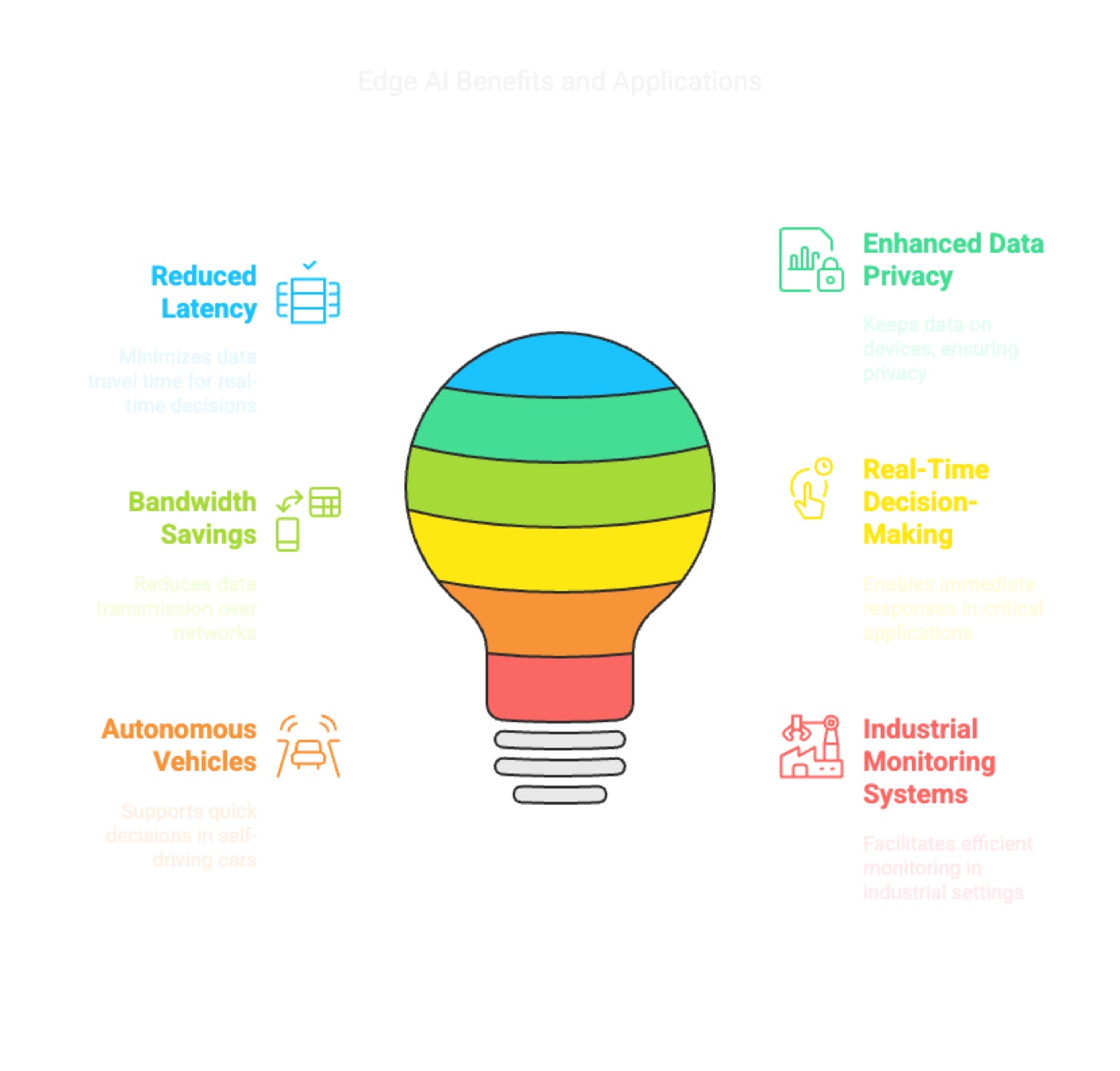
The role of Edge AI is increasingly important as more devices become interconnected. By processing data at the source, Edge AI supports faster and more efficient operations across various sectors. This capability is particularly beneficial in environments where immediate responses are necessary, such as in autonomous vehicles or industrial monitoring systems. As the demand for real-time data processing grows, Edge AI continues to evolve, offering new possibilities for innovation and application.
Advanced Aspects of Edge AI
Edge AI is transforming how we process data on devices with limited power. To make this possible, model optimization is key. Techniques like quantization help by reducing the size of AI models without losing much accuracy. Pruning goes a step further by removing unnecessary parts of the model, making it faster and more efficient. Knowledge distillation is another method that trains smaller models to mimic larger, more complex ones.
Interoperability with cloud systems is crucial. Edge devices must work seamlessly with cloud platforms to ensure data can be shared and analyzed effectively. This connection allows for more complex computations to happen in the cloud while keeping quick, local decisions on the device.
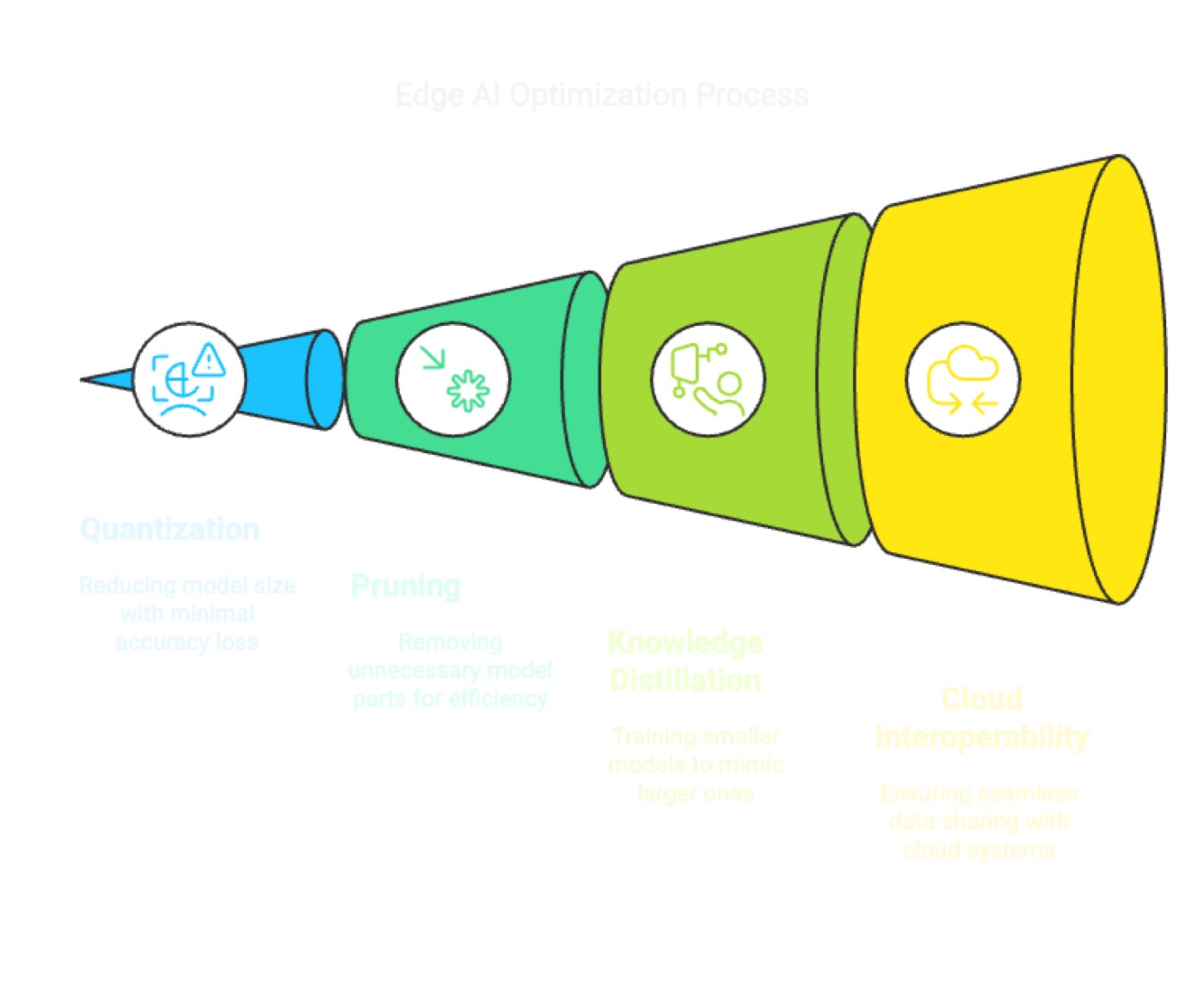
These advancements make Edge AI a powerful tool for real-time decision-making. As technology evolves, the ability to optimize models and ensure they work well with cloud systems will be essential. This will drive the adoption of Edge AI across various industries, enhancing their ability to process data quickly and efficiently.
Practical Applications of Edge AI
Edge AI is revolutionizing various sectors by enabling smarter operations and decision-making. In smart energy systems, it analyzes consumption patterns in real-time, optimizing energy use and reducing waste. This capability is crucial for managing resources efficiently.
In industrial settings, edge AI provides valuable insights into machine health and process optimization. It helps predict maintenance needs, minimizing downtime and enhancing productivity. This proactive approach is transforming how industries operate.
Environmental monitoring benefits significantly from edge AI. It collects data on air quality and weather conditions, providing timely information for better environmental management. This data-driven approach aids in addressing ecological challenges effectively.
Water management systems use edge AI to detect anomalies in usage patterns. By identifying leaks or unusual consumption, it ensures sustainable water use. This technology is vital for conserving water resources in urban and rural areas.
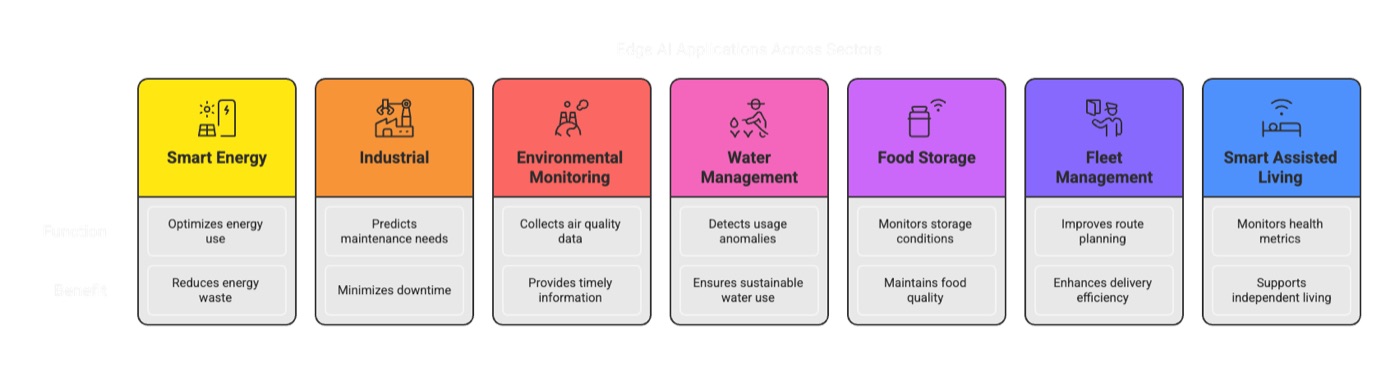
In food storage, edge AI monitors conditions to maintain quality. It tracks temperature and humidity, ensuring that food remains fresh. This application is essential for reducing spoilage and ensuring food safety.
Fleet management leverages edge AI for real-time tracking and logistics improvement. It enhances route planning and delivery efficiency, reducing operational costs. This capability is critical for businesses relying on timely deliveries.
Smart assisted living solutions use edge AI to monitor health metrics for elderly care. It supports independent living by providing alerts and insights into health conditions. This application is key to improving the quality of life for seniors.
Addressing Common Misconceptions
Edge AI is often misunderstood. Many believe it will replace cloud computing. This isn't the case. Instead, edge AI works alongside the cloud. It processes data locally, reducing the load on cloud systems. This collaboration enhances overall efficiency.
Small businesses might think edge AI is out of reach. However, it's becoming more accessible. Costs are decreasing, and tools are improving. This opens doors for smaller enterprises to benefit from edge AI. They can now leverage its capabilities without needing massive infrastructure.
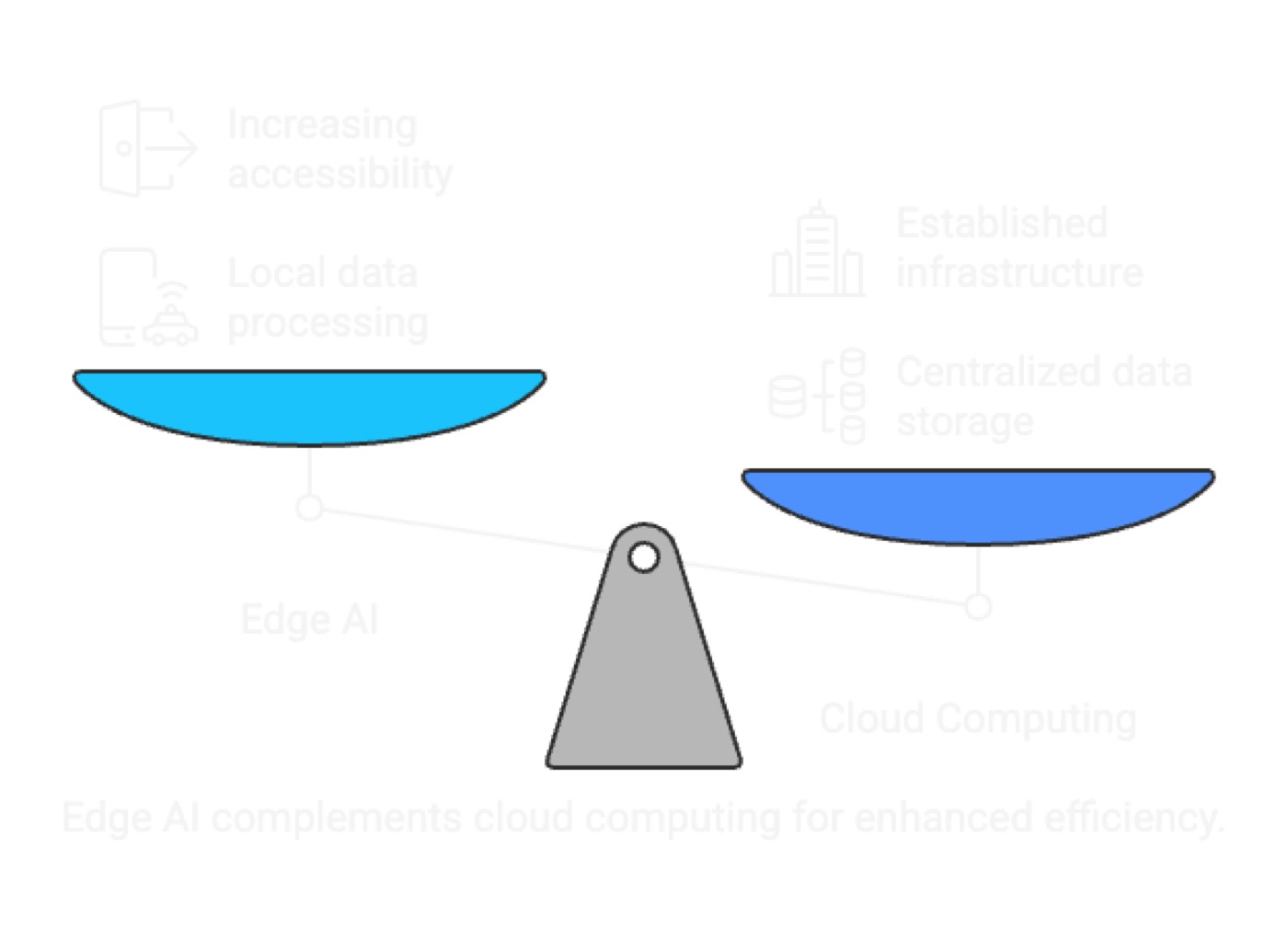
Understanding these points is crucial. Edge AI offers unique benefits. Yet, it doesn't stand alone. It complements existing technologies. By working together, they create a more robust system. This partnership is key to unlocking new possibilities.
Latest Developments in Edge AI
Recent advancements in edge processors are reshaping the landscape. Companies like NVIDIA and Qualcomm are leading the charge. They are developing processors that can handle complex AI tasks on small devices. This means more power-efficient and faster processing capabilities.
Federated learning is also gaining traction. It allows devices to learn from data without sharing it. This approach enhances privacy by keeping sensitive information on local devices. It reduces the risk of data breaches and ensures compliance with data regulations.
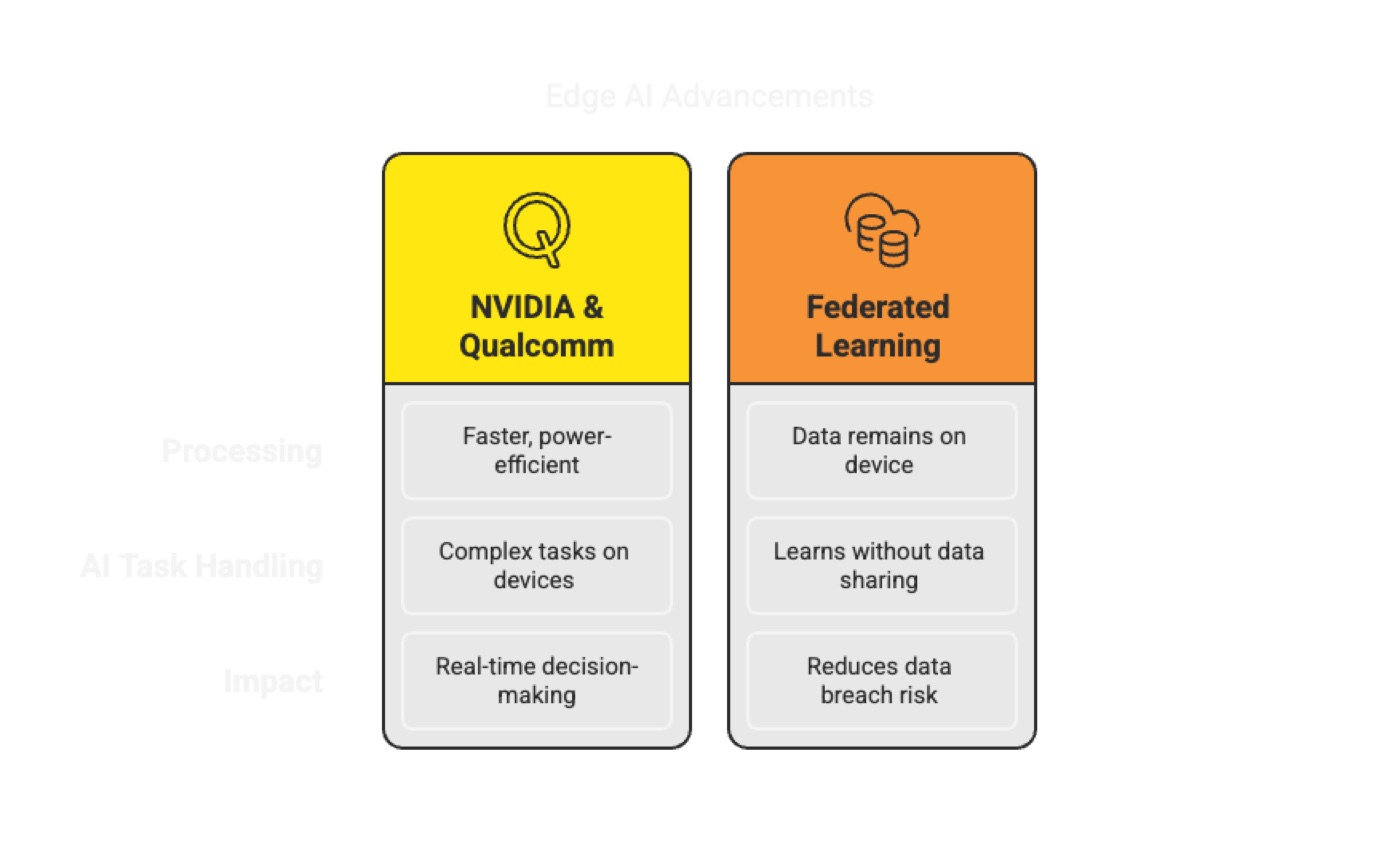
These developments are crucial for the future of AI. They enable real-time decision-making in various applications. From smart homes to autonomous vehicles, the impact is significant. As technology evolves, the potential for edge AI continues to grow.
Edge AI Implementation Strategy
Understanding specific use cases is crucial for successful edge AI implementation. Each application has unique requirements and challenges. Collaborating with AI and domain-specific experts is essential. They bring the necessary knowledge to tailor solutions effectively. This collaboration ensures that edge AI solutions meet the precise needs of different industries.
Continuous monitoring and updating of AI models are vital. The technology landscape evolves rapidly. Regular updates help maintain the relevance and accuracy of AI systems. This ongoing process is necessary for adapting to new data and changing conditions. It also helps in identifying potential issues early and addressing them promptly.
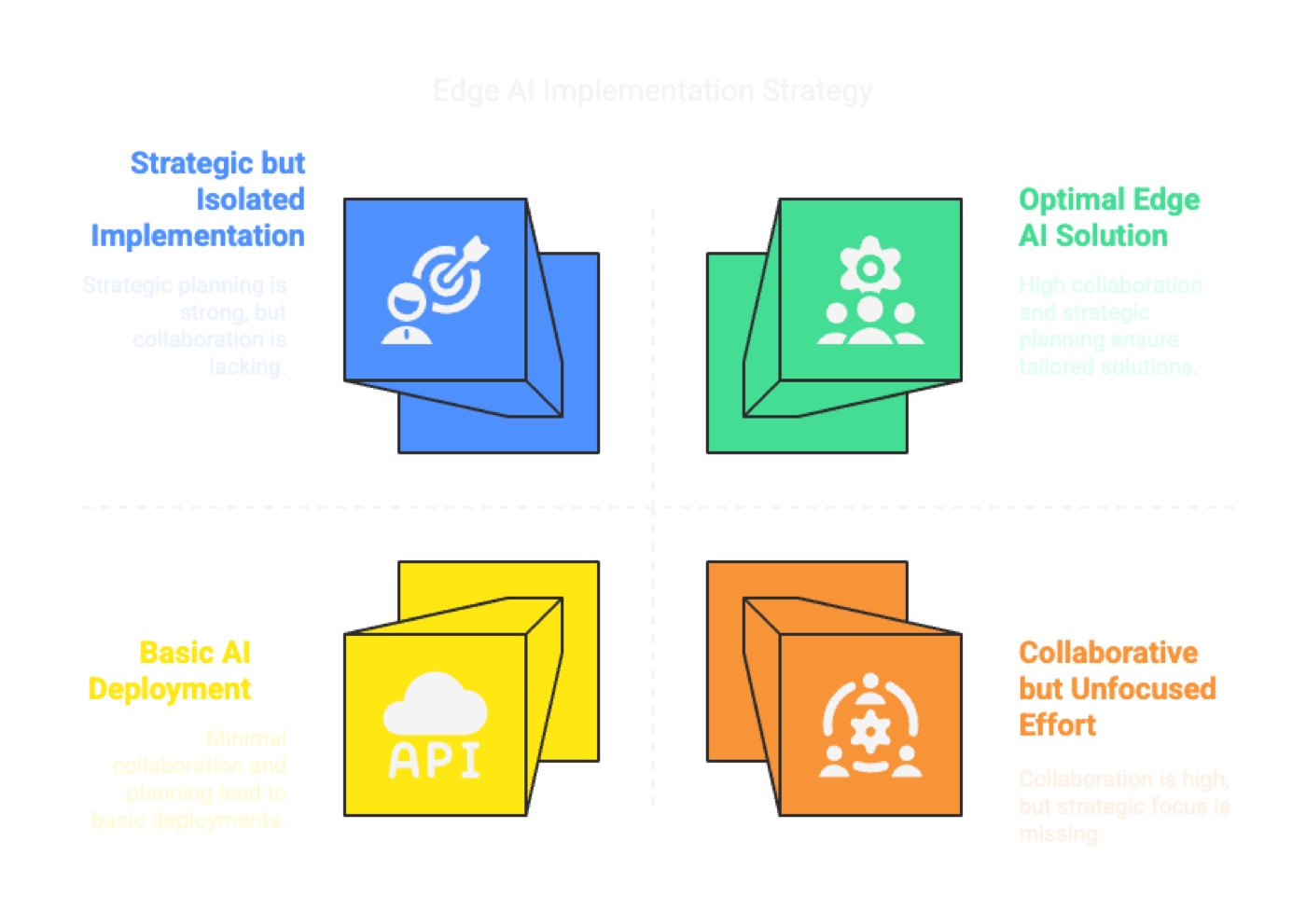
Experts emphasize the importance of a strategic approach. Organizations should assess their specific goals and constraints. This assessment guides the selection of appropriate edge AI technologies. It also aids in aligning AI initiatives with broader business objectives. Thoughtful planning and expert guidance are key to unlocking the full potential of edge AI.
Current Market Trends and Statistics
The global market for edge AI is on an impressive growth trajectory. Valued at USD 18.3 billion in 2024, it is expected to skyrocket to USD 84.0 billion by 2033. This growth reflects a robust Compound Annual Growth Rate (CAGR) of 17.53% from 2025 to 2033. Alternatively, some estimates suggest the market could reach USD 66.47 billion by 2030, with a CAGR of 21.7% from 2025 to 2030. These figures underscore the increasing demand for edge AI solutions across various sectors.
Industries such as healthcare, manufacturing, telecommunications, and automotive are at the forefront of adopting edge AI. They aim to enhance operational efficiency and reduce latency by processing data closer to its source. This shift is driven by the growing need for real-time data processing and the proliferation of IoT devices.
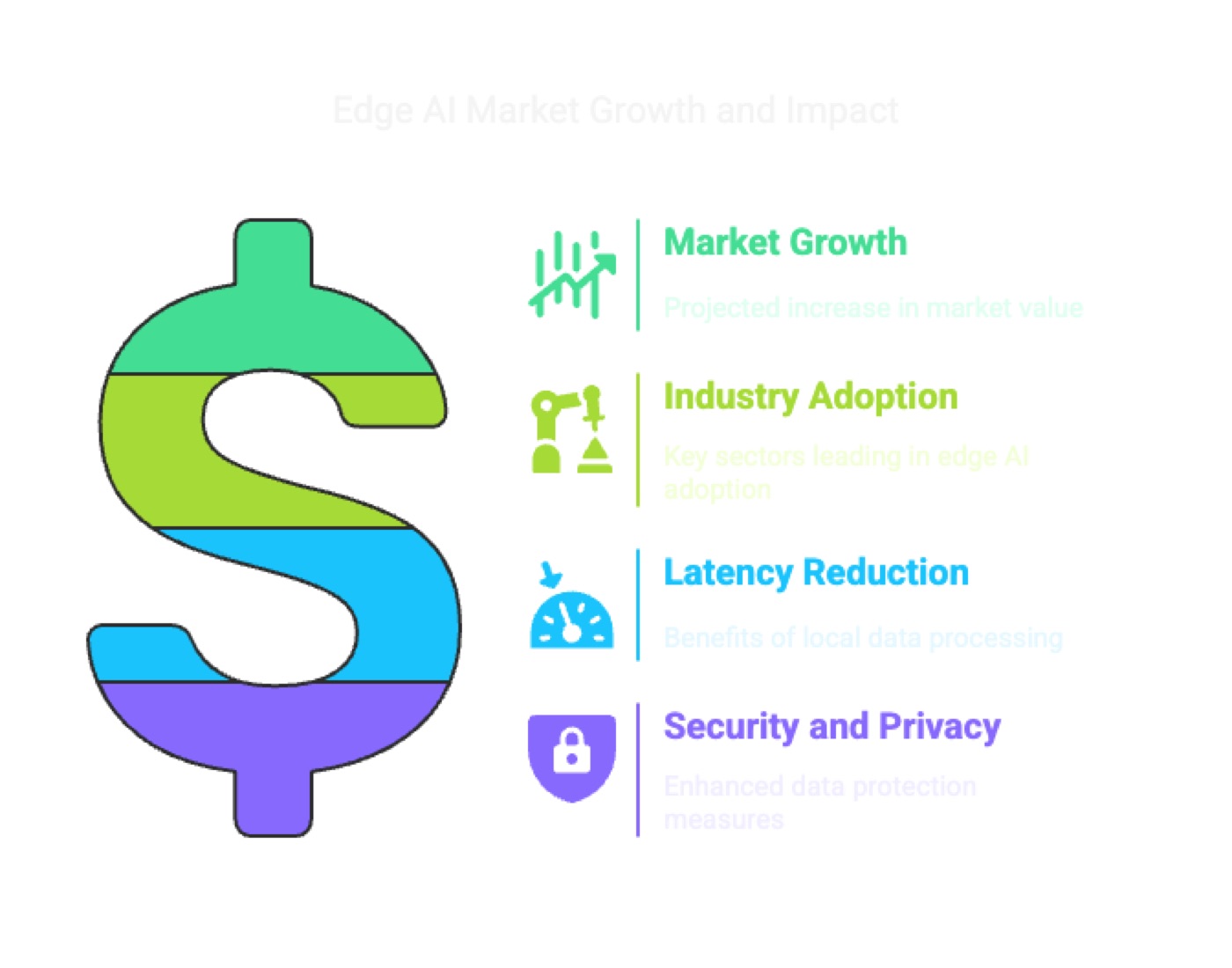
Edge AI significantly reduces latency by processing data directly on local devices, eliminating the need for data to travel across networks. This approach not only saves bandwidth but also improves energy efficiency, although specific savings figures are not detailed. The role of edge AI in preventing data breaches and complying with data sovereignty regulations is also noteworthy. By processing data locally, edge AI minimizes the risk of breaches and aligns with regulations like GDPR.
In summary, the edge AI market is poised for substantial growth. Its adoption across leading industries highlights its potential to transform data processing and decision-making. As the market expands, the focus will likely remain on enhancing performance, security, and privacy.
Future Developments and Challenges
Edge AI is on the brink of major advancements. New edge processors are being developed to handle complex AI tasks. These processors will be more powerful yet consume less energy. This will allow small devices to perform tasks that once required large computers.
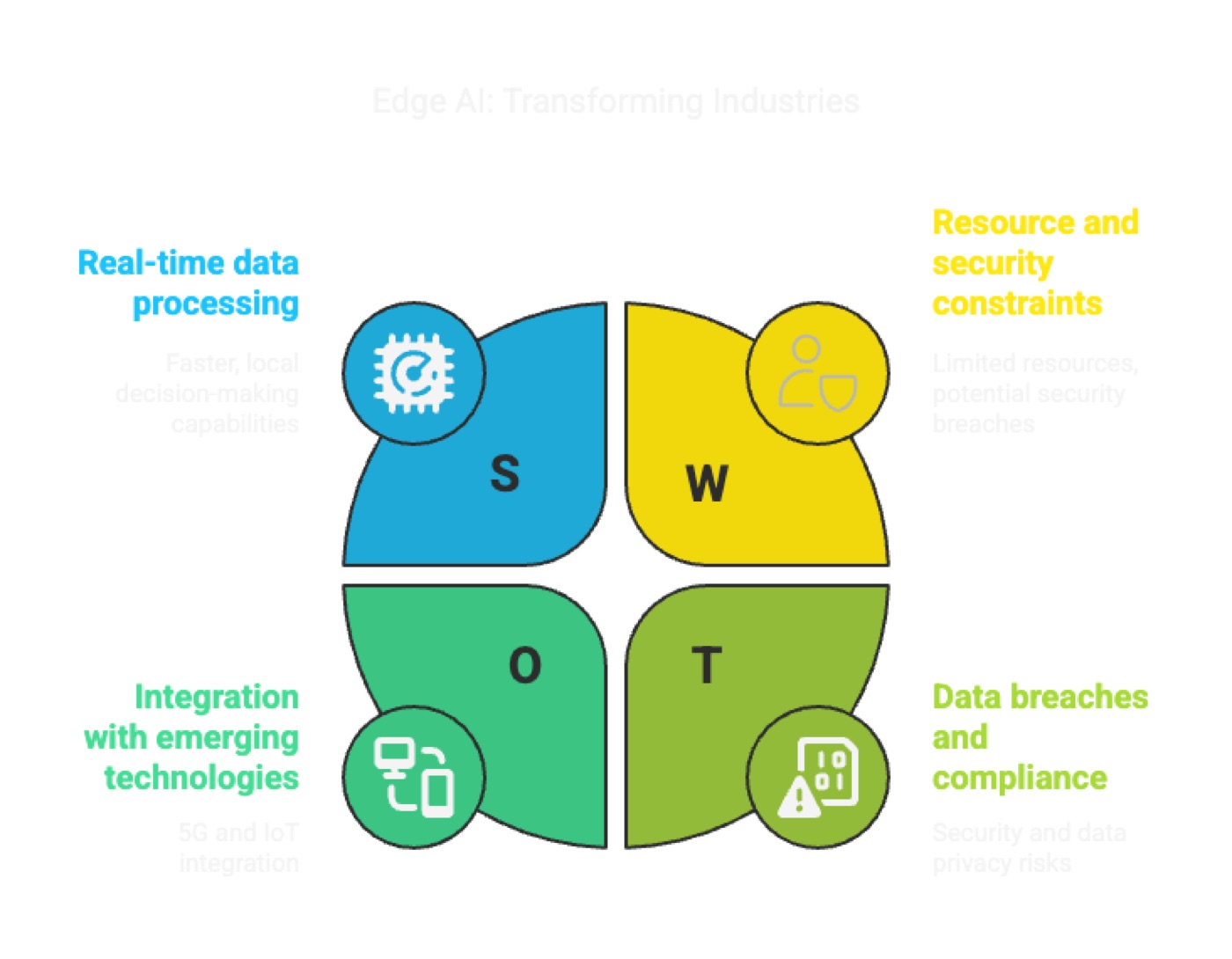
Integration with 5G and IoT is another exciting development. This combination promises faster data transmission and real-time analysis. It could revolutionize industries by enabling instant decision-making. Imagine a world where machines communicate instantly, making processes smoother and more efficient.
However, challenges remain. Edge devices often have limited resources. This can restrict their capabilities. Security is another concern. Edge devices can be vulnerable to physical tampering and cyber attacks. Developers are working on solutions like lightweight encryption and secure enclaves to tackle these issues.
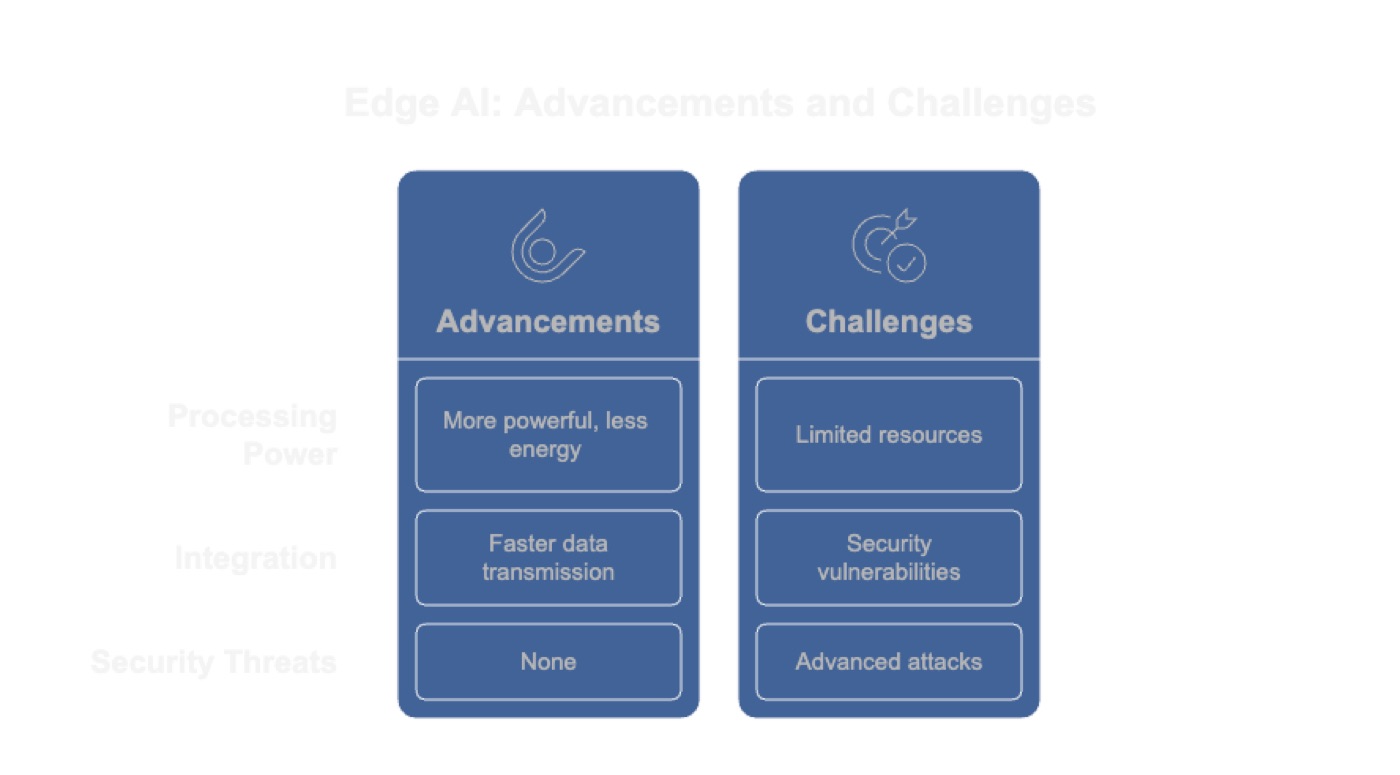
Advanced attacks such as deep leakage from gradients and model inversion are also threats. These attacks can extract sensitive information from AI models. Researchers are developing new methods to protect against these vulnerabilities.
In summary, while edge AI holds great promise, it must overcome significant hurdles. Continued innovation and collaboration will be key to unlocking its full potential.
Final Thoughts
Edge AI is reshaping how industries operate. By processing data locally, it offers faster decision-making, crucial for sectors like healthcare and automotive. As more devices adopt this technology, the demand for real-time data processing will only grow. This shift promises to tackle modern challenges, from enhancing operational efficiency to improving data privacy. As we look ahead, the integration of edge AI with technologies like 5G will unlock new possibilities. However, it is essential to address challenges such as resource constraints and security risks. With ongoing advancements, edge AI is set to play a pivotal role in the future landscape of technology. slightly different perspective. It places the market size at USD 20.78 billion in 2024. According to this source, the market will reach USD 66.47 billion by 2030, with a CAGR of 21.7% from 2025 to 2030.
The number of devices utilizing edge AI is not specifically quantified. However, the surge in IoT adoption and the need for real-time data processing are key drivers. Industries such as healthcare, manufacturing, telecommunications, and automotive are at the forefront. They leverage edge AI to enhance operational efficiency and reduce latency.
Edge AI's impact on performance is significant. By processing data locally, it reduces latency compared to cloud-based solutions. This local processing also saves bandwidth by minimizing data transmission to cloud servers. While exact figures on bandwidth and energy savings are not detailed, the benefits are evident.
Security and privacy are enhanced through local data processing. This reduces the risk of data breaches and aids compliance with data sovereignty regulations like GDPR. Federated learning further protects privacy by allowing collaborative model training without sharing raw data.
Conclusion
Looking ahead, advancements in edge processor technology are anticipated. These include the development of low-power processors and specialized chips. Integration with 5G and IoT will enable new applications, driven by the demand for real-time data processing. Challenges such as resource constraints and security risks persist. However, ongoing developments in encryption methods and secure enclaves aim to address these issues.