Emerging Tech: AI, Quantum Computing and Biotech Trends
Key trends in AI, quantum computing, biotechnology and other emerging technologies, and the opportunities and risks they bring for industry.

Introduction
Emerging technologies are reshaping our world. From artificial intelligence to quantum computing, these innovations hold immense potential to transform industries and solve modern challenges. This article explores key trends in AI, quantum computing, biotechnology, and sustainability-driven technologies. Each section highlights how these technologies are influencing various sectors and what the future might hold. Understanding these trends is crucial as they continue to impact society, governance, and the global economy.
Emerging Trends
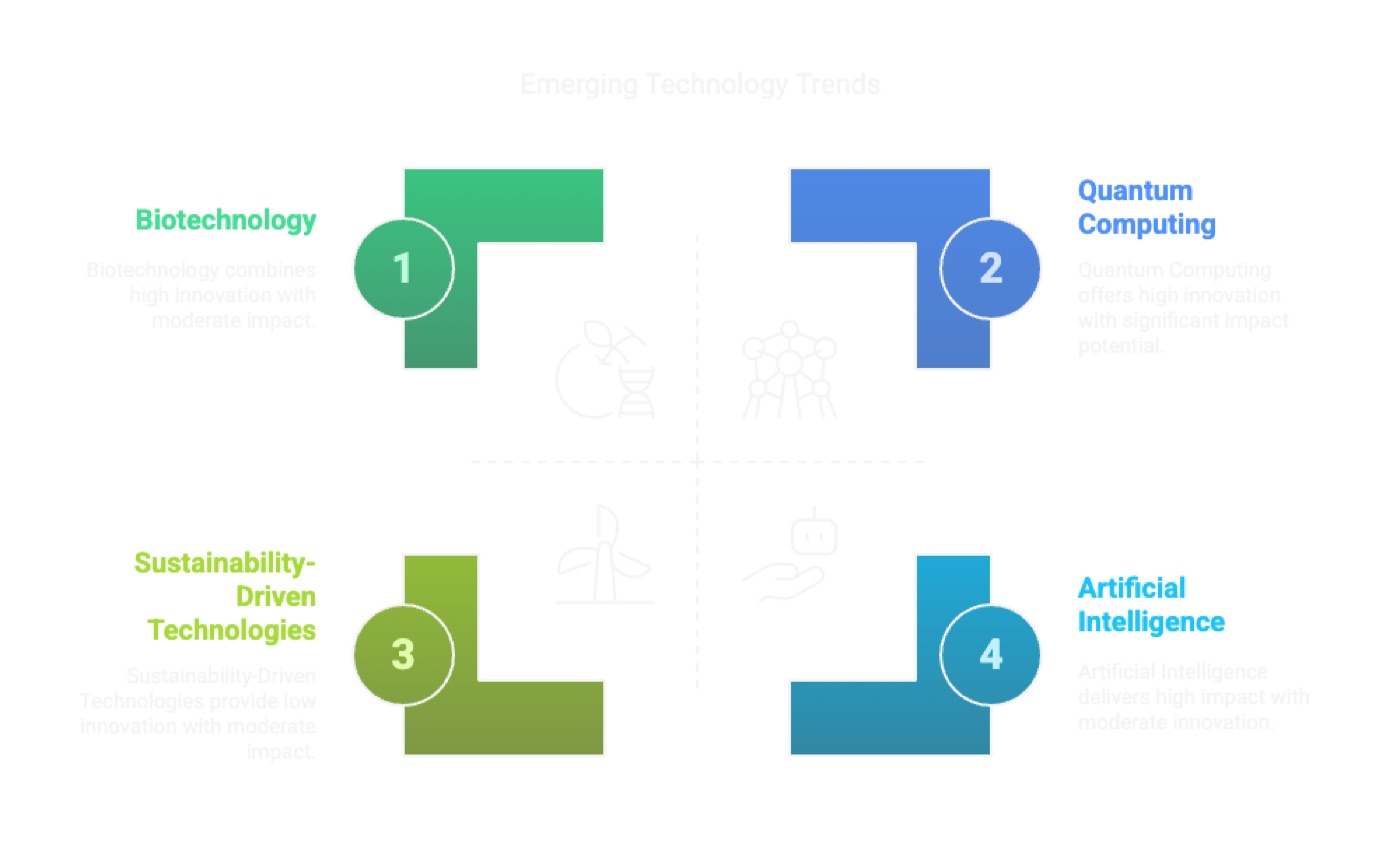
Emerging Trend: Artificial Intelligence (AI)
Artificial Intelligence is changing the way industries operate. By 2025, the AI market is expected to reach around USD 757.58 billion. This growth is driven by its use in many fields—healthcare, finance, and automotive industries are just a few examples.
AI helps automate tasks, making processes faster and more accurate. In healthcare, it aids in diagnostics and personalized medicine. In finance, it enhances fraud detection and data analysis. The automotive sector sees AI in self-driving technology. These applications show AI's role in improving efficiency across sectors.
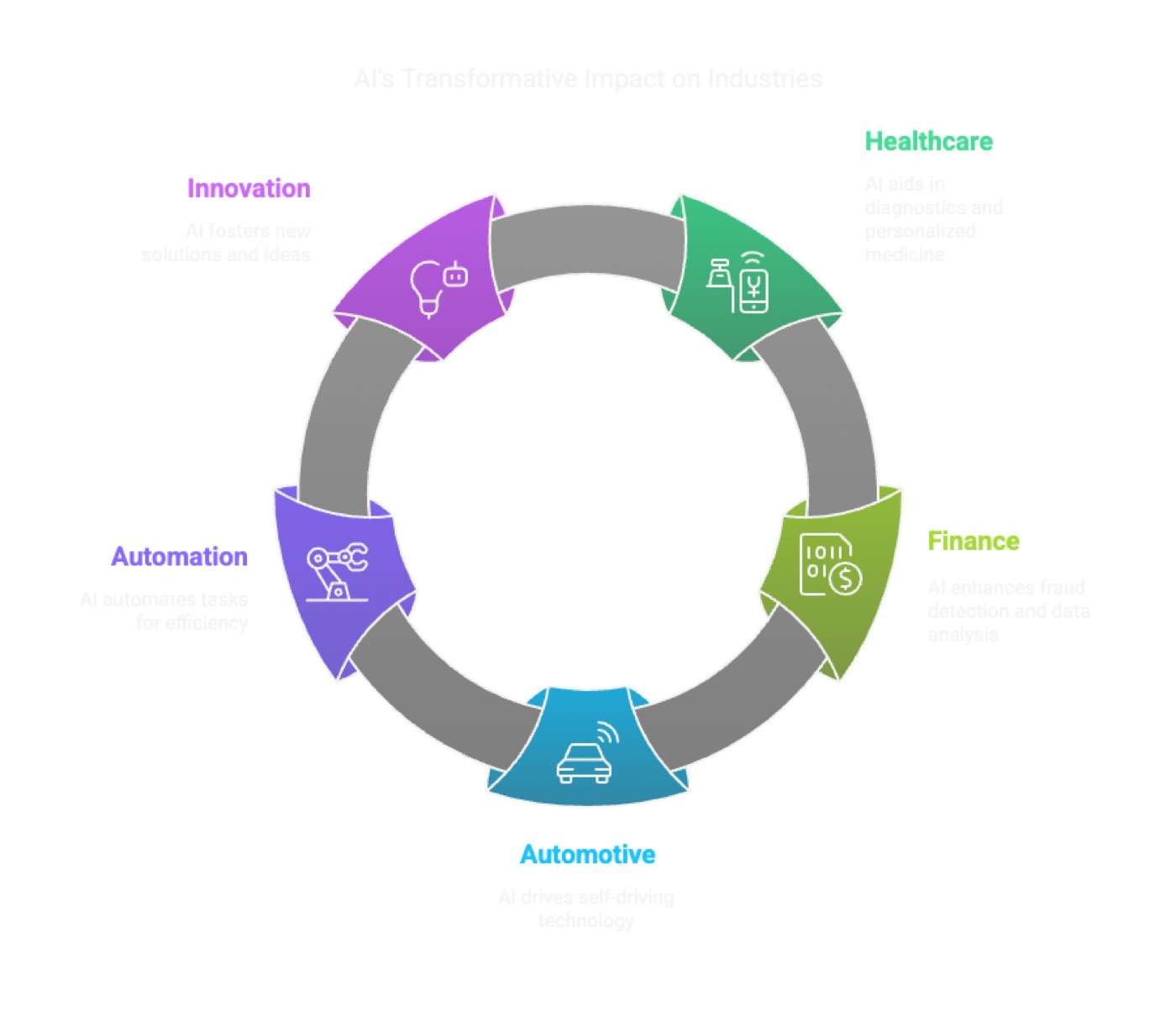
Artificial Intelligence (AI) is reshaping the landscape of modern industries. It automates routine tasks, reduces errors, and boosts productivity. AI is not just a tool; it's a catalyst for change. Each sector leverages AI to solve unique challenges, proving its versatility. As AI continues to evolve, its impact on efficiency and innovation will only deepen.
Emerging Trend: Quantum Computing
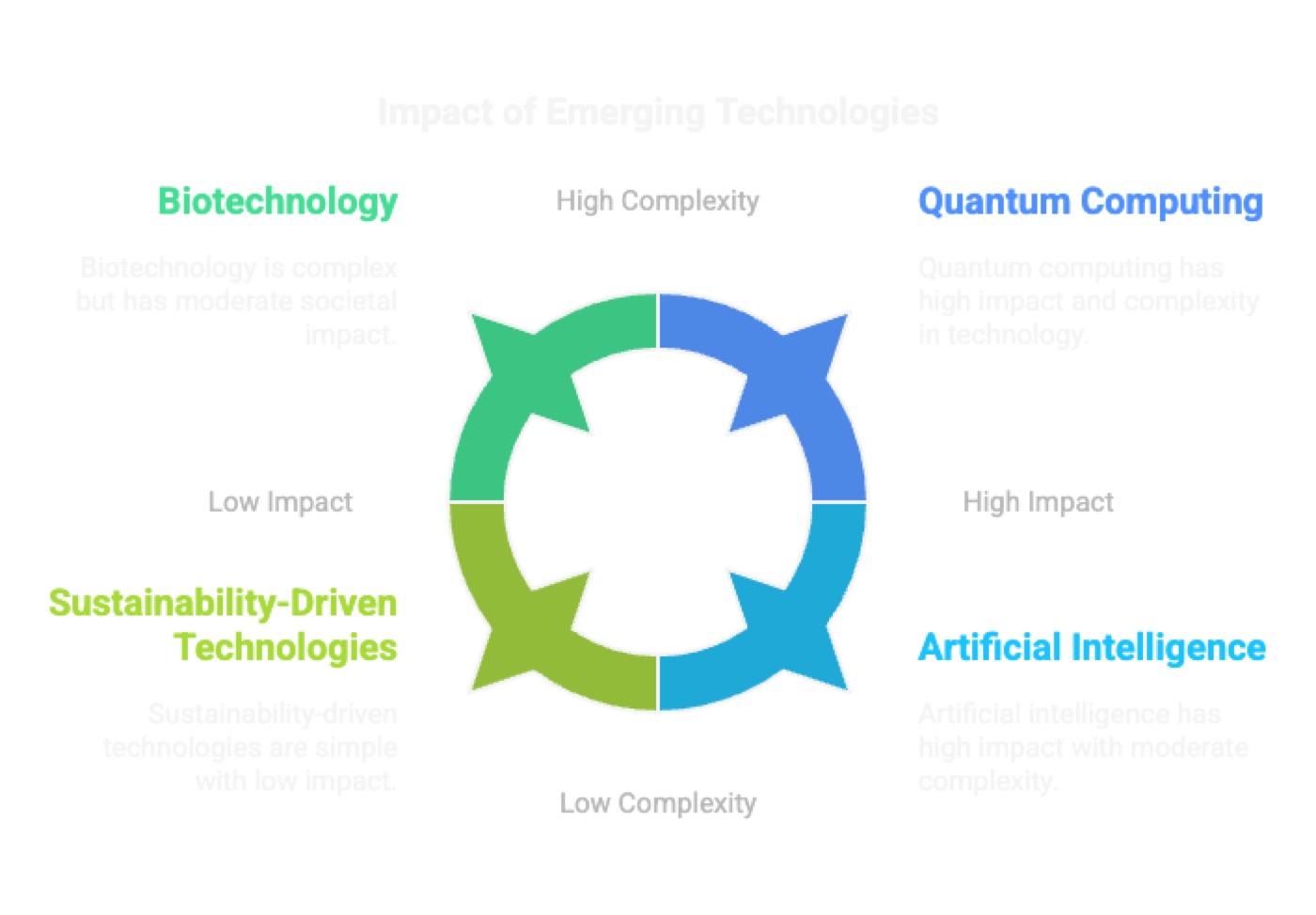
Quantum computing stands at the forefront of technological advancement. Unlike traditional computers, which use bits, quantum computers use qubits—allowing them to process information at unprecedented speeds. The potential for solving complex problems is immense.
Cryptography is one area where quantum computing shows great promise. It could revolutionize data security by breaking current encryption methods. However, this also poses significant security challenges. Researchers are working to develop quantum-resistant algorithms to counteract these threats.
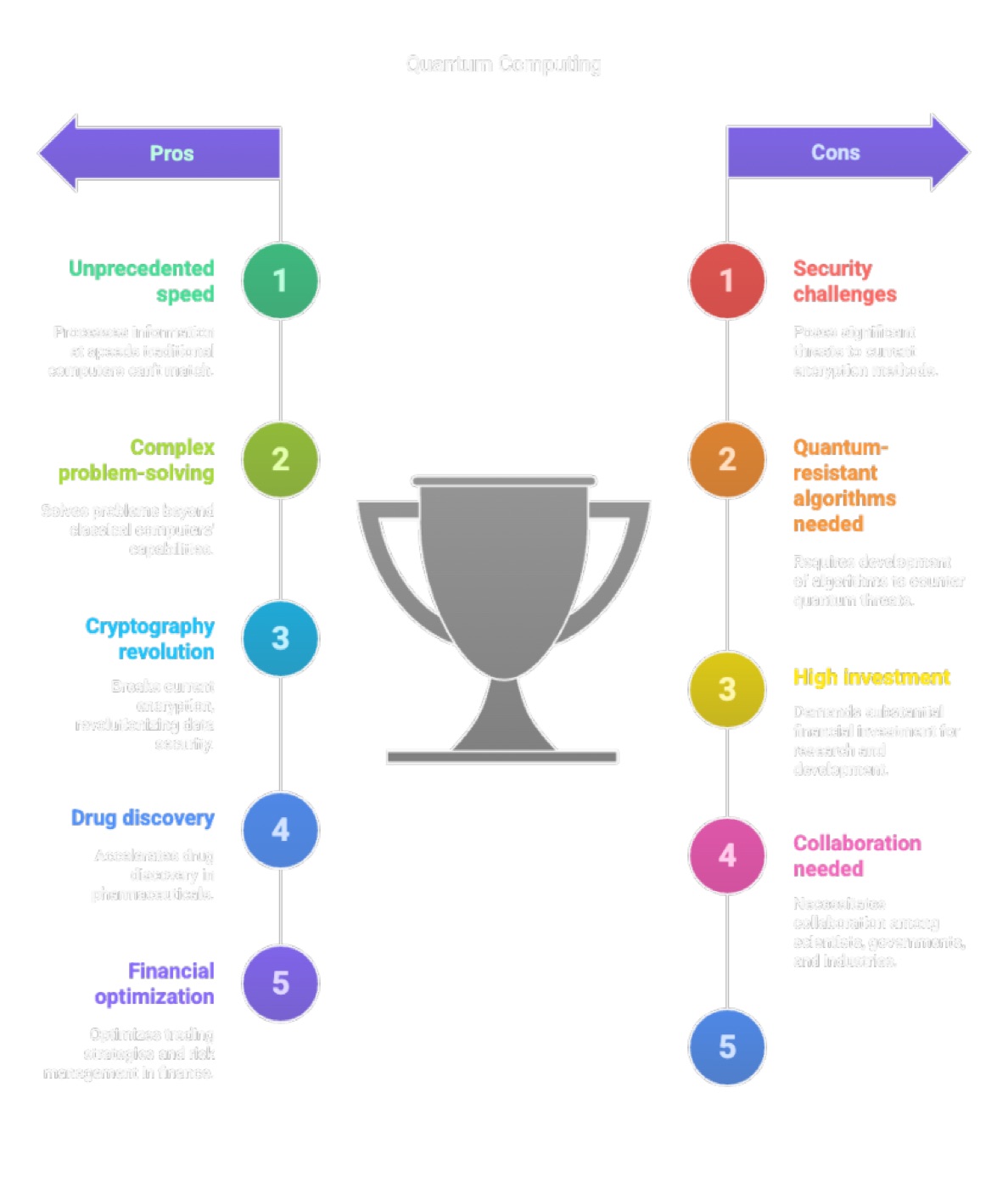
In recent years, significant milestones have been achieved. Companies like Google and IBM have made strides in quantum supremacy—referring to a quantum computer's ability to solve problems beyond the reach of classical computers. Ongoing research and growing investment reflect the global recognition of quantum computing's transformative capabilities.
Its implications span across industries: in pharmaceuticals, quantum computing could accelerate drug discovery; in finance, it might optimize trading strategies and risk management. As we continue to explore this frontier, collaboration among scientists, governments, and industries will be key.
Emerging Trend: Biotechnology
Biotechnology stands at the forefront of medical and agricultural innovation. It integrates biology with technology to create solutions that improve lives and the environment. In medicine, biotechnology has led to breakthroughs like gene therapy and personalized medicine. In agriculture, it enhances crop yields and resilience, addressing food security challenges.
Recent breakthroughs such as CRISPR illustrate biotechnology's transformative potential. CRISPR allows precise gene editing, with significant implications for both healthcare and agriculture—correcting genetic defects in humans or improving crop tolerance to harsh climates.
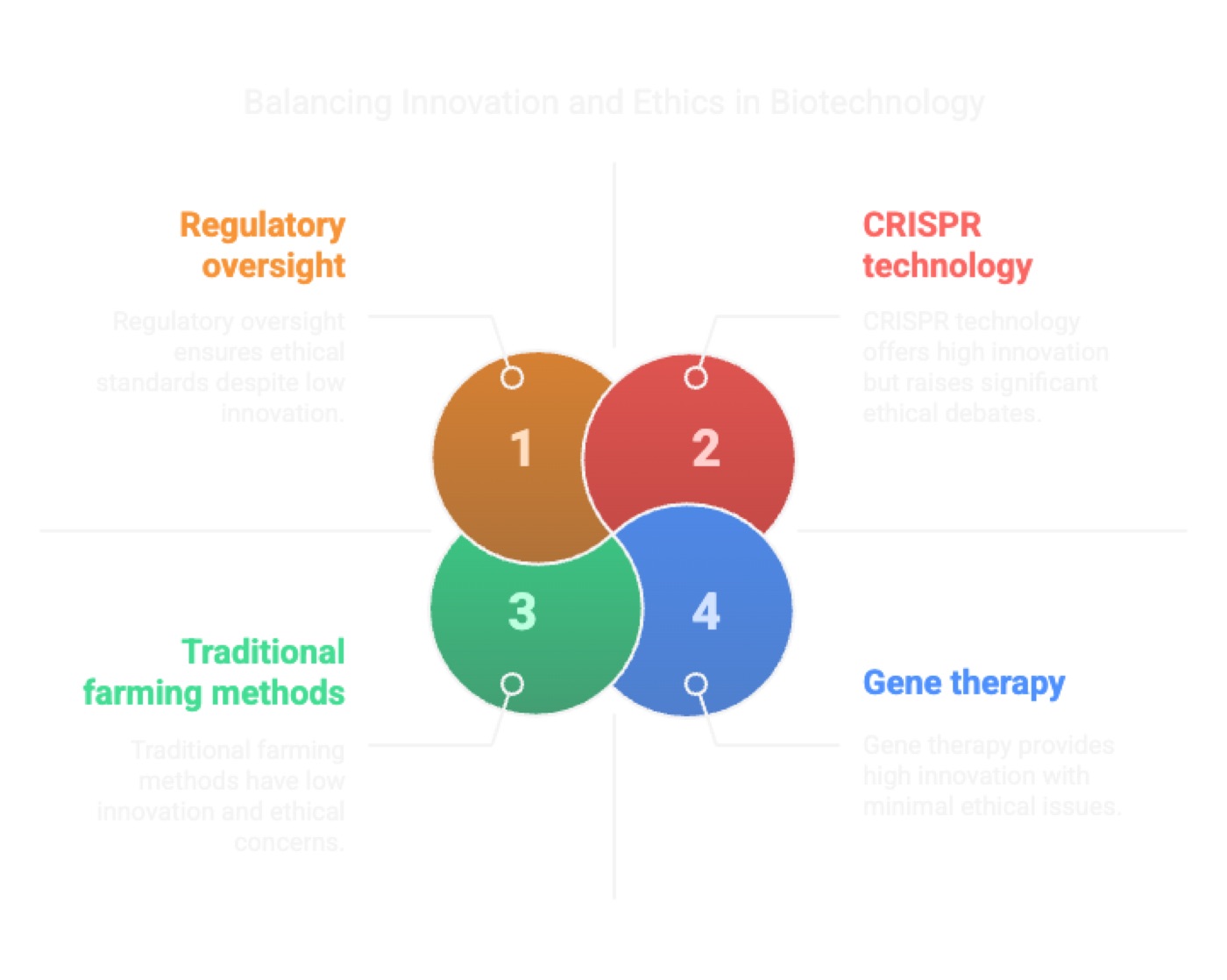
However, biotechnology raises ethical concerns. Gene editing, for example, prompts debates about the moral implications of altering life. Regulatory bodies are tasked with ensuring that biotechnology developments are safe and ethically sound. Striking a balance between innovation and ethics is crucial for the responsible advancement of biotechnology.
Its impact on environmental conservation is also noteworthy. Biotechnology offers tools for cleaning pollutants and managing waste more effectively, contributing to sustainable practices across sectors.
Emerging Trend: Sustainability-Driven Technologies
Sustainability-driven technologies are reshaping our approach to environmental challenges. These innovations focus on reducing carbon footprints and promoting renewable energy. Solar panels and wind turbines are leading examples—they convert natural resources into electricity, reducing reliance on fossil fuels.
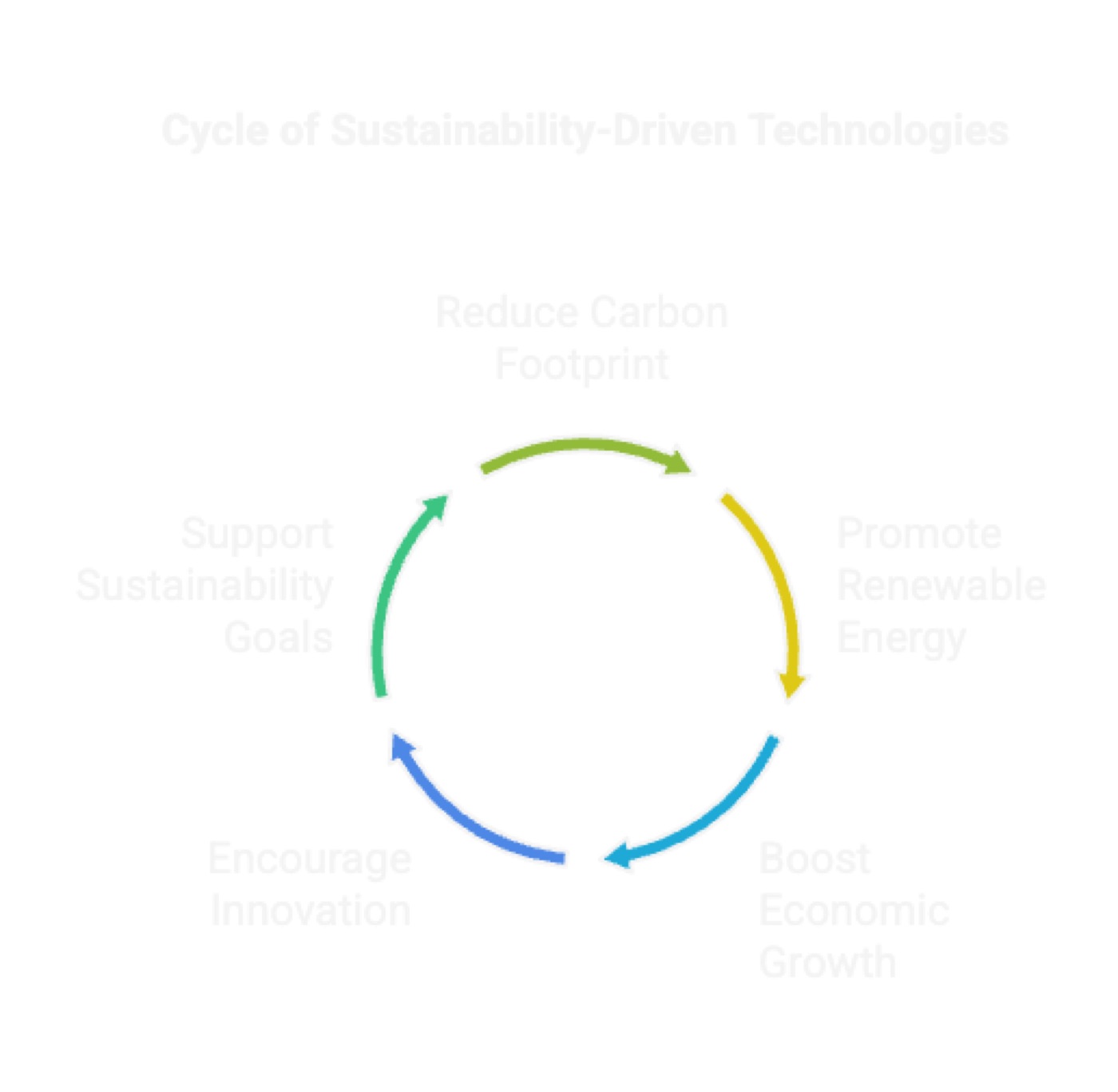
This shift not only benefits the environment but also boosts economic growth by creating new industries, encouraging innovation, and supporting national sustainability goals.
Impact Areas
Impact Area: Society
Emerging technologies are changing how we live. Artificial intelligence is automating tasks, making everyday processes faster. This shift could lead to fewer jobs in some sectors but create new opportunities in others. For instance, AI in healthcare is improving patient outcomes with precise diagnostics. Quantum computing might soon solve problems that are too complex for today’s computers, potentially revolutionizing industries like cryptography and materials science.
Biotechnology is making strides in medicine and agriculture. New treatments and genetically modified crops are becoming more common. However, these advances raise ethical questions about privacy and safety. Meanwhile, sustainability-driven technologies are reducing environmental impacts and helping countries transition to renewable energy.
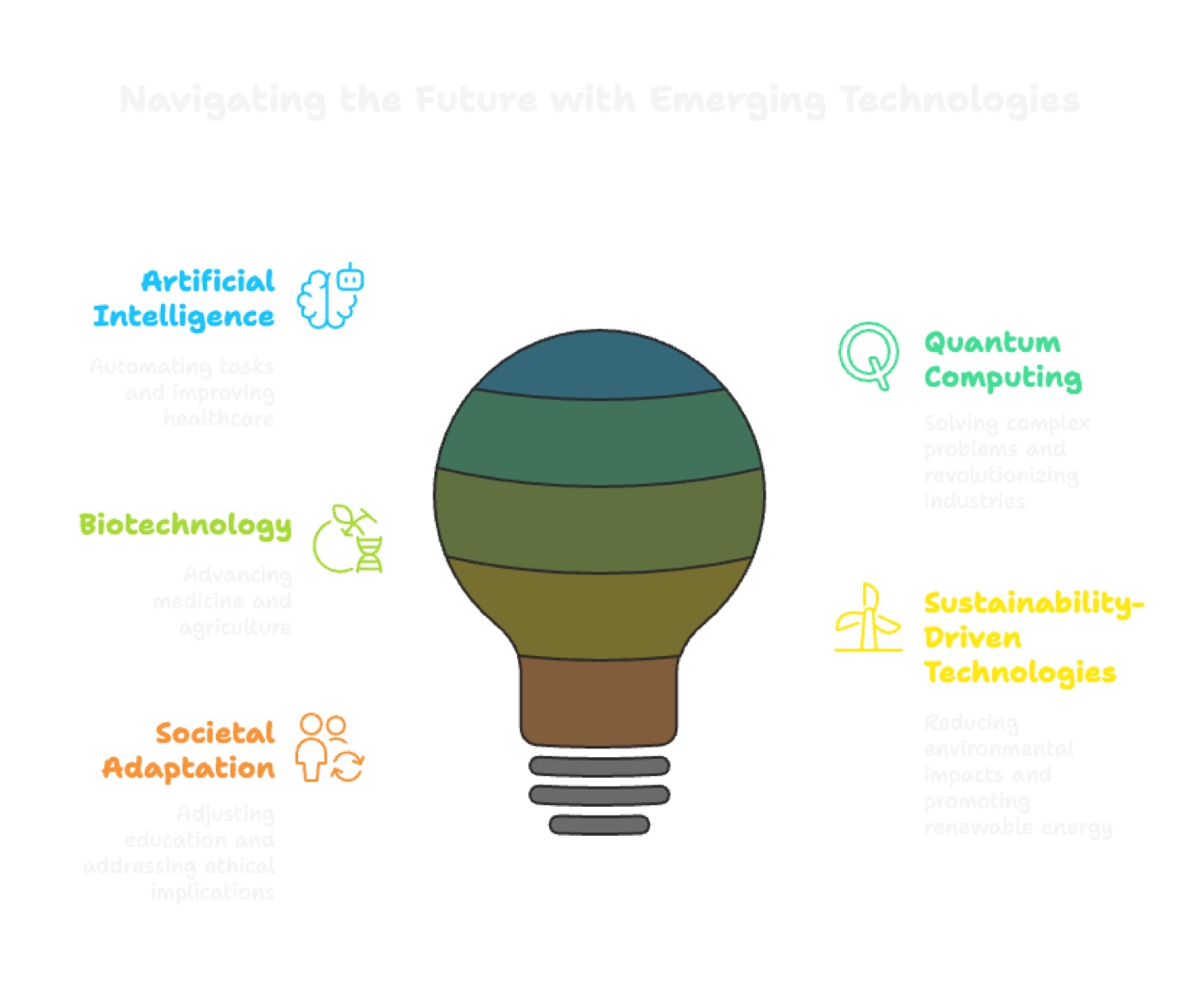
As these technologies advance, society must adapt. Education systems may need to change to prepare students for new types of jobs. Policymakers will need to address the ethical and social implications. The future holds both challenges and opportunities, and it’s crucial to engage with these changes thoughtfully.
Impact Area: Governance
Emerging technologies are reshaping the regulatory landscape. As AI, quantum computing, and biotechnology advance, governments face new challenges. The rapid pace of innovation demands updated policies, as many technologies are outpacing existing legal frameworks.
AI raises questions about privacy and bias. Quantum computing presents unique risks to encryption and data security. Biotechnology brings ethical dilemmas in gene editing and medical interventions. These all require targeted regulatory oversight.
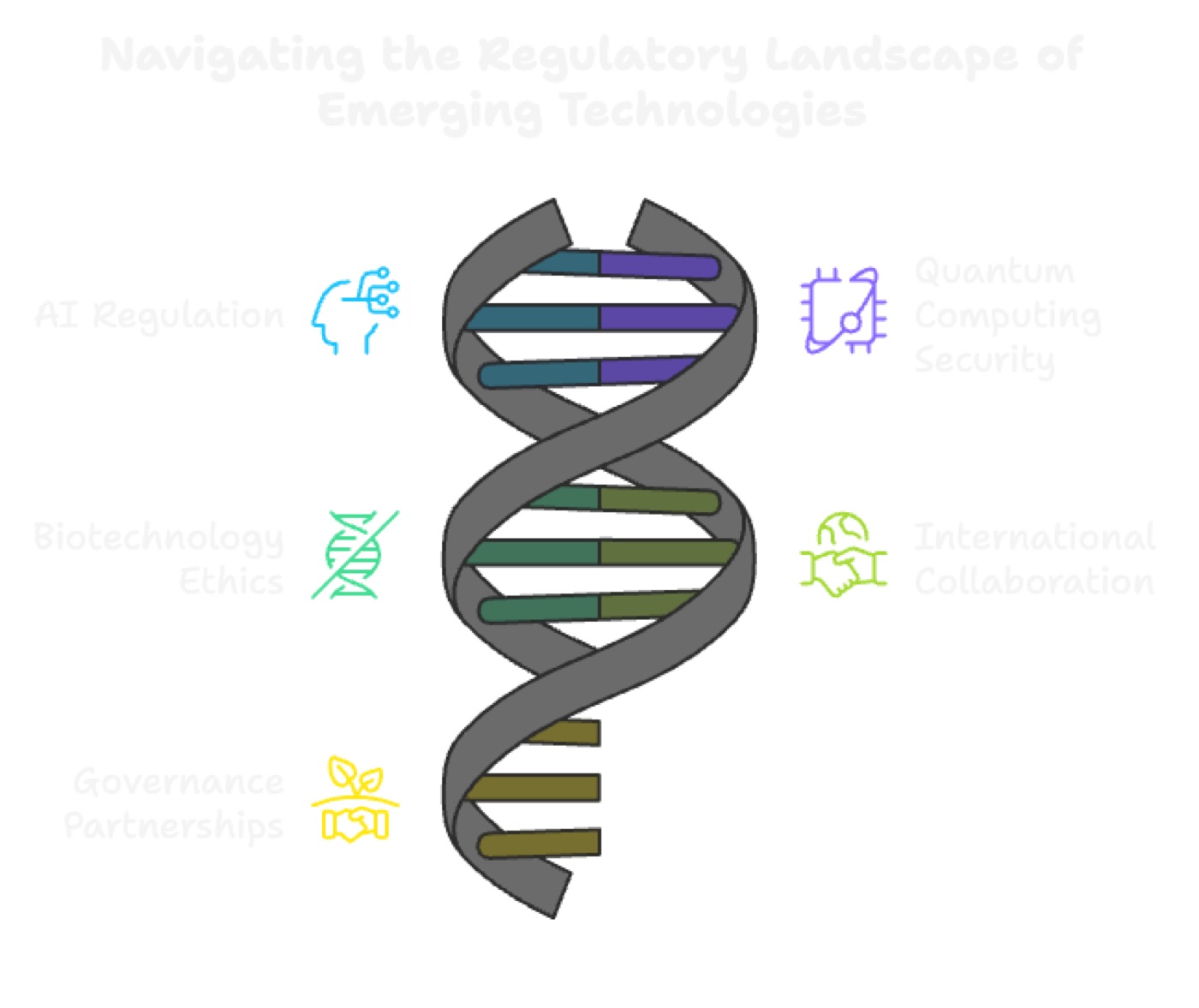
Governments must create frameworks that encourage innovation while ensuring public safety and ethical standards. This involves international collaboration—technology knows no borders, and global standards will help prevent misuse.
The future of governance will depend on effective partnerships between policymakers, industry leaders, and experts. Together, they can craft regulatory strategies that support growth while protecting society.
Impact Area: Global Economy
Emerging technologies are reshaping the global economy. AI is enhancing efficiency and decision-making across industries. With a projected market size of USD 757.58 billion by 2025, its influence on global trade and cooperation is profound.
Quantum computing promises to revolutionize industries like finance and materials science, with major companies investing in R&D. Biotechnology continues to improve healthcare and agriculture, offering scalable solutions to global issues.
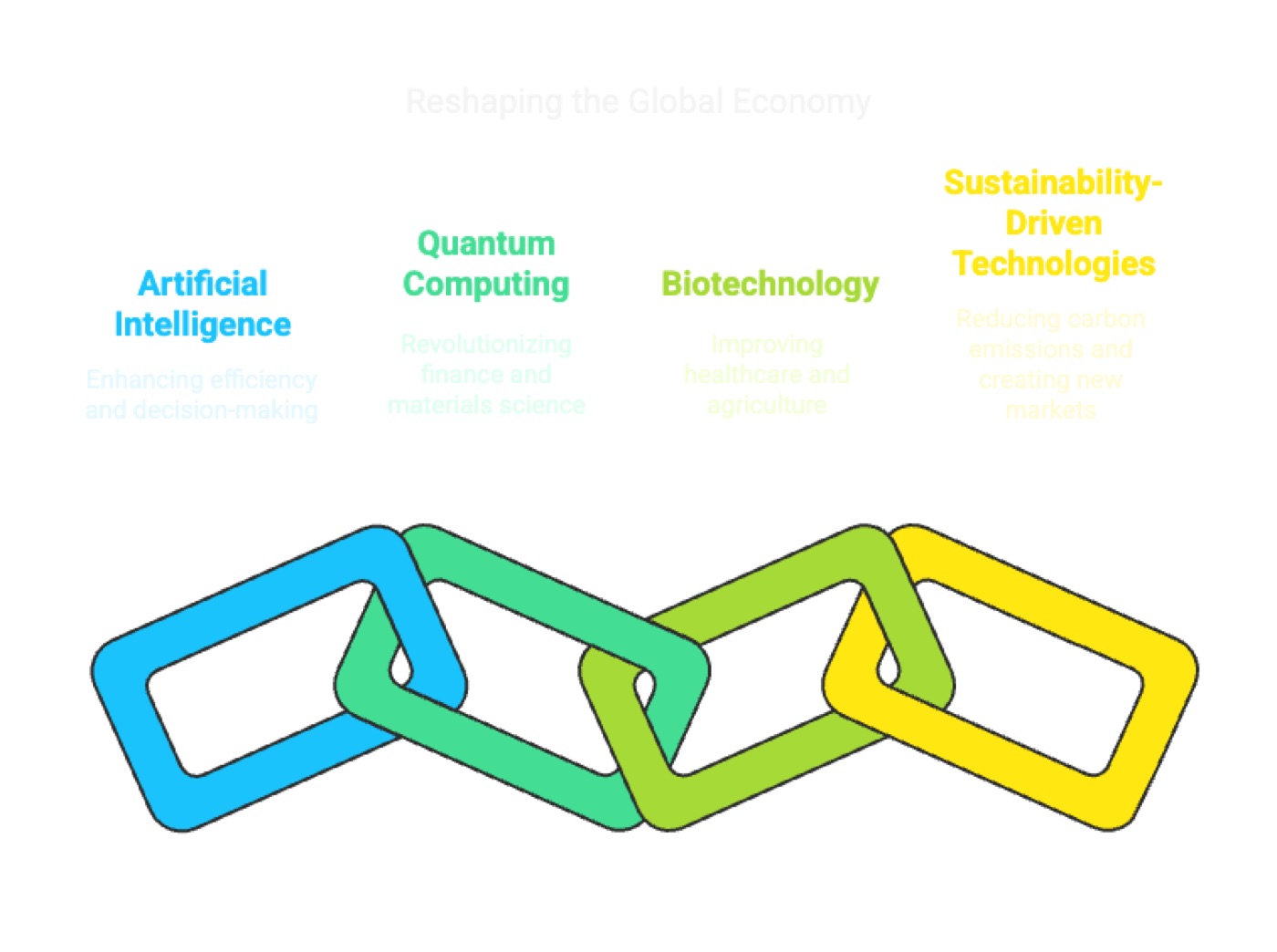
Sustainability-driven innovations in renewable energy are reducing carbon emissions and creating new markets. As countries set ambitious targets for sustainability, global economic policies may evolve, creating both opportunities and challenges in trade and investment.
In summary, emerging technologies are transforming how we work, trade, and grow. To fully benefit, nations must adapt policies and embrace innovation while managing risks.
Strategies
Strategy: Harnessing Potential
Emerging technologies hold immense promise for the future. To fully realize their benefits, strategic collaboration is essential. Industries and governments must work together—pooling resources, sharing knowledge, and aligning goals.
AI can automate tasks and unlock new possibilities in sectors like healthcare and finance. Quantum computing offers unparalleled processing power, enabling breakthroughs in cryptography and modeling. Biotechnology and sustainability technologies are already delivering results in environmental conservation and food security.
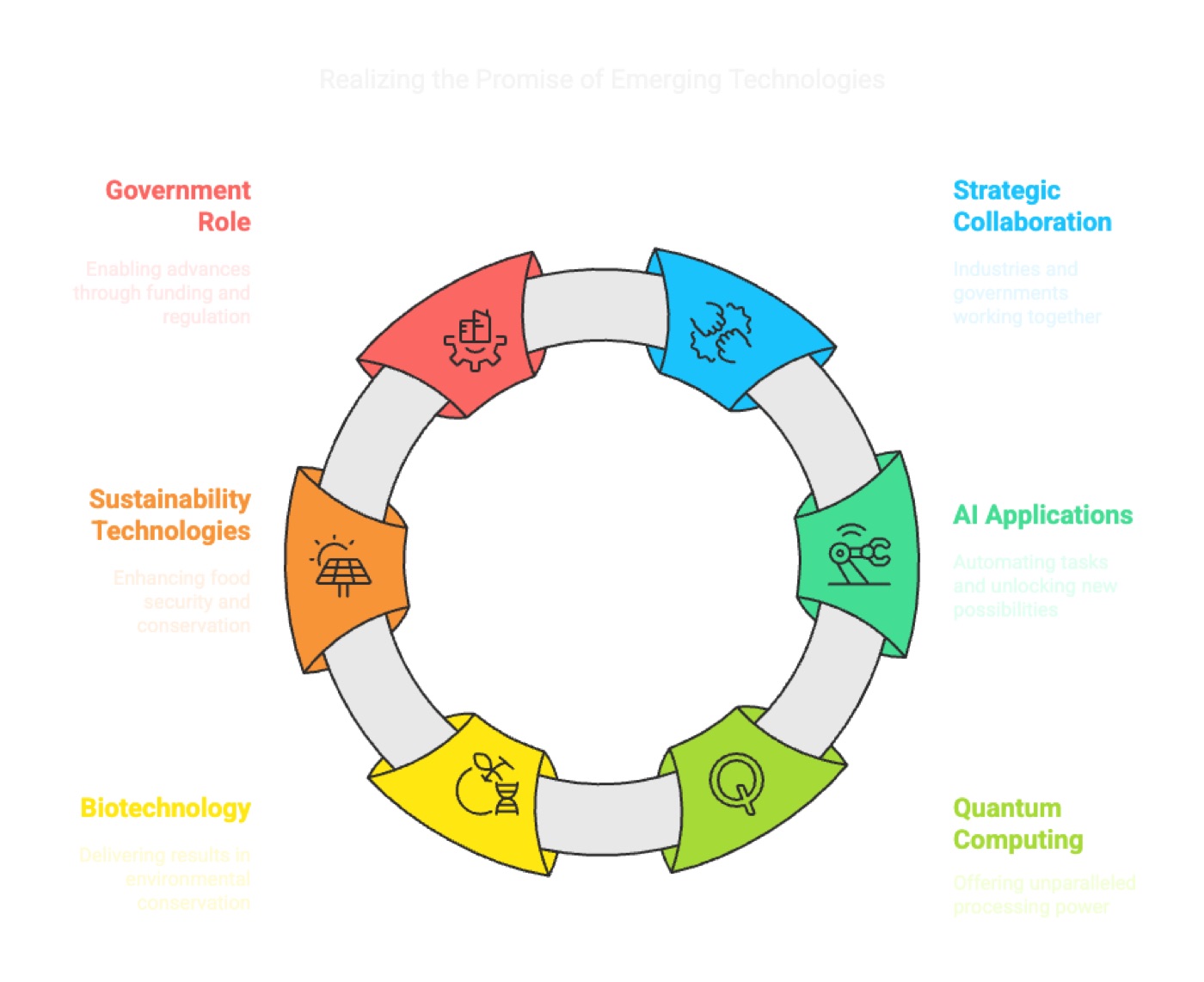
Governments play a vital role in enabling these advances through funding, infrastructure, and smart regulation. By fostering innovation ecosystems, we can accelerate progress that benefits both business and society.
Strategy: Mitigating Risks
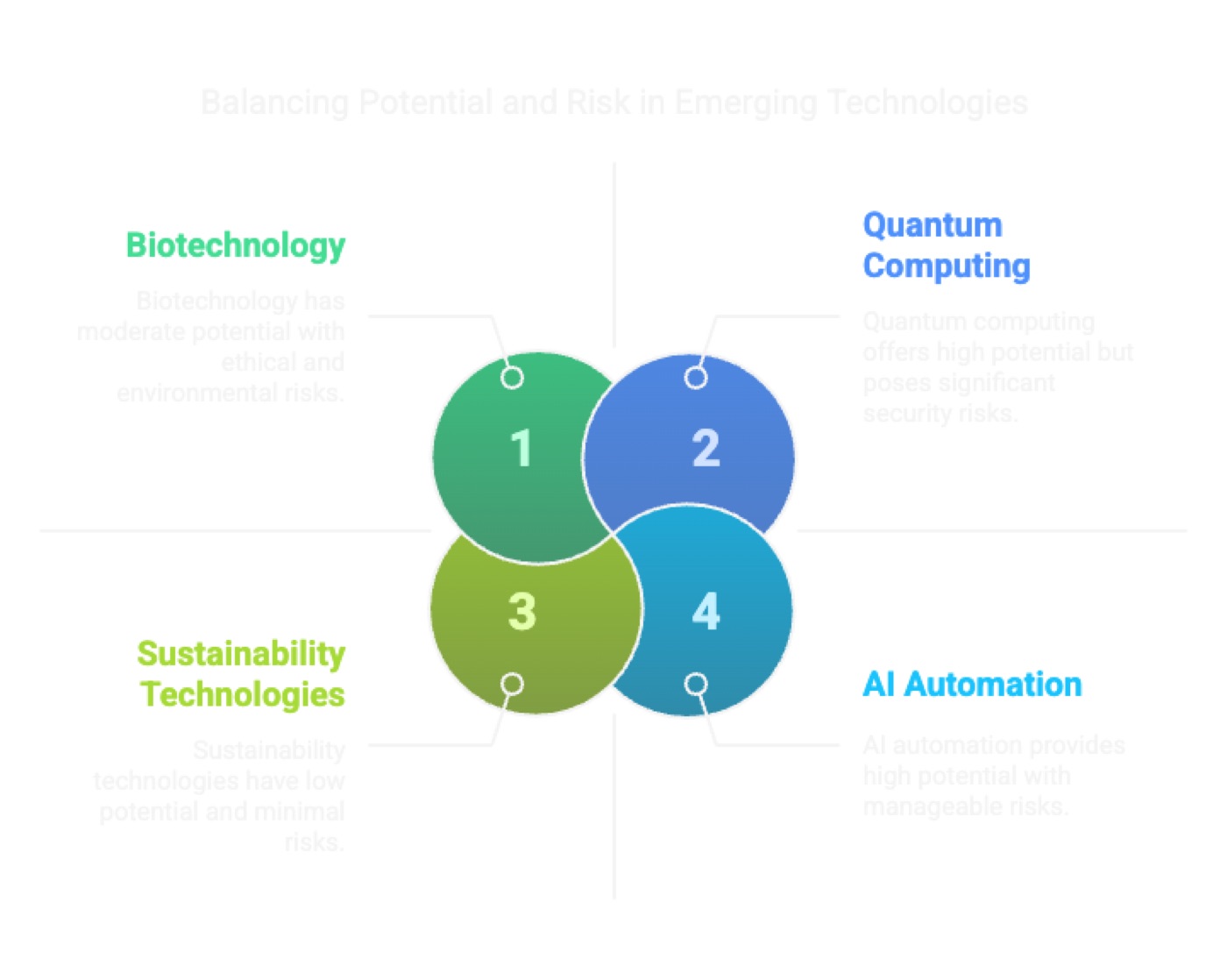
With great potential comes significant risk. Ethical, security, and environmental concerns must be addressed.
AI can lead to data misuse and algorithmic bias. Quantum computing may break existing encryption, compromising sensitive data. Biotechnology raises debates around gene editing and the sanctity of life. Even sustainability solutions can strain resources if mismanaged.
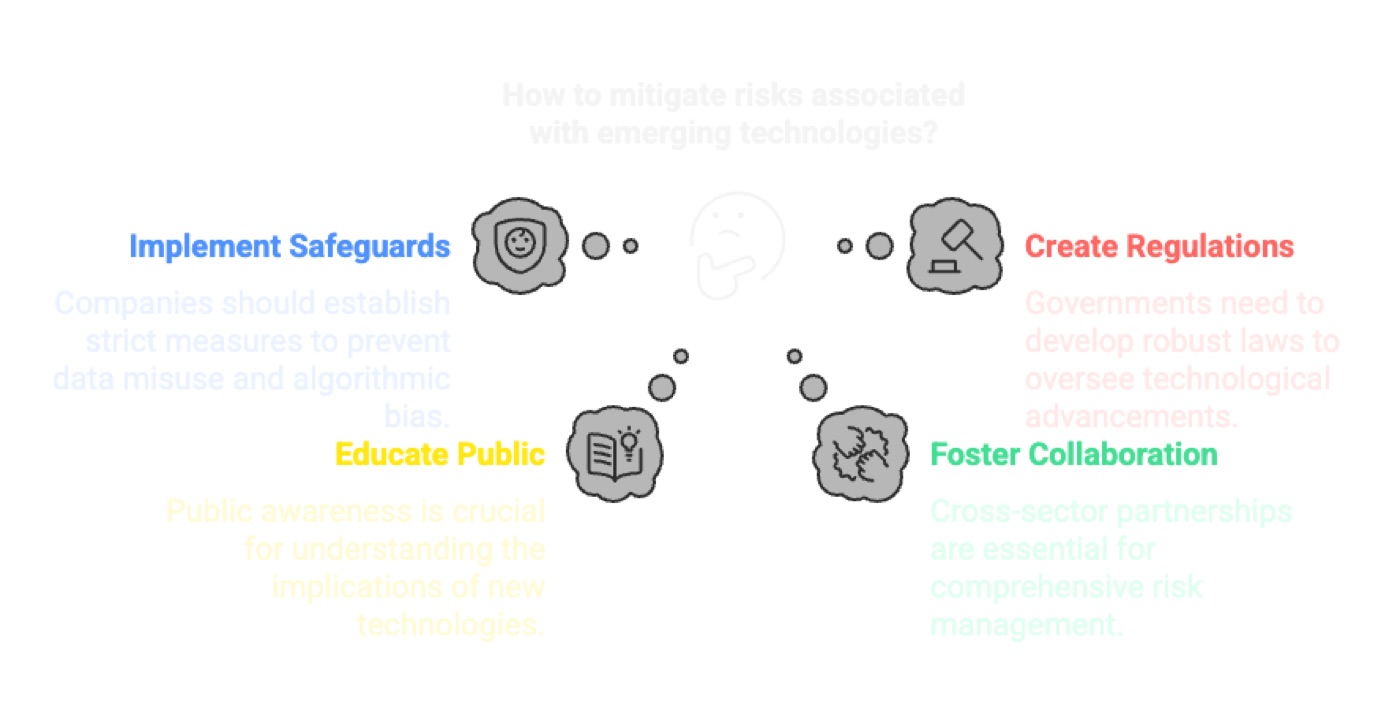
Risk mitigation starts with awareness. Companies must implement strict safeguards, governments must create robust regulations, and the public must be educated to understand the technologies’ implications. Cross-sector collaboration will be essential to develop frameworks that monitor and manage these risks.
By staying proactive, we can ensure that progress is safe, inclusive, and sustainable.
Strategy: Forecasting: Preparing for Challenges and Opportunities
The future is a landscape shaped by both promise and complexity. Foresight enables us to anticipate the trajectory of emerging technologies and prepare accordingly.
AI’s continued growth will redefine business operations and employment landscapes. Quantum computing will challenge existing cybersecurity systems while enabling scientific breakthroughs. Biotechnology will open doors to personalized medicine and resilient agriculture, but must be handled ethically. Sustainability-driven technologies will steer global energy strategies toward cleaner futures.
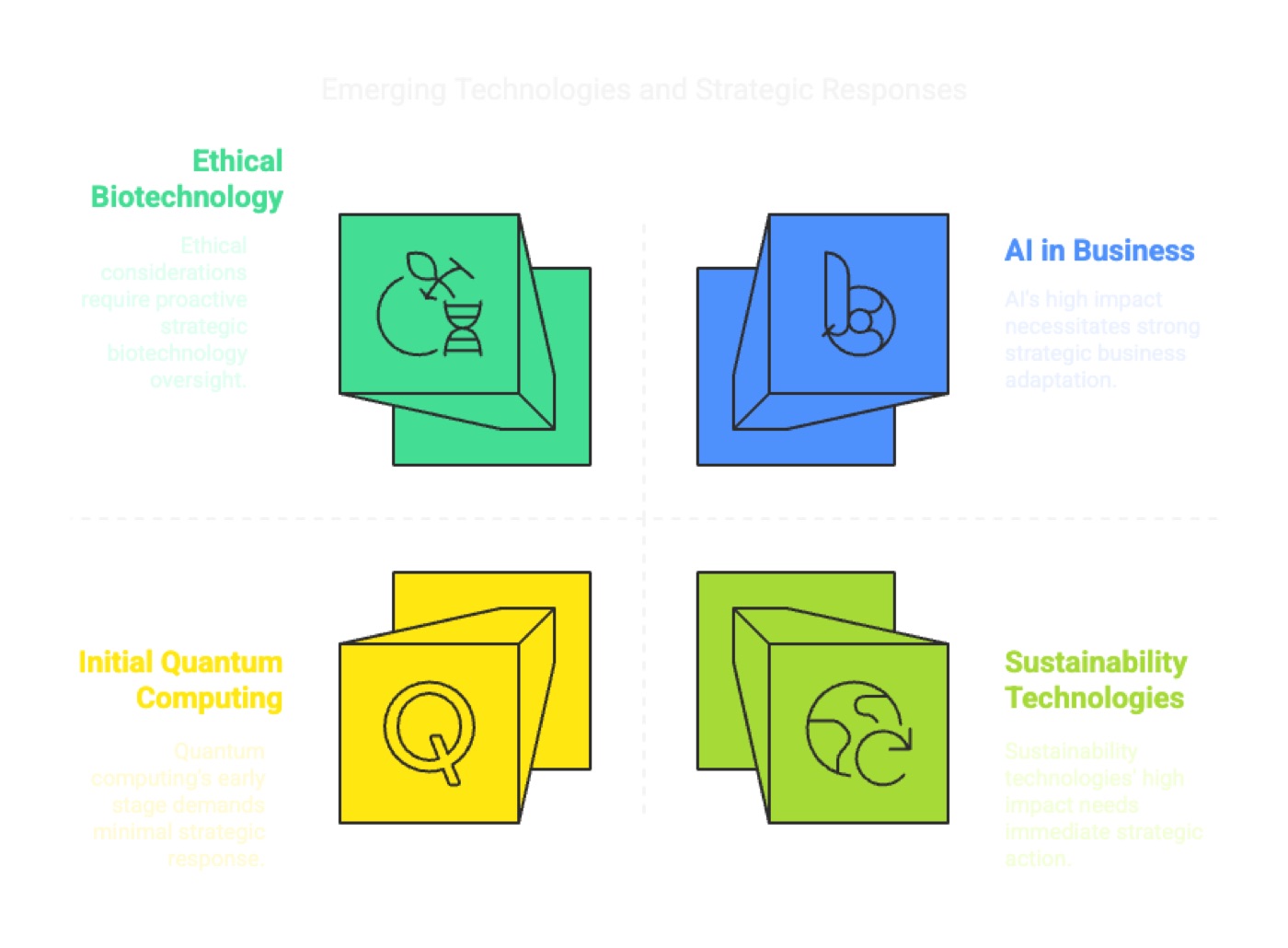
Strategic planning, policy innovation, and public engagement are critical. The success of these technologies depends on how we respond to their development today.
Conclusion
Emerging technologies—AI, quantum computing, biotechnology, and sustainability innovations—are redefining our world. They offer powerful solutions to modern challenges but also demand thoughtful engagement. The road ahead requires strategic foresight, ethical grounding, and collaboration across all sectors.
Let’s embrace this future with a shared commitment to innovation, inclusivity, and responsibility. Together, we can ensure these technologies serve humanity, drive sustainable growth, and unlock new frontiers of progress.