Transforming Healthcare: AI, Telemedicine and Data
How AI, telemedicine and digital records are changing healthcare delivery, the benefits, the barriers to adoption and what comes next.

Transforming Healthcare Today: A Deep Dive into Modern Solutions
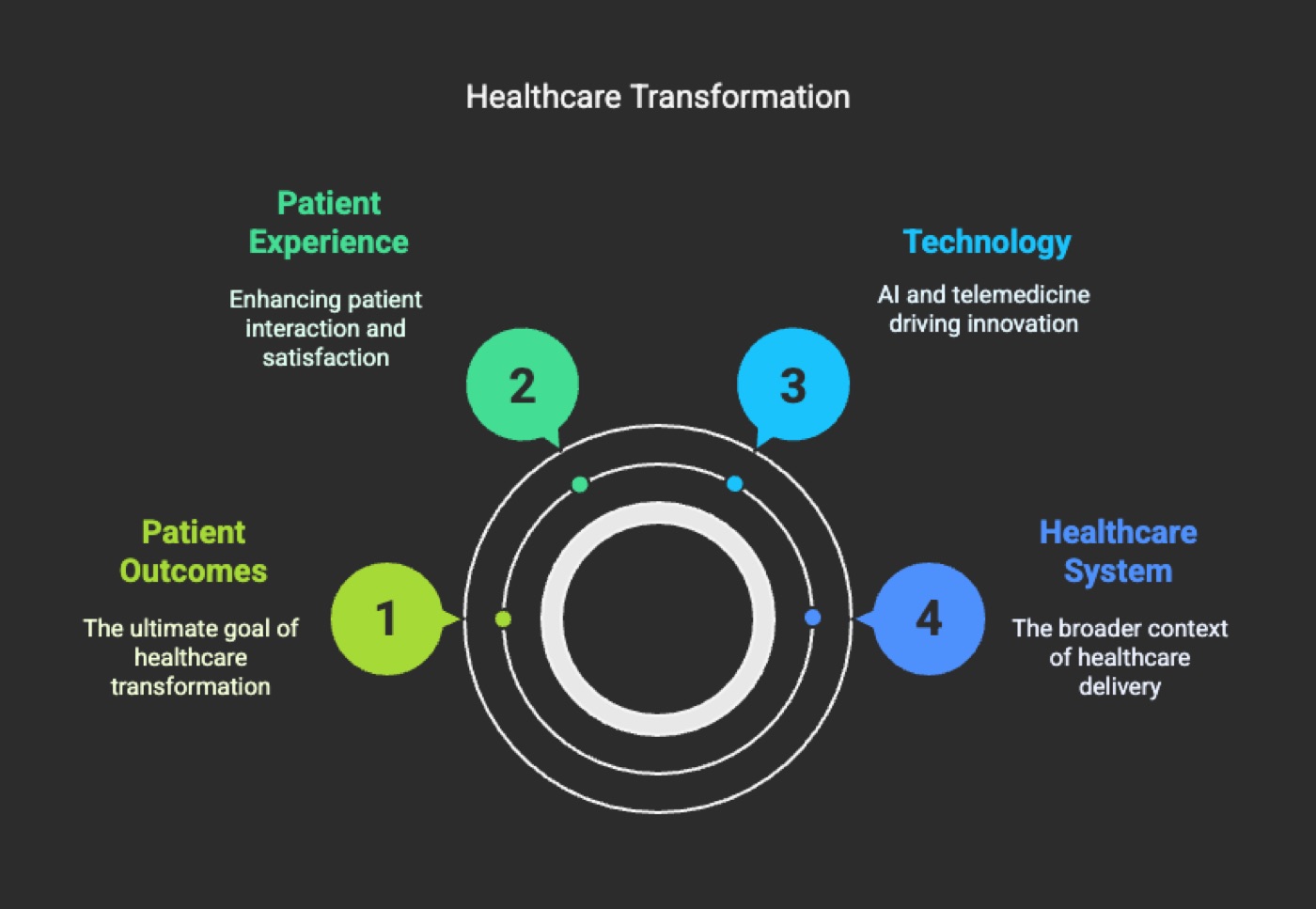
The healthcare landscape is undergoing a significant transformation. At the forefront are technology-driven solutions reshaping patient care. Artificial intelligence and telemedicine are becoming integral to healthcare delivery. This shift is not just about technology; it's about enhancing patient experiences and outcomes. As these tools become more prevalent, they promise to revolutionize how we approach health and wellness. The impact is profound, offering new ways to diagnose, treat, and monitor patients. This evolution marks a pivotal moment in healthcare, setting the stage for a more connected and responsive system.
Enhancing Healthcare Delivery
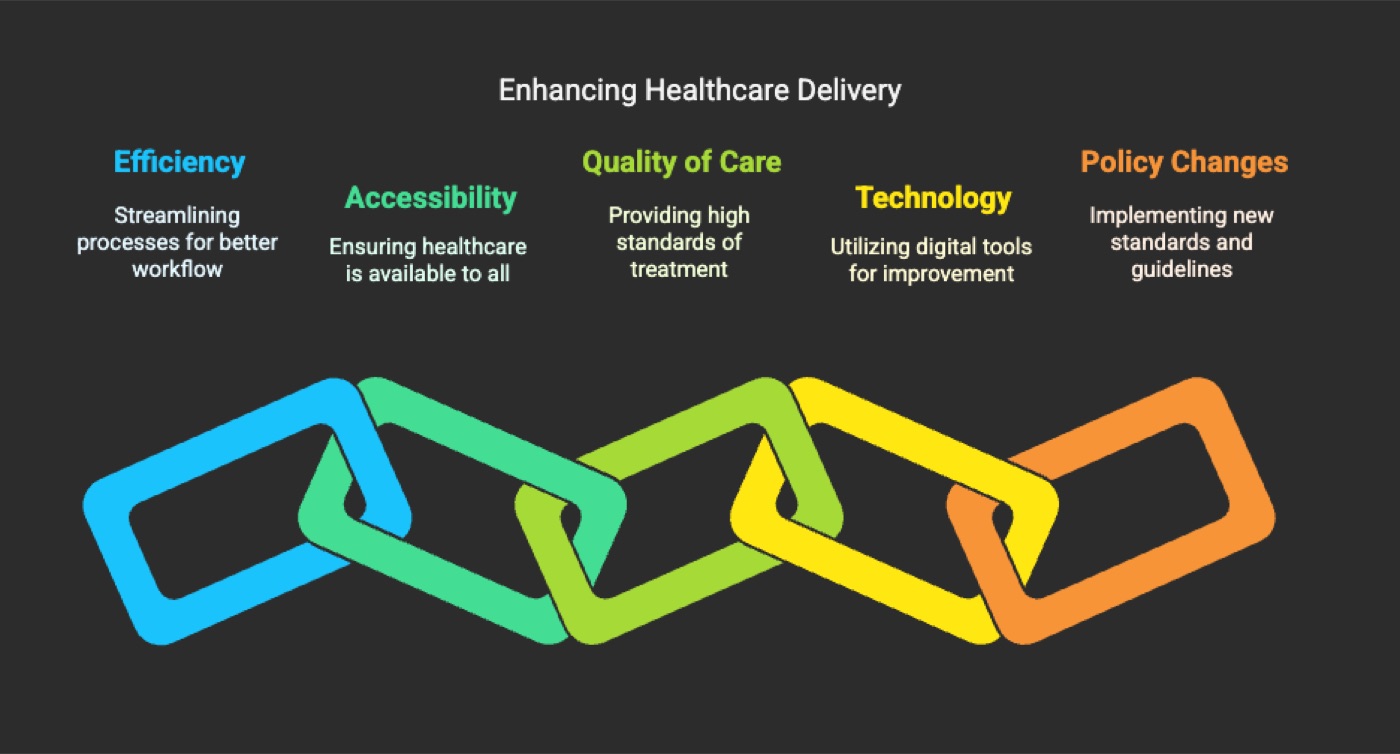
Healthcare solutions aim to improve patient outcomes and service delivery. These solutions include strategies that enhance efficiency, accessibility, and quality of care. Technology plays a crucial role in this transformation. It helps streamline processes and improve accuracy. Policy changes also support these advancements by setting new standards and guidelines. Understanding these solutions is vital for better patient care and outcomes. They help healthcare providers deliver more precise and personalized treatments. As technology and policies evolve, so does the potential for improved healthcare delivery.
Foundations of Healthcare Solutions
Healthcare solutions are strategies designed to enhance the quality and delivery of medical services. They aim to improve efficiency, accessibility, and the overall quality of patient care. These solutions involve a mix of technology, policy changes, and new practices that work together to transform healthcare systems.
Technology plays a crucial role in these solutions by streamlining processes and improving communication. For example, digital records allow for quick access to patient information, reducing errors and saving time. Policy changes also support these improvements by setting standards and guidelines that ensure consistent care across different facilities.
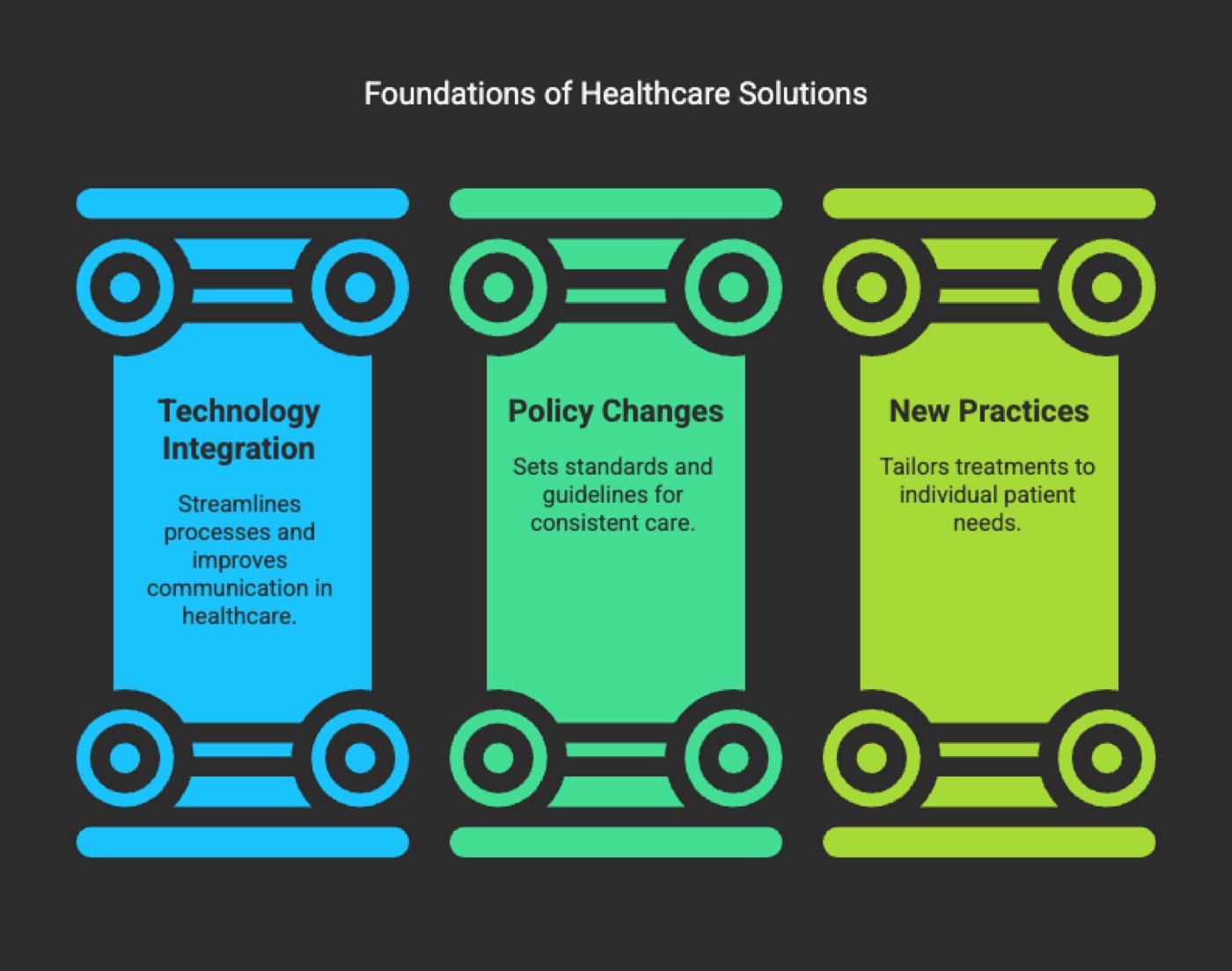
New practices, such as personalized medicine, tailor treatments to individual patient needs. This approach uses data and research to provide more accurate diagnoses and effective treatment plans. By integrating these elements, healthcare solutions aim to create a more responsive and patient-centered system.
Transforming Healthcare with Technology
Telemedicine is changing how patients and doctors interact. It allows for remote consultations, making healthcare more accessible. This technology is especially beneficial for people in rural areas. It reduces the need for travel and helps manage time better.
Data analytics plays a crucial role in healthcare. It helps predict health trends and manage medical records efficiently. By analyzing large sets of data, healthcare providers can identify patterns and make informed decisions. This leads to better patient care and resource management.
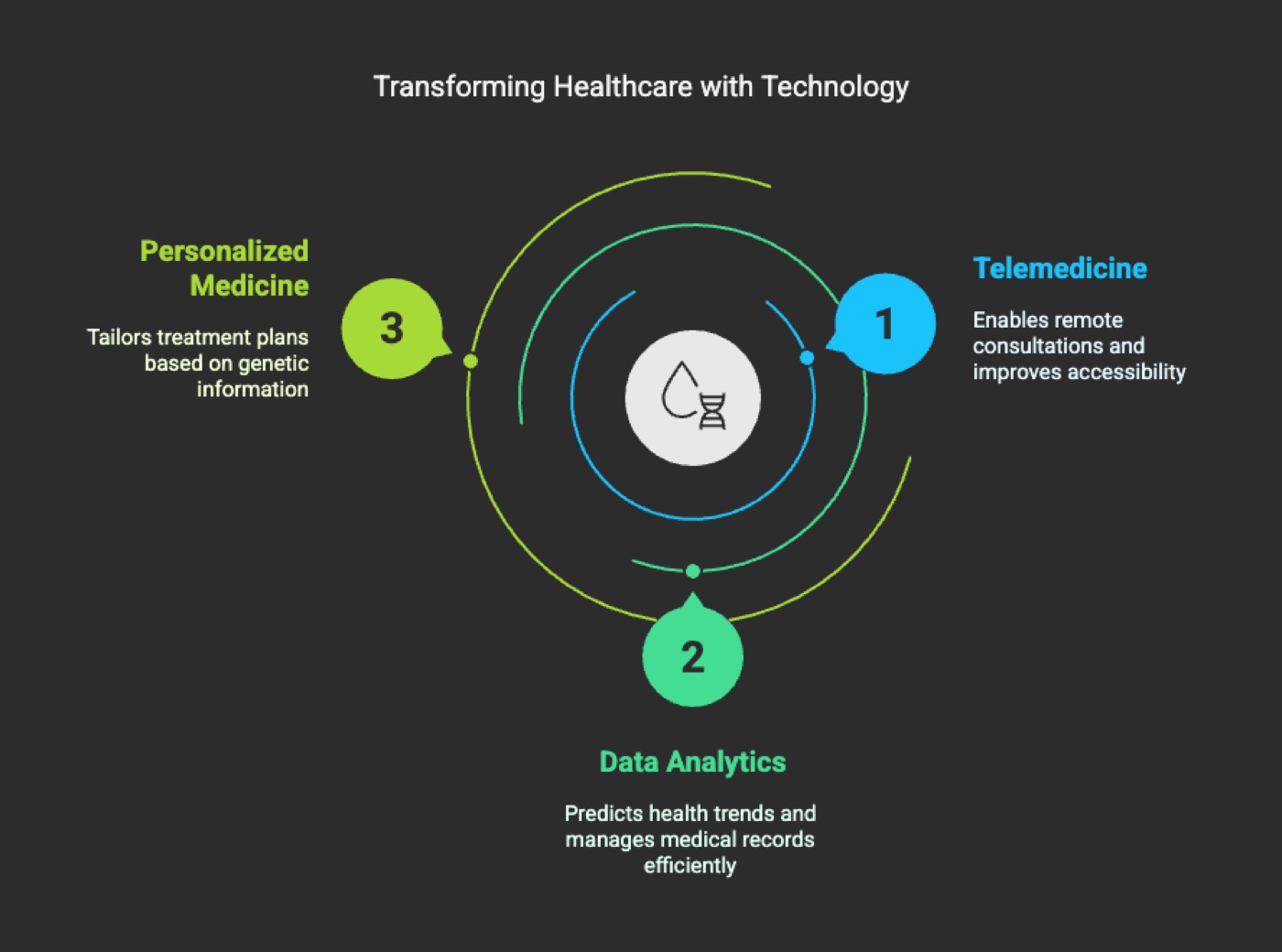
Personalized medicine is another significant advancement. It tailors treatment plans based on individual genetic information. This approach can improve treatment effectiveness and reduce side effects. Genetic testing companies like 23andMe are at the forefront of this movement. They provide insights that help doctors create customized care plans.
These advancements are reshaping healthcare. They offer new ways to improve patient outcomes and streamline operations. As technology continues to evolve, the potential for further transformation in healthcare is immense.
Exploring Technological Innovations in Healthcare
Telemedicine platforms like Teladoc are changing how patients access care. They allow people to consult with doctors from the comfort of their homes. This reduces the need for travel and waiting times. It also means that healthcare can reach remote areas more easily.
IBM Watson Health uses artificial intelligence to analyze vast amounts of medical data. This helps doctors make more informed decisions. By identifying patterns and predicting outcomes, AI supports better patient care. It can also help in diagnosing diseases earlier, which is crucial for effective treatment.
23andMe offers genetic testing that provides personalized health insights. By analyzing a person's DNA, it can suggest potential health risks. This information allows individuals to take preventive measures. It also helps doctors tailor treatment plans to suit specific genetic profiles.
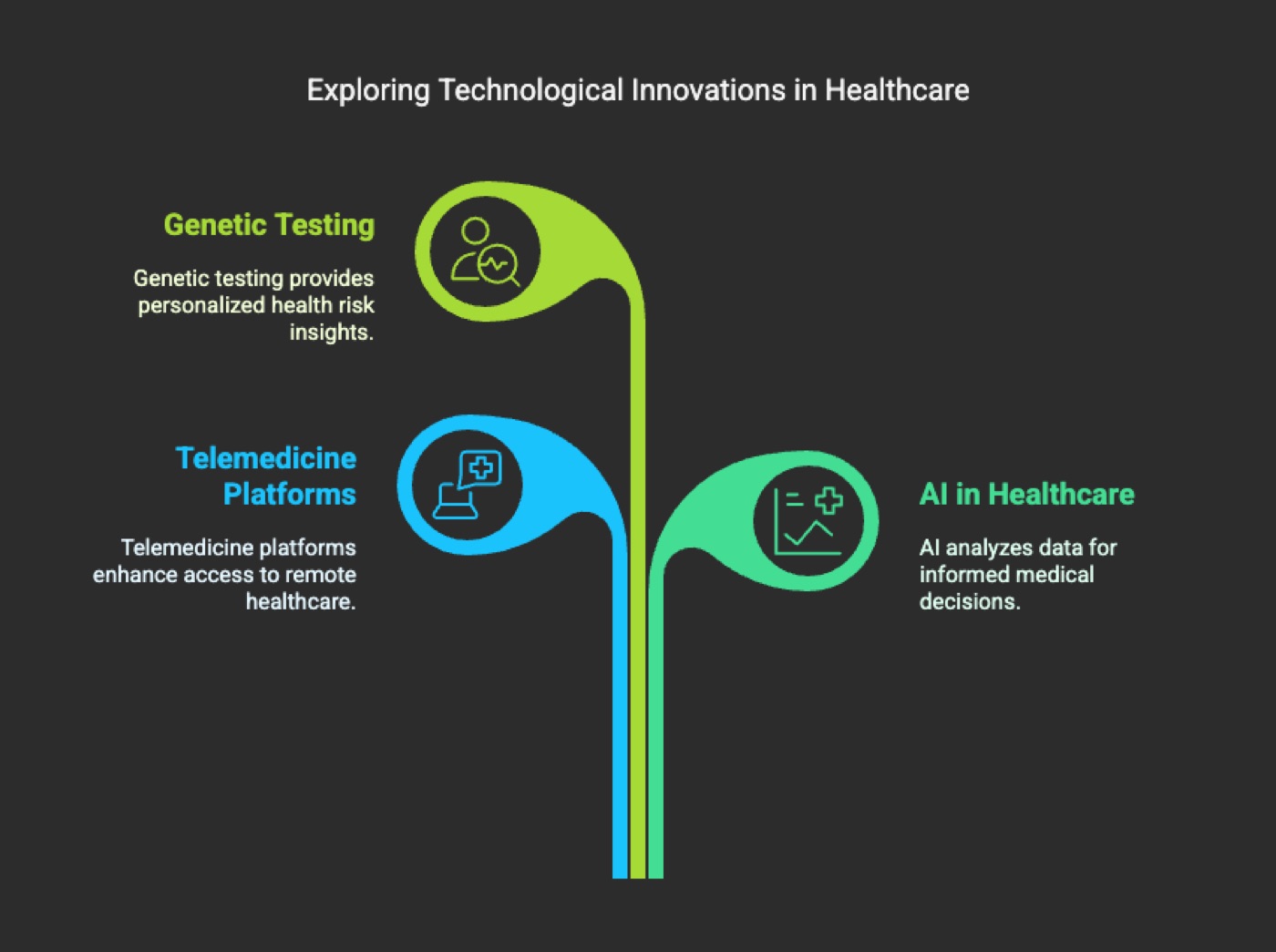
These examples show how technology is reshaping healthcare. They highlight the shift towards more accessible and personalized care. As these solutions continue to evolve, they promise to improve patient outcomes and healthcare delivery.
Overcoming Misconceptions in Healthcare Solutions
Many believe healthcare solutions revolve solely around technology. This is not the case. Policy changes play a crucial role. They shape how healthcare is delivered and accessed. Patient education is equally important. It empowers individuals to make informed decisions about their health.
Another misconception is that only large hospitals benefit from modern healthcare solutions. Smaller clinics and rural healthcare providers also see significant improvements. They use telemedicine to reach more patients. AI tools help them interpret complex medical data. This makes quality care more accessible to underserved areas.
Some think AI and telemedicine replace human interaction. In reality, they enhance it. AI assists doctors in making more accurate diagnoses. Telemedicine connects patients with specialists they might not otherwise reach. These tools support healthcare professionals, not replace them.
It's also misunderstood that healthcare solutions are expensive. While initial costs can be high, they often lead to long-term savings. Early disease detection and efficient patient management reduce overall healthcare costs. Governments and organizations are investing in these technologies to save money in the long run.
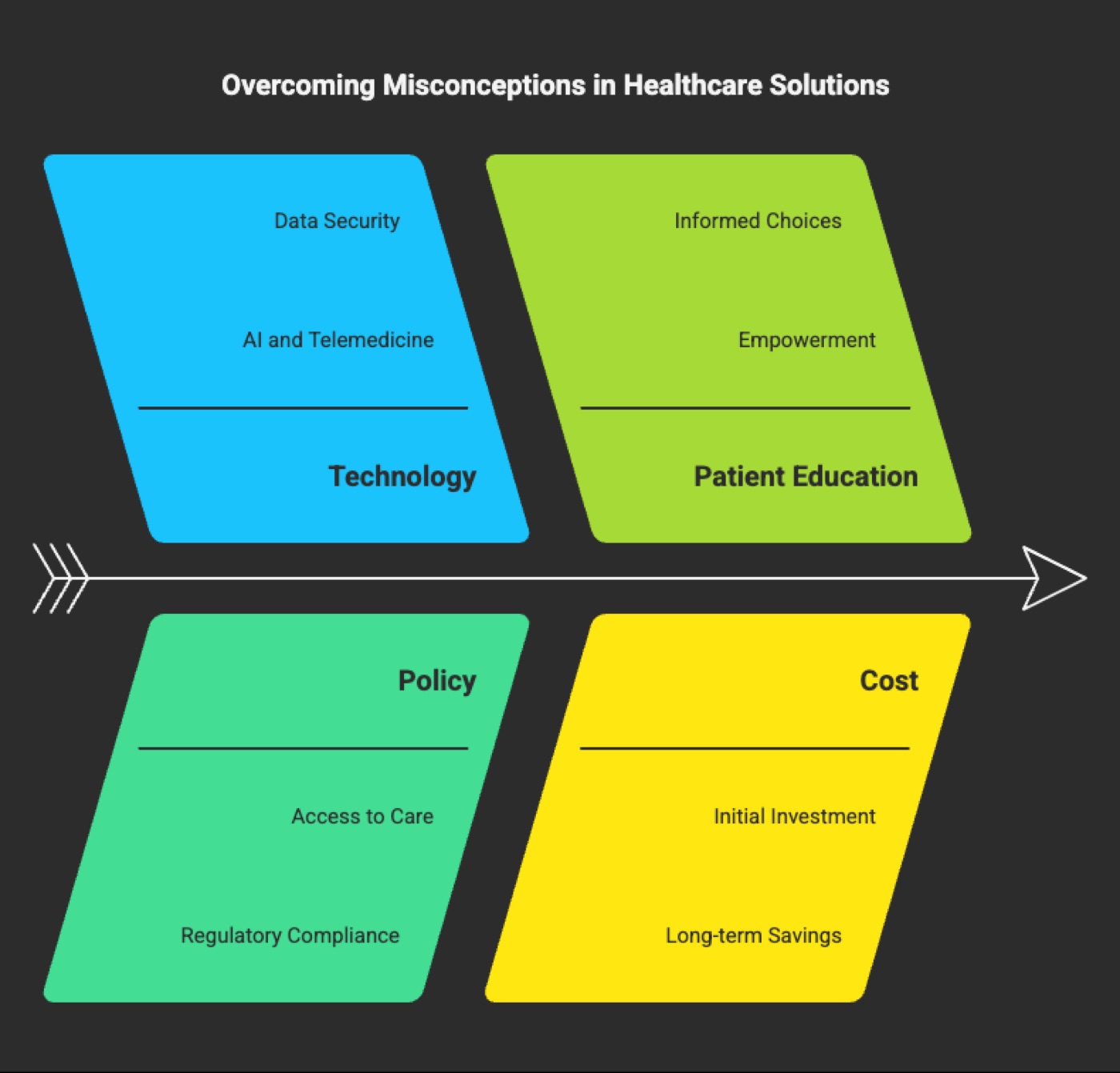
Lastly, there is a myth that these solutions are not secure. However, strict regulations ensure patient data protection. Healthcare providers must comply with these standards to maintain patient trust. This ensures that patient information is handled with care and responsibility.
Healthcare Technology Transformation
The healthcare industry is witnessing a surge in wearable health technology. Devices like smartwatches and fitness trackers are becoming integral to patient monitoring. These gadgets provide real-time data, helping doctors make informed decisions. Another significant advancement is the use of blockchain for handling patient records. This technology ensures that data is tamper-proof and accessible only to authorized personnel.
AI-driven healthcare tools are also making headlines. These tools assist in diagnosing diseases with greater accuracy. They analyze vast amounts of data quickly, offering insights that were previously unattainable. The integration of AI in healthcare is not just a trend; it's a revolution. Hospitals are increasingly relying on these tools to enhance patient care and streamline operations.
Recent advancements in AI have led to improved diagnostic tools. These tools can predict health issues before they become critical. By analyzing patterns and patient history, AI offers a proactive approach to healthcare. This shift towards predictive medicine is changing how diseases are managed and treated.
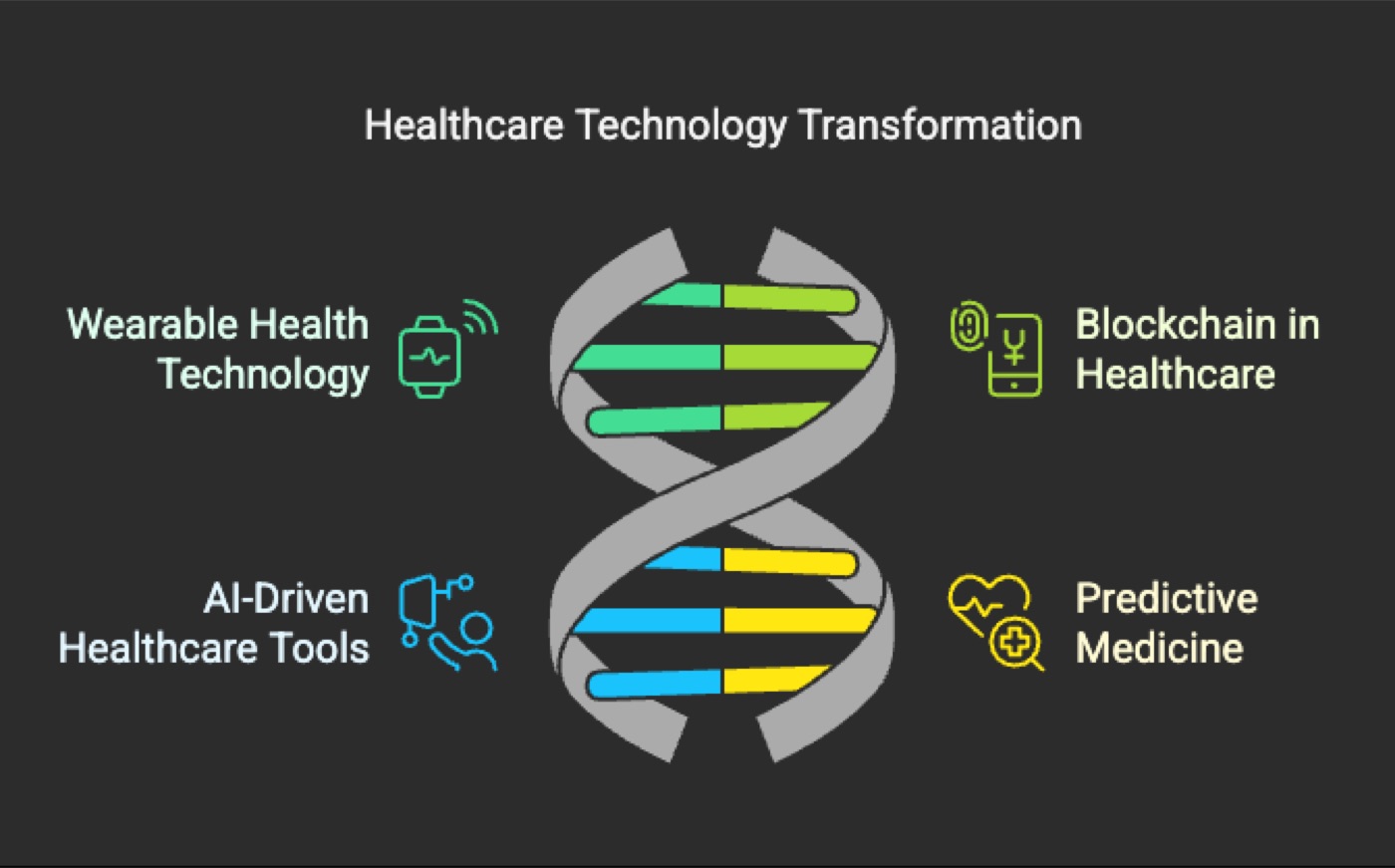
In summary, the latest developments in healthcare technology are reshaping the industry. Wearables, blockchain, and AI are at the forefront of this transformation. They promise to enhance patient care, improve data management, and offer new ways to tackle health challenges. As these technologies evolve, the potential for further advancements is immense.
Cycle of Healthcare Advancement
In the rapidly evolving world of healthcare, collaboration is essential. Tech experts, healthcare professionals, and policymakers must work together. This collaboration drives meaningful advancements. It ensures that solutions are practical and beneficial.
Patient education is crucial. As new healthcare solutions emerge, patients must understand them. Educated patients make informed decisions. This improves their healthcare experiences and outcomes.
Staying informed is vital. The healthcare landscape changes quickly. Professionals need to adapt to new tools and methods. This adaptability ensures they provide the best care possible. It also helps them anticipate future challenges.
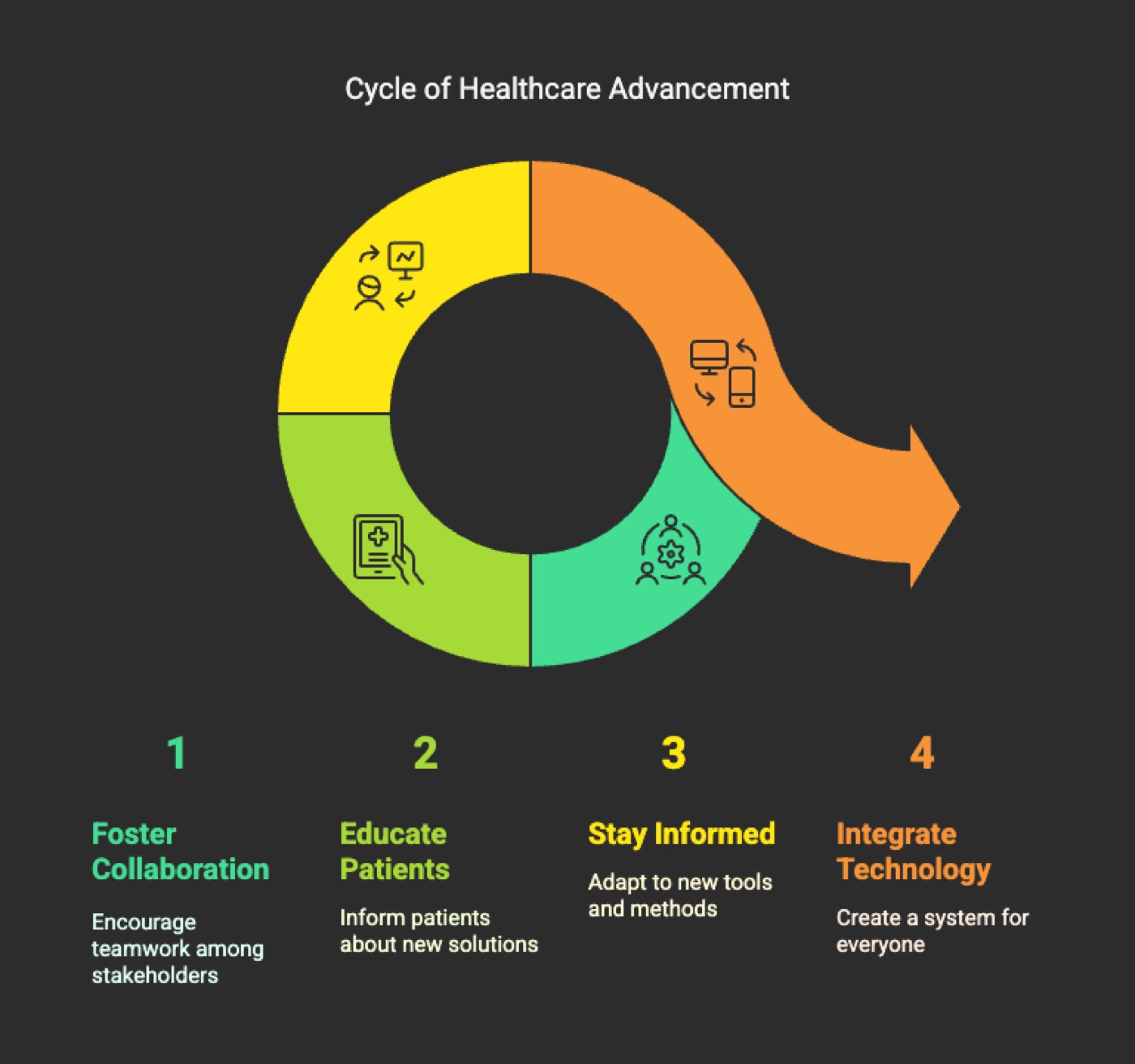
The integration of technology in healthcare is not just about tools. It's about creating a system that works for everyone. This requires ongoing dialogue and cooperation. By focusing on these elements, healthcare can continue to advance and improve lives.
Key Milestones in Healthcare Technology Adoption (2024–2033)
The healthcare industry is witnessing a significant shift with the rise of AI and telemedicine. As of 2024, 80% of hospitals are leveraging AI to enhance patient care and streamline workflows. This trend is not just about adopting new technologies but about fundamentally changing how healthcare is delivered. Telemedicine, once a niche service, is projected to account for 25–30% of all medical visits in the United States by 2026. This growth reflects a broader acceptance and reliance on digital solutions in healthcare.
The telemedicine market is on a steep growth trajectory, expected to soar from $83.23 billion in 2024 to an astounding $618.34 billion by 2033. This expansion is driven by the need for accessible healthcare solutions, especially in rural or underserved areas. AI is also playing a crucial role in this transformation, with 75% of leading healthcare companies exploring or planning to expand their use of Generative AI. These technologies are not only improving diagnostic accuracy but also enabling more personalized treatment plans.
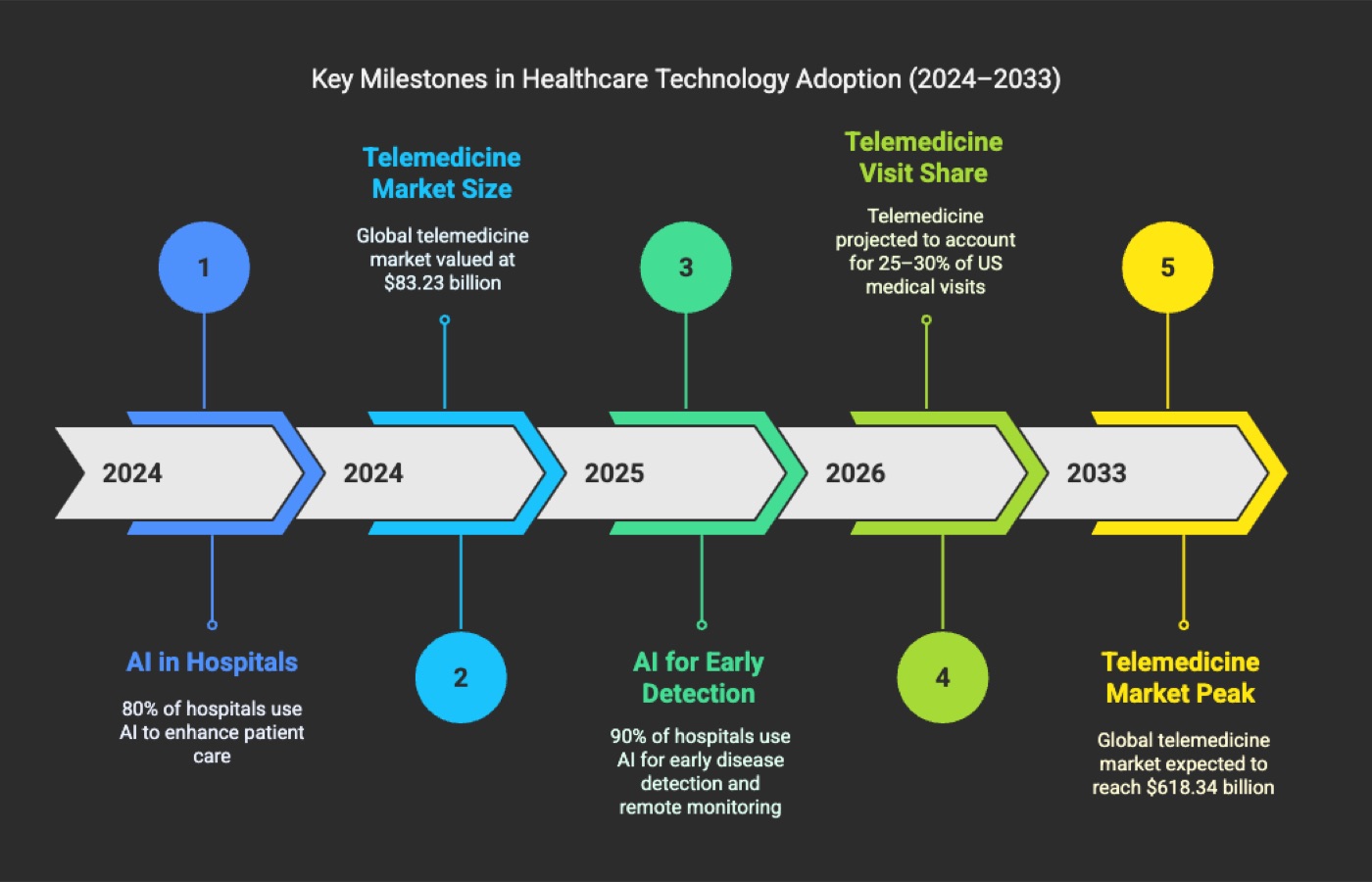
This trend represents a shift towards more patient-centered care, where technology aids in early disease detection and remote monitoring. By 2025, it's anticipated that 90% of hospitals will utilize AI for these purposes, marking a new era in healthcare delivery. The integration of these technologies is set to redefine patient experiences and outcomes, making healthcare more responsive and adaptive to individual needs.
Healthcare Transformation: AI and Telemedicine Surge
In recent years, the adoption of artificial intelligence (AI) in healthcare has surged. As of 2024, 80% of hospitals are utilizing AI to boost patient care and streamline workflows. This widespread use of AI-driven tools is reshaping how healthcare providers operate, offering improved diagnostic accuracy and personalized treatment plans. Moreover, 75% of leading healthcare companies are either experimenting with or planning to scale the use of Generative AI in their operations.
Telemedicine is also on the rise. Although its adoption rate was between 4 to 6% in 2024, projections indicate that by 2026, 25–30% of all medical visits in the United States will occur via telemedicine. This growth is driven by the increasing demand for remote healthcare solutions and the expansion of the telemedicine market, which is expected to grow from $83.23 billion in 2024 to $618.34 billion by 2033.
Regulatory changes are playing a significant role in this transformation. The potential permanent extension of existing telehealth policies by the US Congress could further cement telemedicine's place in healthcare. These changes are crucial for ensuring that healthcare providers can continue to offer remote services effectively and comply with evolving standards.
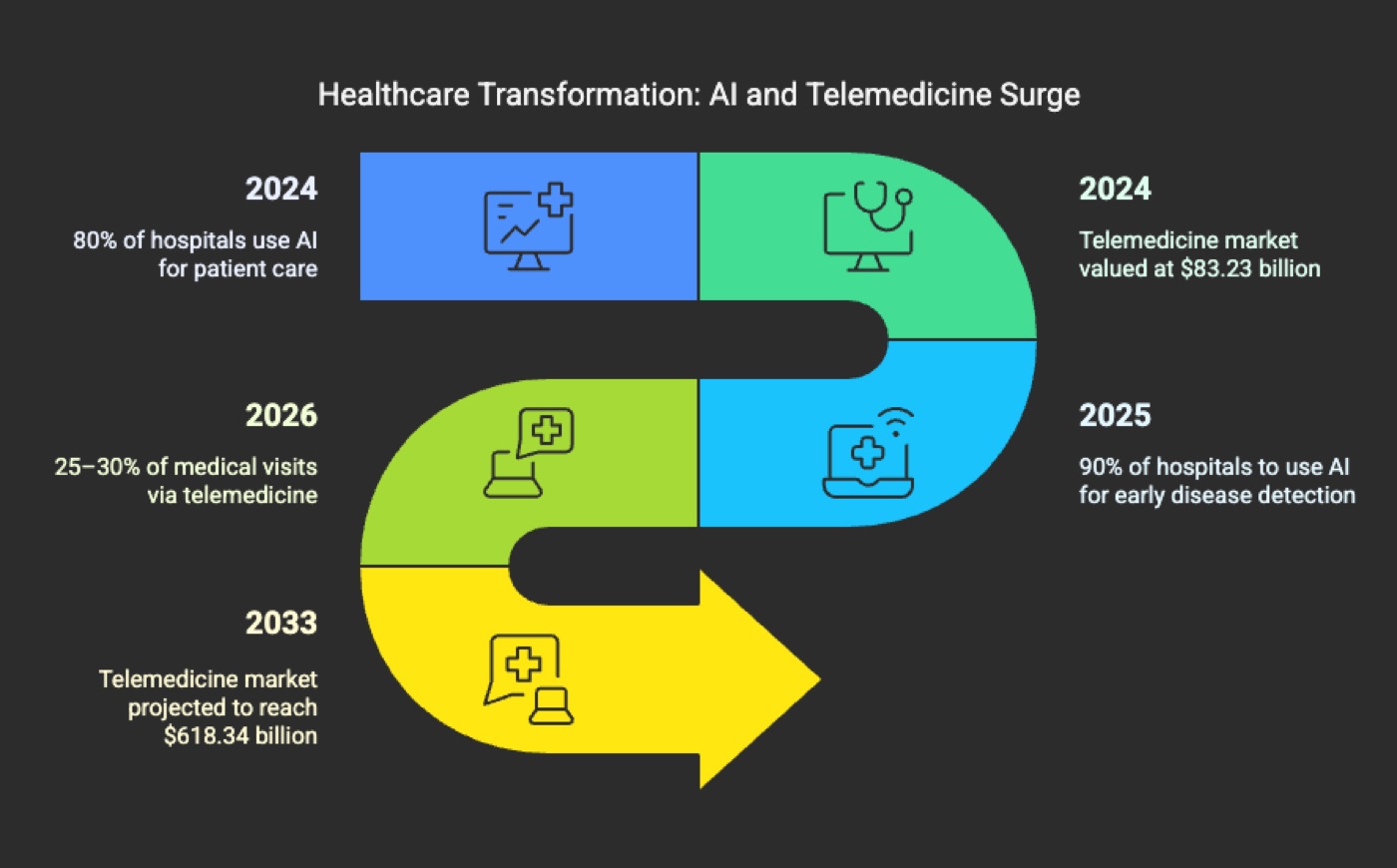
AI's impact on healthcare is profound. It not only enhances patient outcomes but also reduces medical errors. For instance, 78% of users reported a better understanding of their lab results when using AI-powered explanations. By 2025, it's anticipated that 90% of hospitals will employ AI for early disease detection and remote monitoring, highlighting the technology's growing importance in proactive healthcare management.
Healthcare Technology Integration
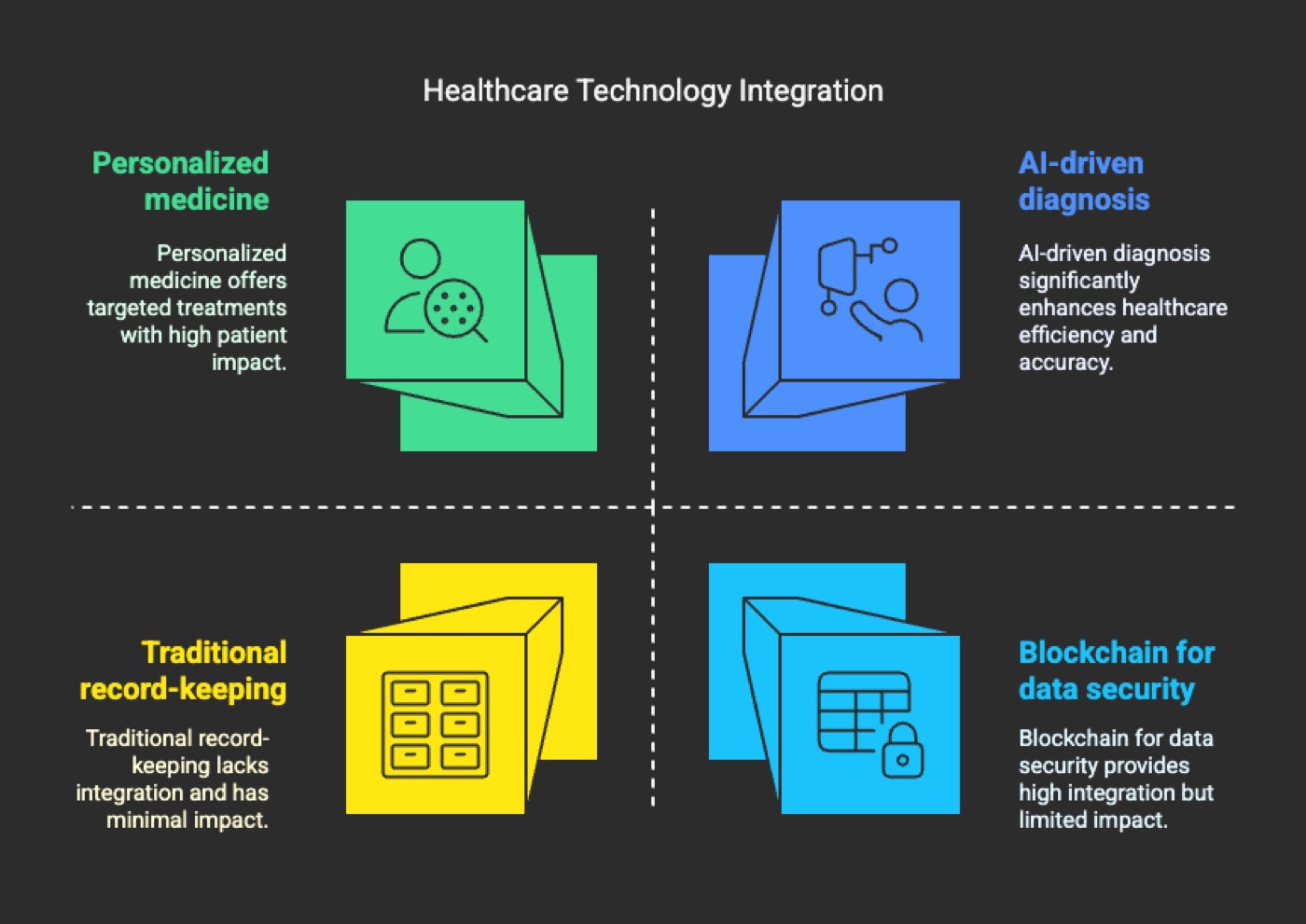
The integration of AI and automation in healthcare is set to revolutionize the industry. By 2025, we anticipate that 90% of hospitals will utilize AI for early diagnosis and remote monitoring. This shift promises to enhance patient care by providing faster and more accurate diagnoses. Automation will also alleviate administrative burdens, allowing healthcare professionals to focus more on patient interaction.
Personalized care is another promising frontier. With advancements in genetic testing and data analytics, treatments tailored to individual genetic profiles will become more common. This approach aims to improve patient outcomes and satisfaction by offering more effective and targeted therapies.
Blockchain is emerging as a key player in managing patient records. By ensuring data integrity and accessibility, it can streamline record-keeping processes and enhance patient privacy. This technology could redefine how patient information is stored and shared, fostering a more secure environment for sensitive data.
As healthcare continues to evolve, staying adaptable and informed will be crucial. The ongoing development of AI, personalized medicine, and blockchain applications will require continuous learning and collaboration among healthcare providers, tech developers, and policymakers. These advancements hold the potential to address current challenges and set new standards for patient care.