Decentralization vs Trade Wars: Resilience for Business
How decentralized systems, from supply chains to digital payments, can help businesses absorb tariffs, sanctions and the disruption of trade wars.

Decentralization offers a robust defense against the economic turmoil caused by trade wars. When tariffs rise, costs soar, and markets become unpredictable. In such times, decentralized systems show their strength. Unlike centralized systems, they distribute control across a network, reducing the risk of single-point failures. This makes them more resilient to sudden economic shifts.
Industries like finance and supply chains are already leveraging these systems. They use decentralized networks to maintain operations even when global trade tensions escalate. For example, decentralized finance (DeFi) platforms enable cross-border transactions without depending on traditional banks. This independence from central authorities allows for continued operation despite trade disruptions.
The adaptability of decentralized systems is not just theoretical. In real-world scenarios, they have proven their capability to withstand economic disruptions. By spreading control and data across many points, they minimize the impact of any one point failing. This approach provides a buffer against the volatility that trade wars often bring.
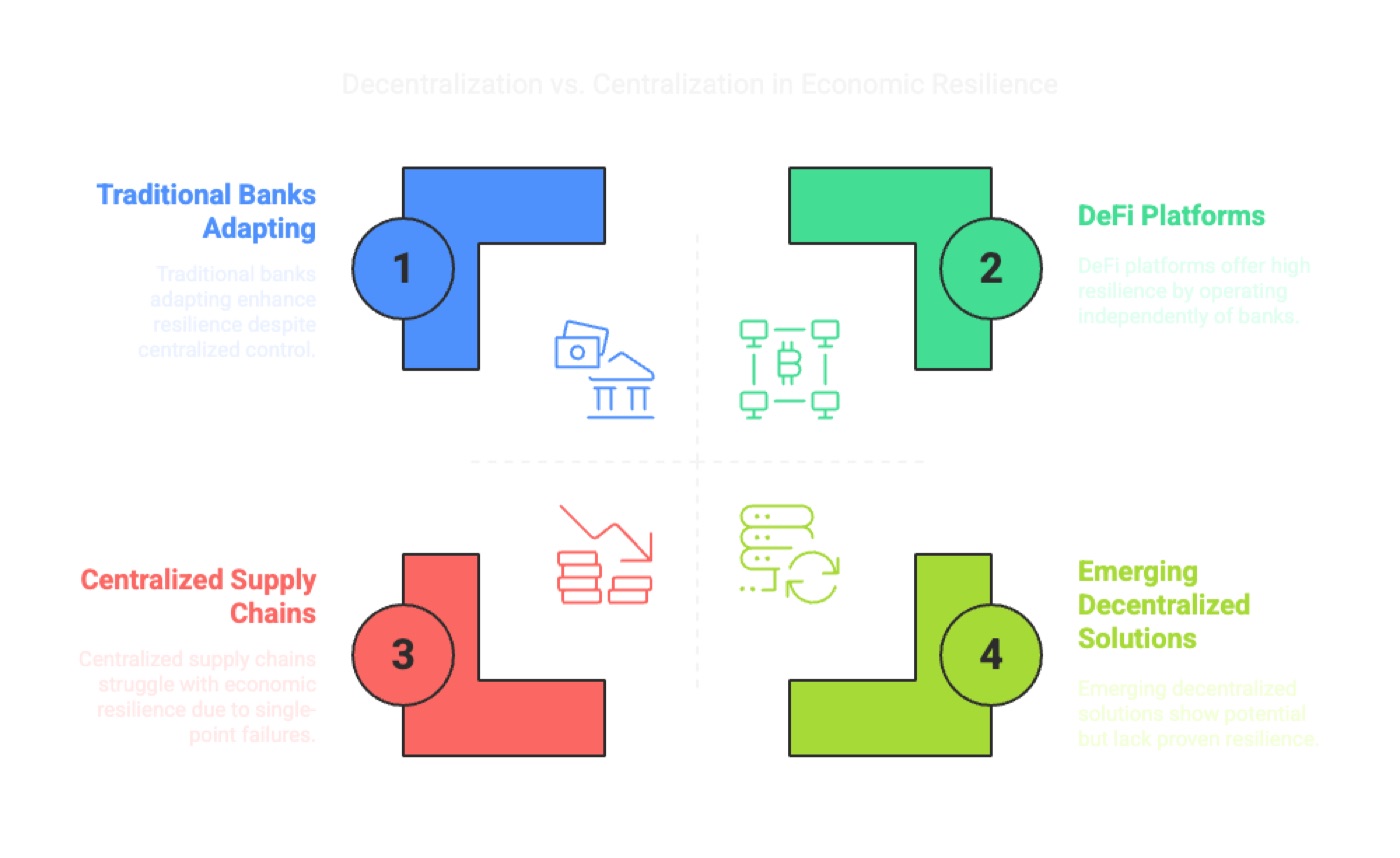
As industries face growing uncertainties, the shift towards decentralization is gaining momentum. The ability to operate independently of centralized control is becoming increasingly valuable. This trend suggests a future where decentralized systems play a critical role in stabilizing economies during trade conflicts.
Introduction: The Rise of Decentralization in a Turbulent World
Global markets are in turmoil. Trade wars are fueling economic instability. Amidst this chaos, decentralization emerges as a beacon of hope. Industries are increasingly turning to decentralized systems to weather the storm. This shift is not just a trend; it's a strategic response to the unpredictability of trade conflicts.
Trade wars have a direct impact on economies worldwide. Tariffs disrupt traditional markets. They lead to increased costs and heightened volatility. As a result, businesses are seeking alternatives. Decentralized systems offer a way to mitigate these challenges. They provide a framework that can adapt to rapid changes.
The interest in decentralization is growing. It offers a way to distribute control and reduce vulnerability. This approach is particularly appealing in uncertain times. By spreading out operations, companies can avoid the pitfalls of centralized control. This makes them more resilient in the face of economic disruptions.
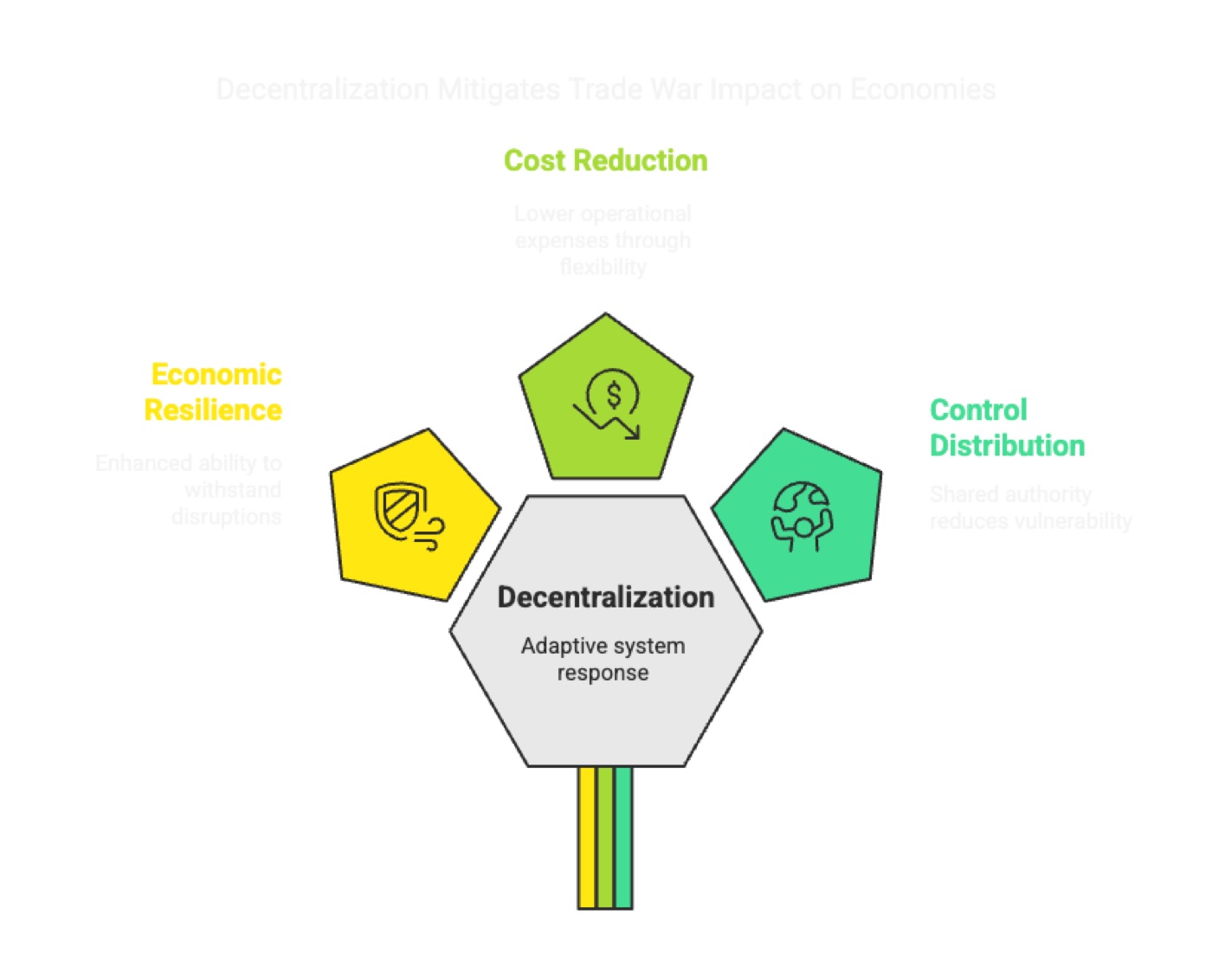
In conclusion, decentralization is gaining traction as a viable strategy. It provides industries with a tool to navigate the complexities of trade wars. As global tensions rise, the shift towards decentralized systems is likely to continue. This evolution marks a significant step in how businesses approach economic resilience.
Understanding the Basics: Centralization vs. Decentralization
Centralization means control by a single authority. This setup makes systems vulnerable. If the central point fails, everything connected to it can also fail. This is a common issue in traditional systems. They rely on a central hub to operate smoothly. When disrupted, the entire system can face significant challenges.
Decentralization, on the other hand, spreads control across a network. This reduces the risk of single-point failures. By not relying on one central authority, decentralized systems are more resilient. They continue to function even if one part of the network encounters problems. This makes them an attractive option in uncertain times.
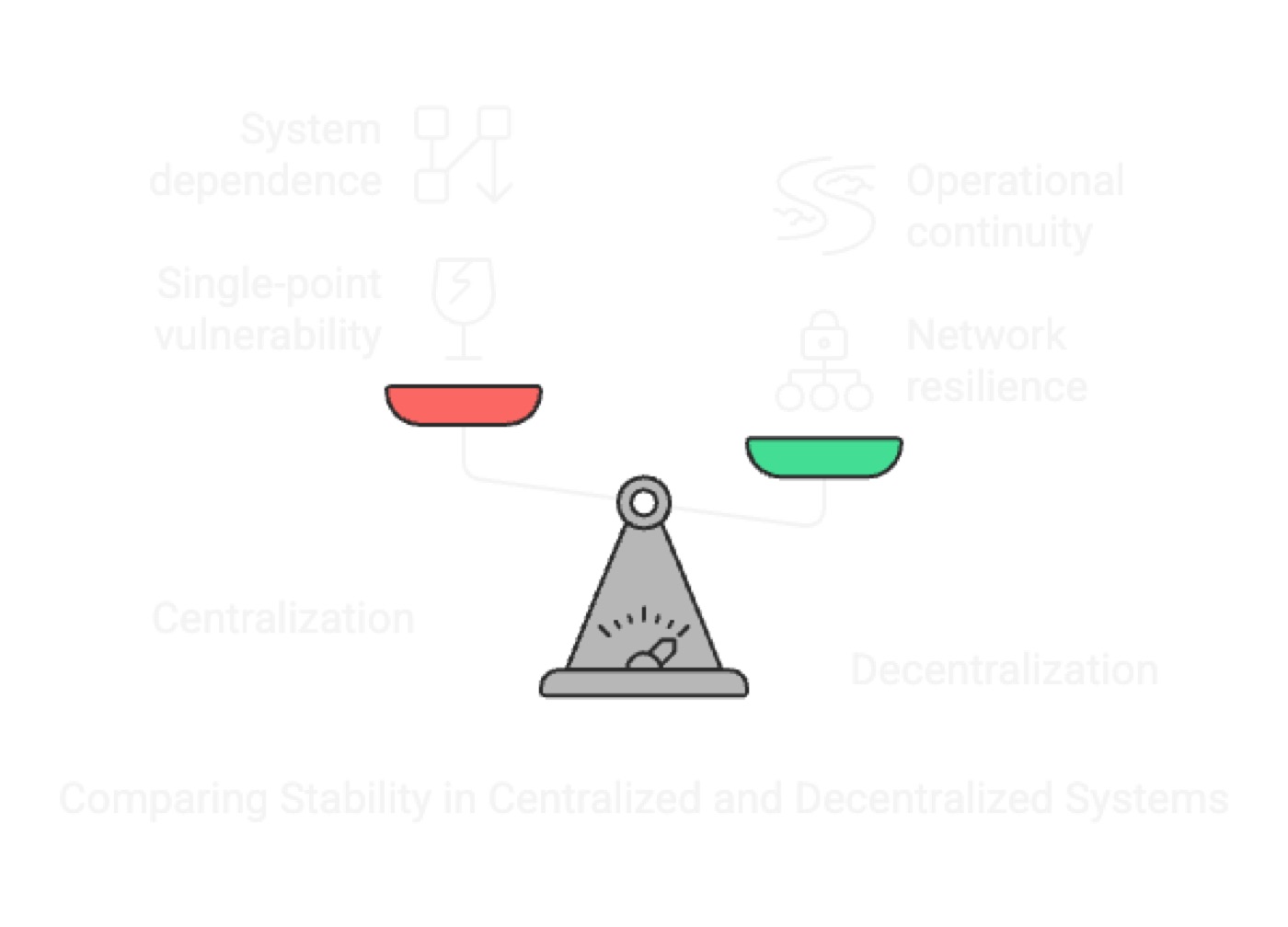
In the context of trade wars, decentralization offers a strategic advantage. It provides stability when global markets face disruptions. Industries are increasingly looking at decentralized systems as a way to maintain operations. This shift highlights the growing interest in alternative solutions that can withstand economic pressures.
Blockchain's Role in Decentralization
Blockchain is a digital ledger. It records transactions across a network. This system ensures that data is distributed. No single entity controls it. This distribution reduces the risk of data manipulation. Each transaction is verified by multiple nodes. This makes the system more robust against tampering.
Decentralization is at the core of blockchain. It removes the need for a central authority. This means that decisions are made collectively. The absence of a central point reduces vulnerabilities. If one part of the network fails, the rest remains operational. This resilience is crucial in today's volatile economic climate.
Blockchain's structure offers a solution to many industries. In finance, it allows for secure and efficient transactions. In supply chain management, it provides transparency and traceability. These applications showcase blockchain's potential to transform traditional systems.
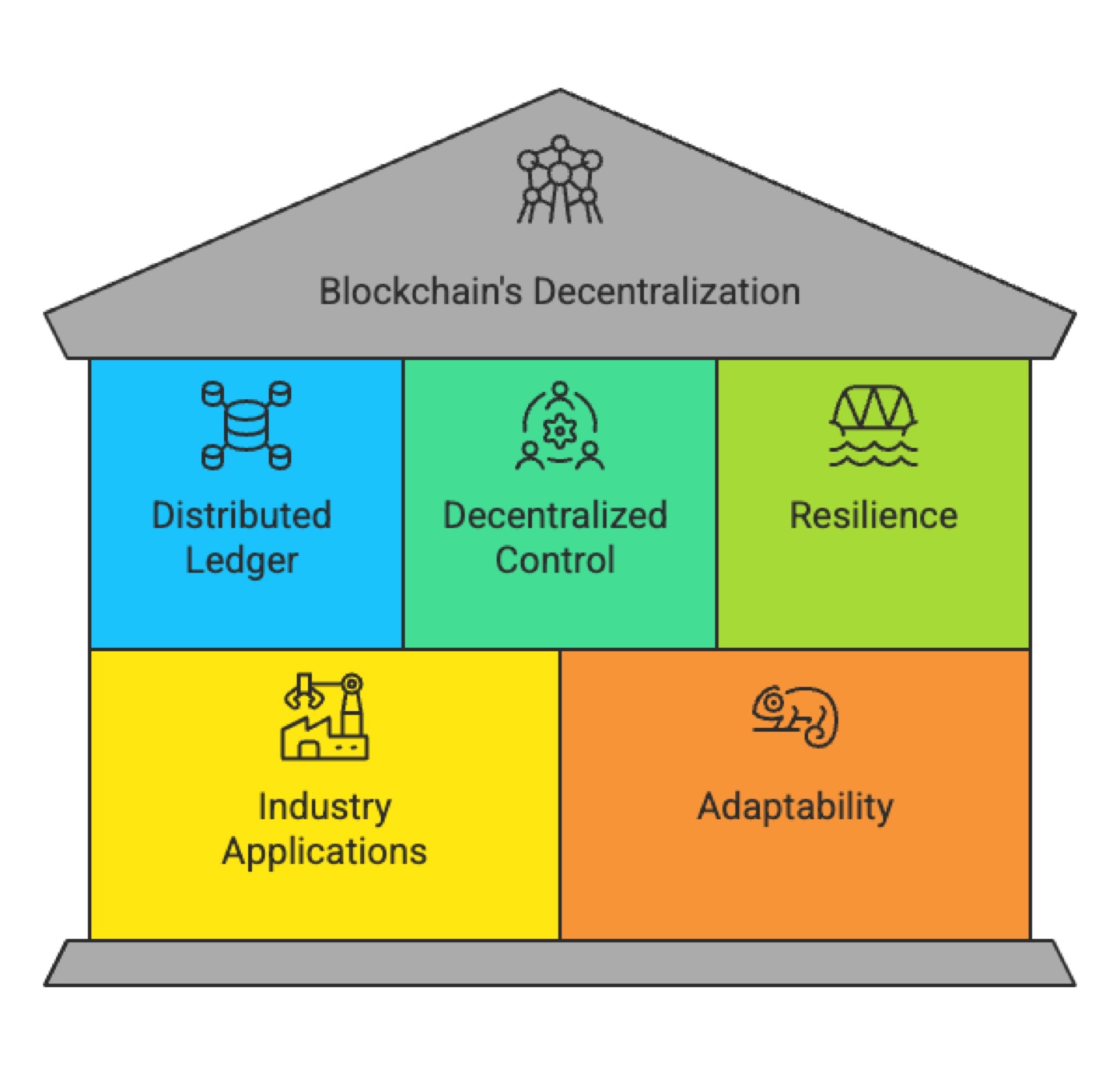
As trade wars create economic uncertainty, blockchain's decentralized nature becomes more appealing. It offers a way to navigate disruptions without relying on centralized systems. This adaptability is key for industries looking to maintain stability. Blockchain is not just a tool; it's a new way of thinking about how we manage and share information.
Trade Wars and Economic Volatility
Trade wars often introduce tariffs, which are taxes on imports or exports. These tariffs can lead to increased costs for businesses and consumers. When tariffs are announced, markets can react swiftly. For instance, the recent announcement of new tariffs by President Donald Trump on April 2, 2025, caused a notable ripple in the cryptocurrency market. Bitcoin's price fell from nearly $88,000 to just over $82,000. Ethereum and XRP also saw significant declines.
This isn't an isolated incident. Historically, trade war escalations have often led to increased volatility in cryptocurrency markets. Investors typically react to the uncertainty by pulling back, leading to price drops. The fear of inflation and economic slowdown further fuels this volatility. As a result, cryptocurrencies like Bitcoin and Ethereum experience sharp declines in value.
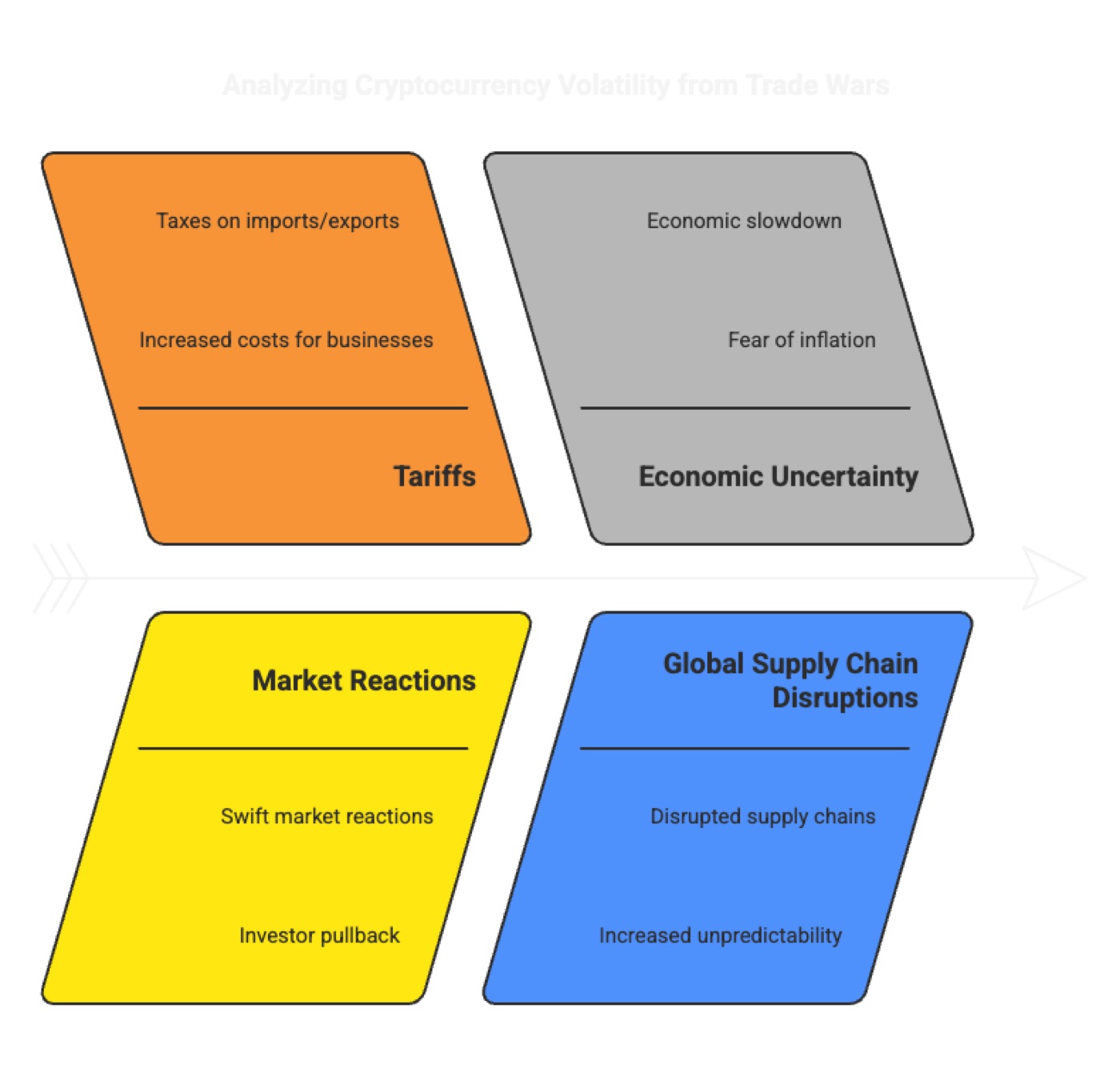
The correlation between trade wars and cryptocurrency volatility highlights a broader economic impact. Tariffs can disrupt global supply chains, leading to uncertainty across various markets. This environment of unpredictability makes cryptocurrencies particularly sensitive to trade tensions. As trade wars continue to unfold, the cryptocurrency market remains on edge, reflecting broader economic anxieties.
Decentralization as a Hedge Against Trade Wars
Decentralized systems offer a robust response to the economic disruptions caused by trade wars. Unlike centralized systems, which rely on a single point of control, decentralized systems distribute operations across a network. This distribution makes them more adaptable to sudden changes in the economic landscape. When tariffs are imposed, centralized systems often struggle due to increased costs and restricted operations. In contrast, decentralized systems can continue functioning with minimal disruption.
Industries like finance and supply chain management are increasingly turning to decentralized systems. These industries face significant challenges during trade wars, such as increased costs and logistical hurdles. By adopting decentralized models, they can maintain operations more smoothly. For example, decentralized finance (DeFi) platforms allow for cross-border transactions without relying on traditional banks. This capability is crucial during trade wars when traditional financial systems may face restrictions.
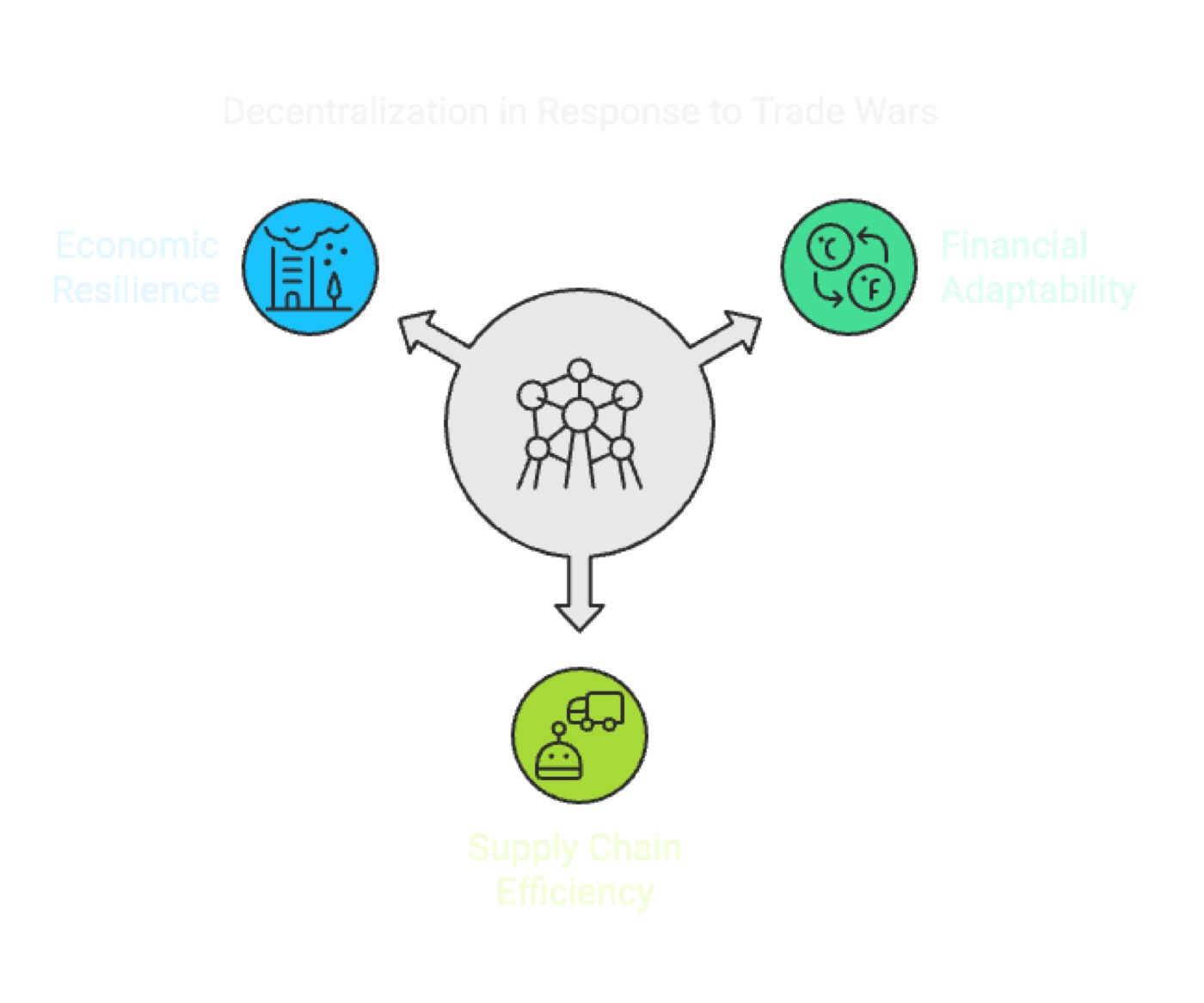
The adaptability of decentralized systems is not just theoretical. Real-world applications demonstrate their effectiveness. In the finance sector, decentralized systems enable peer-to-peer transactions, reducing dependency on banks. In supply chain management, decentralized networks can track goods more efficiently, ensuring transparency and reducing delays. These systems provide a way to navigate the complexities of trade wars, offering a stable alternative to traditional models.
As trade wars continue to create uncertainty, the shift towards decentralization is expected to grow. Industries are recognizing the benefits of decentralized systems in maintaining operations and reducing risks. This trend suggests a future where decentralization plays a critical role in economic resilience. By embracing these systems, industries can better withstand the pressures of global trade tensions.
Blockchain and Decentralized Finance (DeFi) in Action
Decentralized finance, or DeFi, is transforming how we handle money. It allows for cross-border transactions without the need for traditional banks. This system uses a network of computers to verify and record financial activities, making it more adaptable in uncertain times. As trade tensions rise, more businesses are turning to DeFi. They seek stability and flexibility that centralized systems often lack.
The adoption of DeFi is on the rise. Companies are increasingly exploring these platforms to manage financial operations amid global trade uncertainties. This trend is driven by the need for systems that can operate without the constraints of national borders or centralized control. With DeFi, businesses can conduct transactions quickly and efficiently, even during economic disruptions.
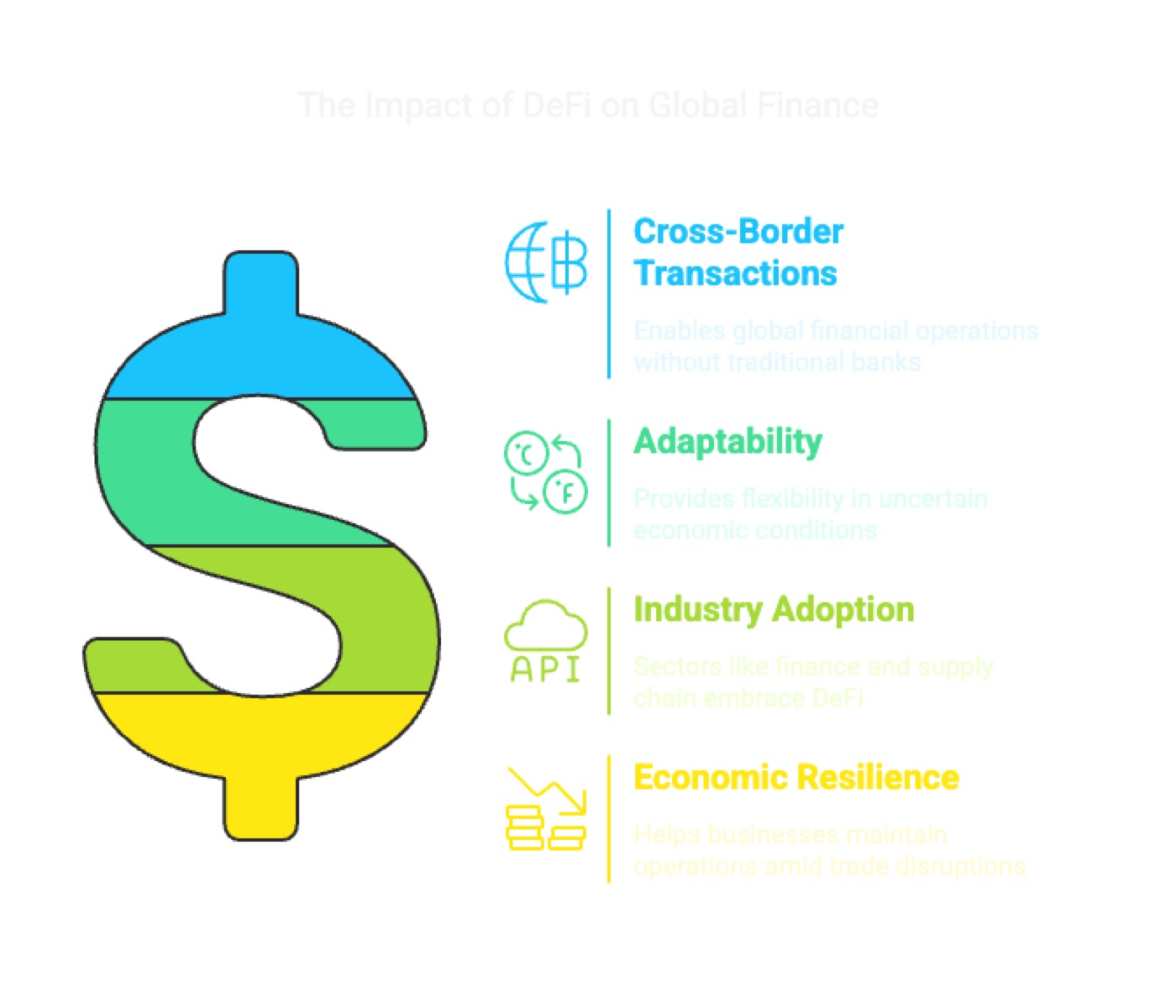
Industries are noticing the benefits. Finance and supply chain sectors are particularly interested. They see DeFi as a way to maintain operations smoothly, even when trade wars disrupt traditional markets. This shift is not just about avoiding tariffs or economic slowdowns. It's about finding new ways to thrive in a rapidly changing world. As more industries recognize the potential of DeFi, its role in the global economy is likely to expand significantly.
Economic Resilience and Future Prospects
Blockchain and decentralized finance (DeFi) offer significant economic advantages during trade wars. These systems can help businesses save costs and improve efficiency. By eliminating the need for intermediaries, they streamline operations. This can be crucial when traditional systems face disruptions due to tariffs and trade barriers.
Industry experts see a promising future for blockchain and DeFi. They predict that trade wars might actually boost their adoption. As businesses seek stability, these technologies provide a viable alternative. Their ability to operate independently of centralized control makes them attractive in uncertain times.
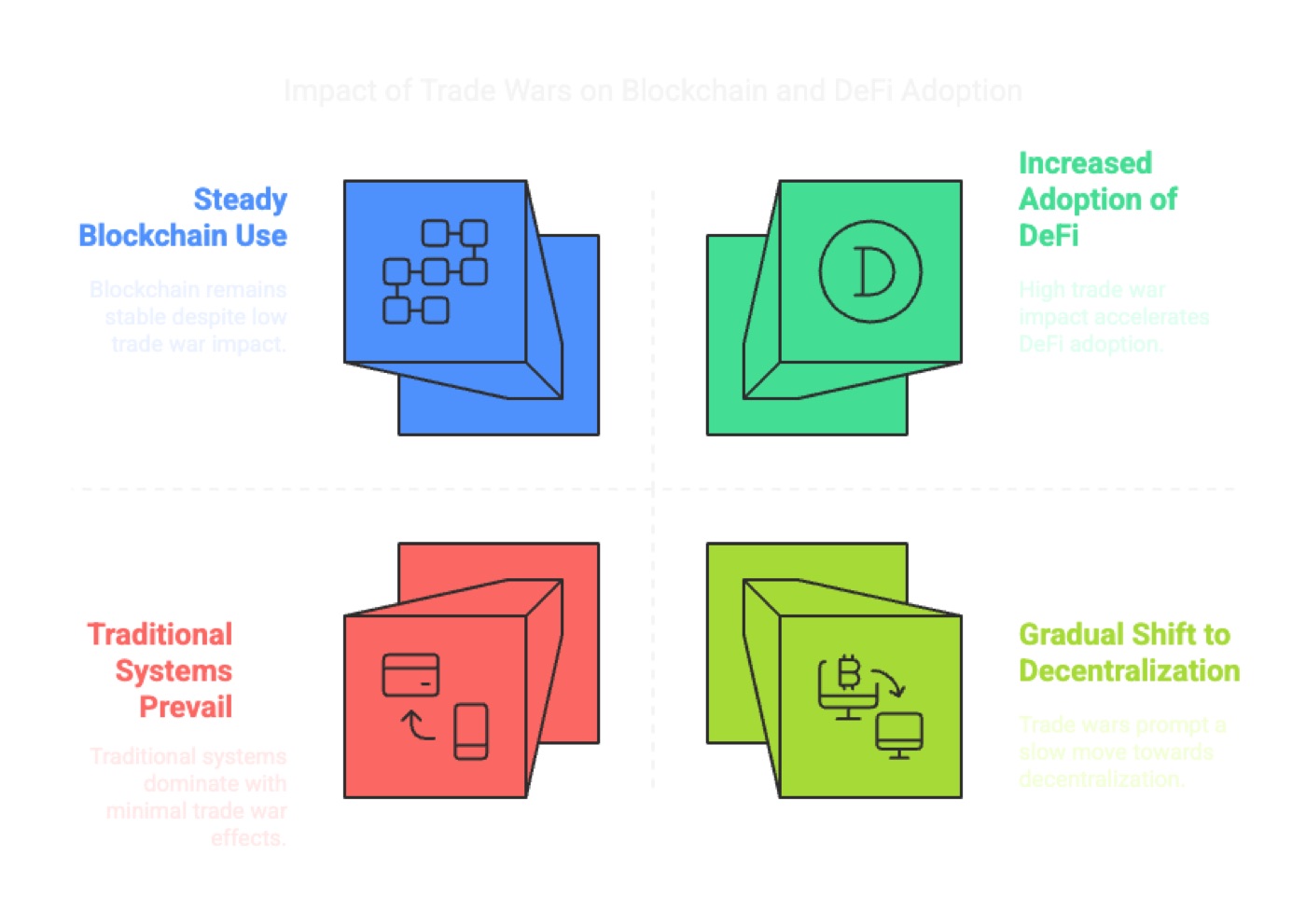
The long-term impact of trade wars could be substantial. If economic tensions persist, more industries might turn to decentralized solutions. This shift could lead to broader acceptance and integration of these systems. As a result, blockchain and DeFi could become central to global economic strategies.
In summary, blockchain and DeFi present a robust option for navigating trade-induced volatility. Their potential to reshape economic landscapes is significant. As industries adapt, these technologies are likely to play a crucial role in future economic resilience.
Regulatory Landscape and Challenges
Regulatory bodies worldwide are grappling with the rise of decentralized finance (DeFi) and blockchain amid ongoing trade tensions. The rapid growth of these technologies poses unique challenges for regulators. They must balance innovation with consumer protection. As trade wars fuel economic uncertainty, the appeal of decentralized systems grows. This has caught the attention of policymakers.
In the United States, there is a noticeable shift in the regulatory environment. Authorities are increasingly aware of the potential of decentralized systems. However, clear guidelines are still lacking. This creates a gray area for businesses and investors. The need for regulatory clarity is urgent. Without it, the risk of stifling innovation remains high.
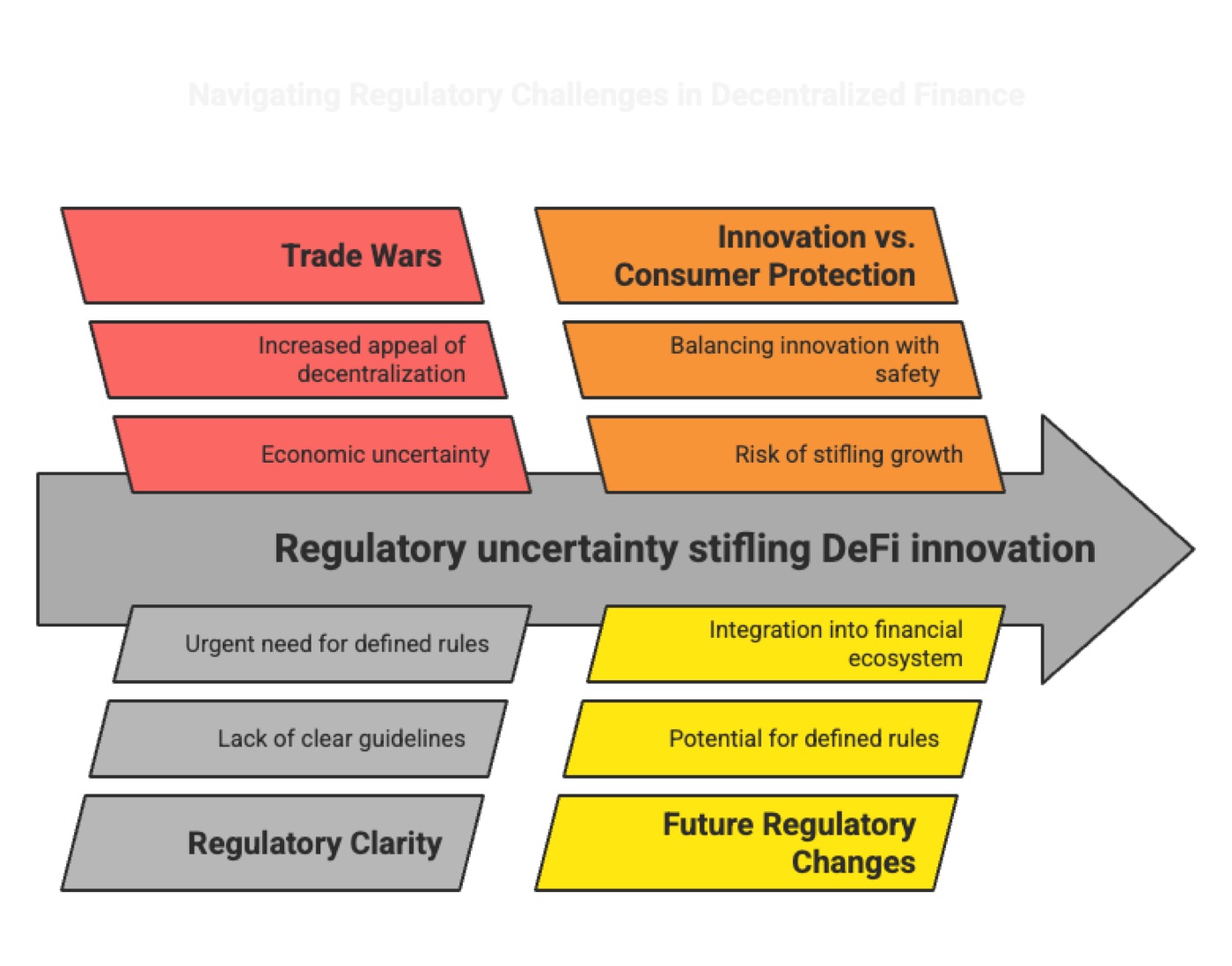
Looking ahead, potential regulatory changes could reshape the landscape. Experts predict a move towards more defined rules. This would help integrate decentralized systems into the broader financial ecosystem. Such changes could provide a stable framework for growth. As trade wars continue to impact global markets, the role of regulation becomes even more critical.
The future of decentralized systems depends on how well regulatory bodies adapt. They must address the challenges while fostering an environment that encourages growth. The coming years will be crucial in determining the trajectory of these technologies. The balance between regulation and innovation will be key.
Conclusion: Embracing Decentralization for Stability
Decentralization stands as a robust shield against the chaos of trade wars. By distributing control, it mitigates risks tied to centralized systems. Industries worldwide are beginning to see the value in this approach. As tariffs and trade tensions rise, decentralized systems offer a way to maintain stability and continuity. Blockchain, with its distributed ledger, is at the forefront of this shift. It enables industries to operate smoothly, even amidst economic disruptions.
The path forward is clear. Embracing decentralized systems can help industries navigate the unpredictable waters of global trade. This strategy not only ensures operational resilience but also positions businesses to thrive in a rapidly changing world. As trade tensions persist, the call to action is evident. Industries must explore and adopt decentralized solutions to safeguard their future.