Crypto Payment Gateways: Market, Features and Choices
How crypto payment gateways work, how the market is growing, the features that matter and how businesses choose a provider.

Introduction
Crypto payment gateways are reshaping the future of digital transactions. This innovative technology is rapidly gaining traction in the global marketplace. In 2023, the crypto payment gateway market was valued at USD 1.2 billion. Experts project this figure to soar to USD 4.4 billion by 2032. This represents a compound annual growth rate (CAGR) of 15% from 2024 to 2032.
The rise of cryptocurrencies has created a need for specialized payment solutions. Crypto payment gateways fill this gap by enabling businesses to accept digital currencies. They offer unique advantages over traditional payment methods. These include lower fees, enhanced security, and faster transaction times.
As more consumers embrace cryptocurrencies, businesses are taking notice. The ability to process crypto payments is becoming a competitive edge. It opens up new markets and customer bases. For many companies, integrating crypto payment gateways is no longer optional—it's essential for staying relevant in a rapidly evolving digital economy.
The growth of this market reflects a broader shift towards digital currencies. It signals a future where crypto payments are as common as credit cards. As we explore this trend, it's clear that crypto payment gateways are not just a passing fad. They're a glimpse into the future of global commerce.
Understanding Payment Gateways
Payment gateways are the backbone of online transactions. They're the digital cashiers that process your payments when you shop online. Traditional payment gateways handle credit cards, debit cards, and bank transfers. They verify your payment info and make sure the money gets from your account to the seller's.
Crypto payment gateways are the new kids on the block. They do the same job, but for cryptocurrencies. These gateways let businesses accept Bitcoin, Ethereum, and other digital coins. They're changing how we think about online payments.
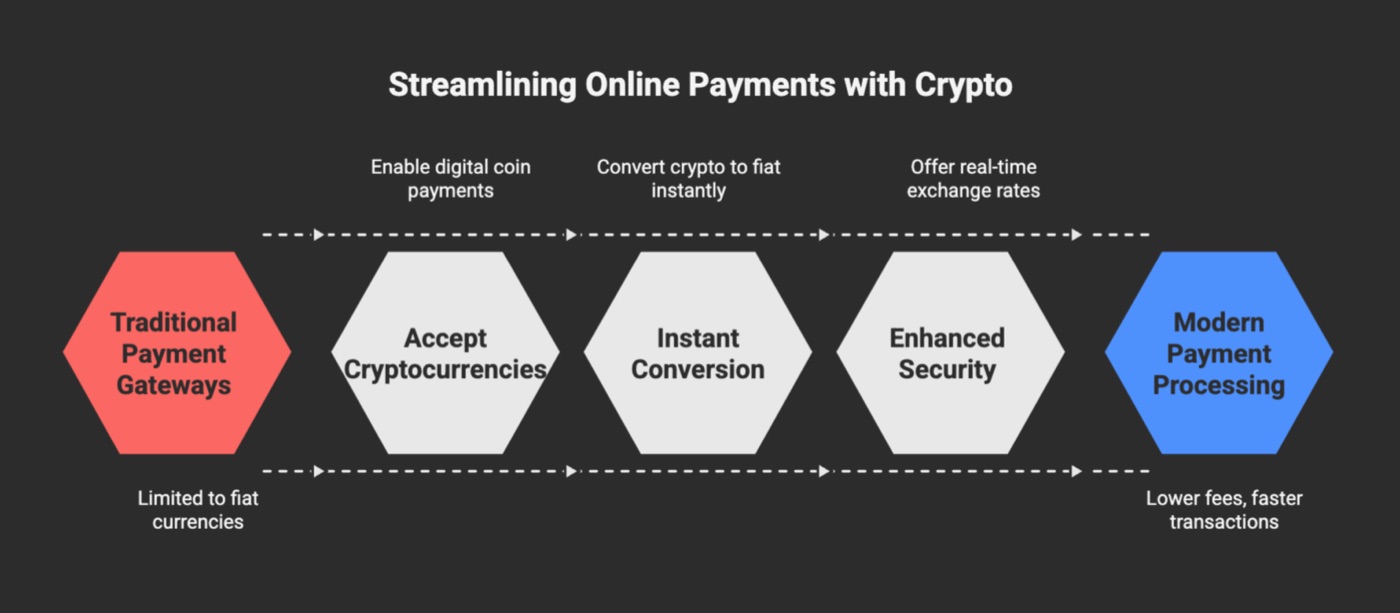
The big difference? Crypto gateways can convert digital coins to regular money instantly. This protects businesses from the wild price swings of cryptocurrencies. They also offer some cool features like real-time exchange rates and stronger security.
Crypto gateways are growing fast. The market was worth $1.2 billion in 2023. Experts think it'll hit $4.4 billion by 2032. That's a 15% growth rate each year. More businesses are jumping on board, seeing the benefits of lower fees and faster transactions.
Advantages of Crypto Payment Gateways
Crypto payment gateways offer several key benefits over traditional payment methods. You'll save money with lower transaction fees, typically ranging from 0.5% to 1.5%. This is significantly less than the 2% to 4% fees charged by credit card processors.
Security is enhanced through advanced protocols like zero-knowledge proofs and improved encryption. These features protect your transactions and customer data from potential threats.
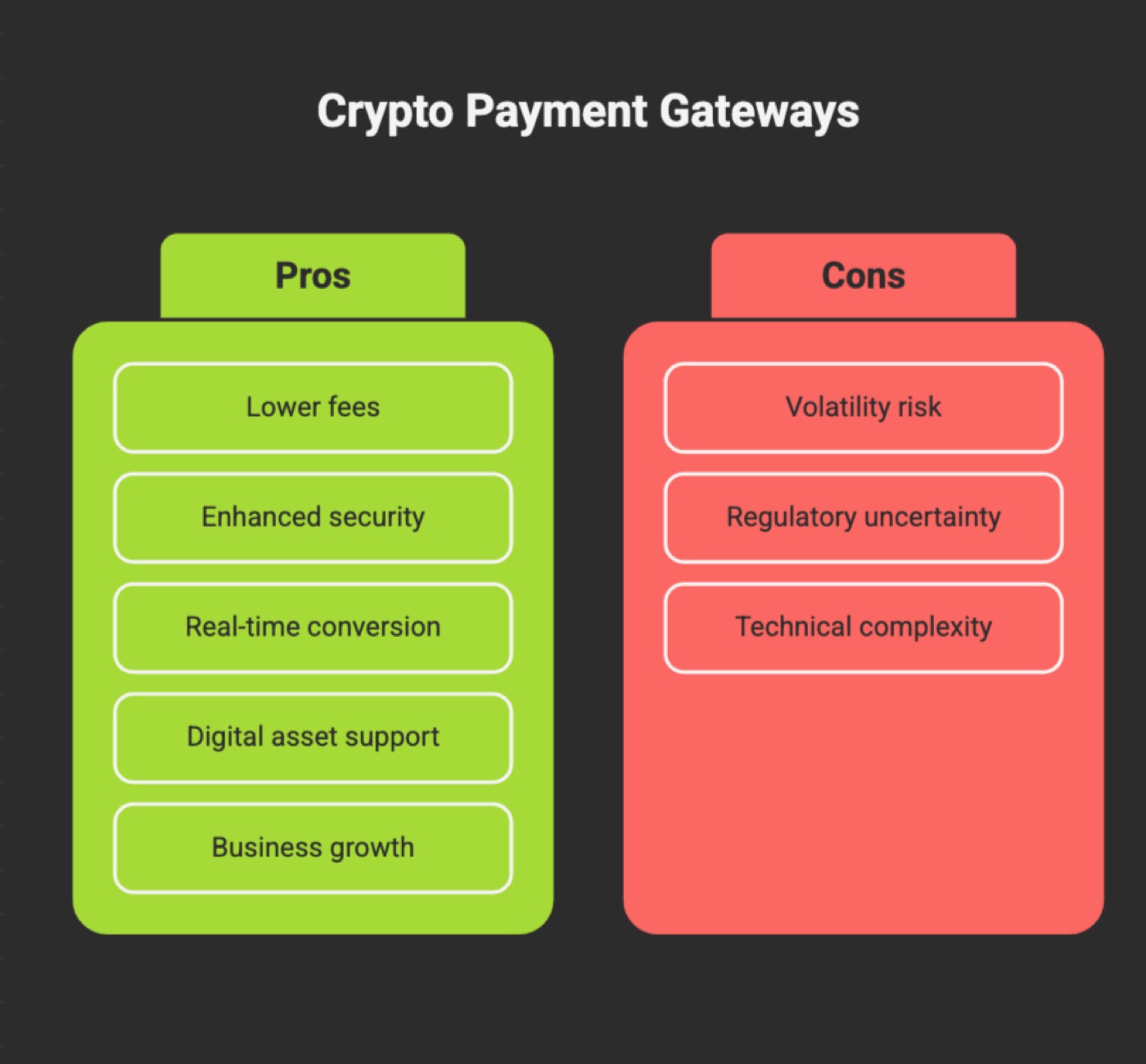
Real-time exchange rate conversion is another advantage. This feature allows you to accept payments in various cryptocurrencies while receiving funds in your preferred currency. It simplifies accounting and reduces exposure to market volatility.
Crypto gateways support popular digital assets like Bitcoin, Ethereum, and stablecoins. This flexibility lets you cater to a wider customer base and tap into the growing cryptocurrency market.
By integrating a crypto payment gateway, you'll reduce costs, enhance security, and expand your payment options. These benefits position your business for growth in the evolving digital economy.
Integration Process for Businesses
Integrating a crypto payment gateway into your business operations is a strategic move. You'll need to start by researching and selecting the right provider. Look for gateways that support the cryptocurrencies your customers use most.
Next, assess your current infrastructure. You may need to upgrade your systems to handle crypto transactions smoothly. This could involve new software or hardware investments.
Security is paramount. Implement robust measures to protect your customers' data and transactions. This includes encryption, multi-factor authentication, and regular security audits.
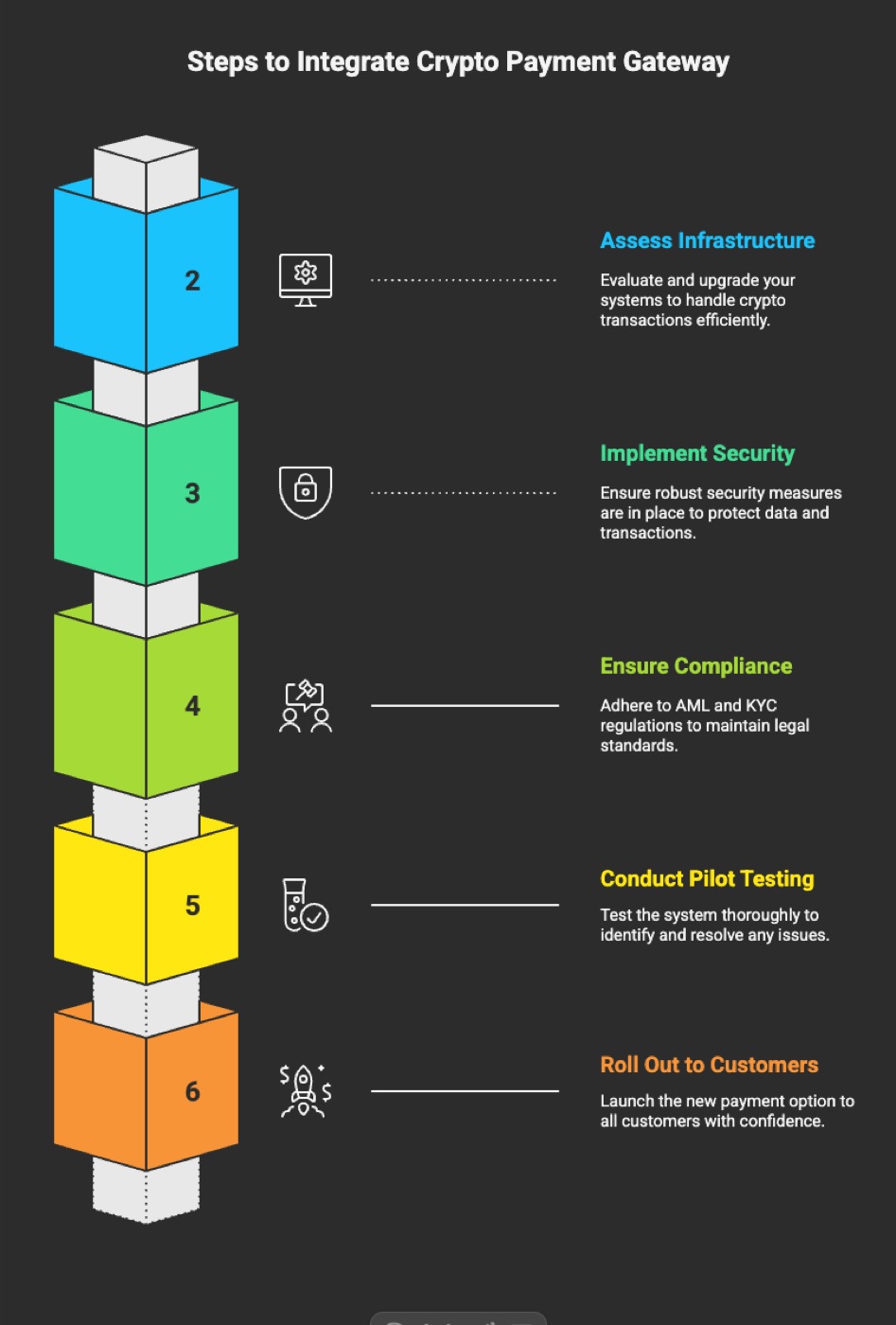
Regulatory compliance is crucial. Ensure your chosen gateway adheres to AML and KYC regulations. Stay informed about upcoming laws like the EU's MiCA regulation.
Before full launch, conduct thorough pilot testing. This helps identify and resolve any issues. Once you're confident in the system's performance, roll out the new payment option to all customers.
Remember, the integration process may vary based on your business size and needs. Seek expert advice if you're unsure about any steps.
Security Considerations
Crypto payment gateways use advanced security measures to protect your transactions. Multi-layer security is a key feature, combining several protective elements. These gateways use strong encryption to safeguard your data. They also often require two-factor authentication, adding an extra layer of protection.
Transaction monitoring is another crucial security aspect. These systems constantly watch for suspicious activity. If anything looks off, they can quickly flag or stop transactions. This helps prevent fraud before it happens.
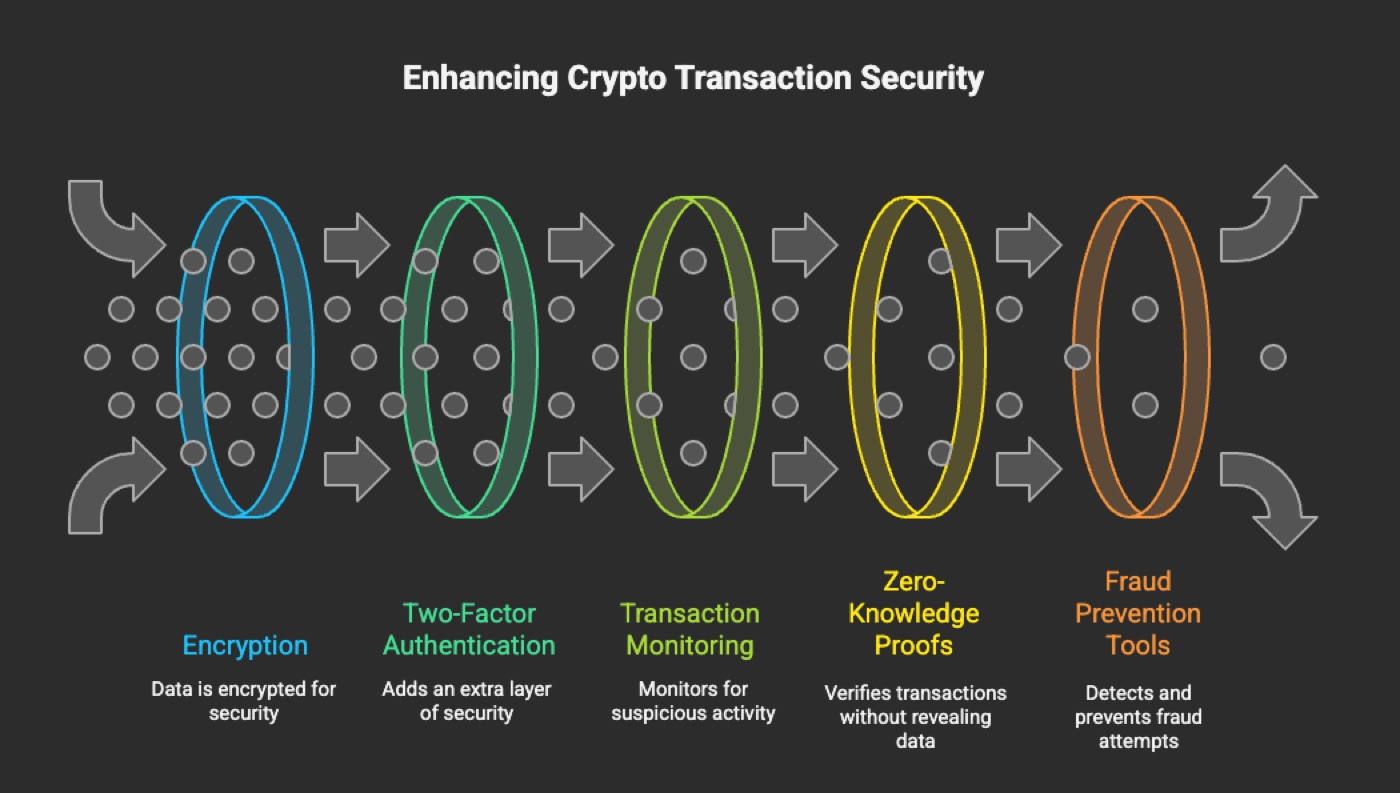
Many crypto payment gateways now use zero-knowledge proofs. This technology lets them verify transactions without seeing sensitive information. It's a powerful tool for maintaining privacy while ensuring security.
Fraud prevention tools are also built into these systems. They use complex algorithms to spot potential scams or theft attempts. These tools work in real-time, offering immediate protection for your funds.
Remember, while these security measures are robust, you still play a role in keeping your transactions safe. Always use strong passwords and be cautious about sharing sensitive information online.
Regulatory Compliance
Crypto payment gateways face a complex regulatory landscape. The European Union's Markets in Crypto-Assets (MiCA) regulation, set to roll out in 2024, will reshape the industry. This framework aims to protect consumers and ensure fair practices across EU member states.
Anti-money laundering (AML) and know-your-customer (KYC) regulations are crucial for crypto payment providers. These rules help prevent financial crimes and ensure user identity verification. Businesses must implement robust AML and KYC procedures to stay compliant.
Regulatory approaches vary globally. Some countries embrace crypto payments, while others impose strict controls or outright bans. The U.S. takes a cautious stance, with multiple agencies overseeing different aspects of crypto transactions. In contrast, El Salvador has adopted Bitcoin as legal tender, showcasing a more open approach.
Navigating this diverse regulatory landscape is challenging for businesses. Partnering with experienced crypto payment gateway providers can help ensure compliance across different regions. As the industry evolves, expect more standardized global regulations to emerge, potentially simplifying cross-border crypto transactions.
Market Trends and User Adoption
Crypto payment gateways are gaining traction fast. By 2024, over 420 million people worldwide will use cryptocurrencies for payments. This represents a 28% jump from 2022. The surge shows growing trust in digital currencies.
North America leads the charge. In 2023, it claimed 37% of the market share. This dominance stems from a tech-savvy population and favorable regulations. Other regions are catching up, though.
Businesses are taking notice. Lower fees and enhanced security are key draws. The ability to tap into a global customer base is another plus. As more companies adopt, it creates a network effect.
User-friendly interfaces are driving adoption. Modern crypto payment gateways offer smooth experiences. They're often as easy to use as traditional payment methods. This ease of use is crucial for mainstream acceptance.
The rise of stablecoins is another trend to watch. These cryptocurrencies, pegged to fiat currencies, reduce volatility concerns. They're becoming a popular choice for both businesses and consumers.
Mobile payments are also fueling growth. Many crypto payment gateways offer robust mobile solutions. This aligns with the broader trend of smartphone-based transactions.
As the market evolves, expect more innovations. The line between traditional and crypto payments may blur. The future of payments is digital, and crypto gateways are at the forefront.
Challenges and Solutions
Integrating crypto payment gateways isn't without hurdles. Technical issues can arise during setup. But don't worry – most providers offer robust support. They'll guide you through the process step-by-step.
Market volatility is another concern. Crypto prices can swing wildly in short periods. This makes pricing tricky for businesses. Stablecoins offer a solution. These cryptocurrencies are pegged to fiat currencies, providing more stability.
Regulatory compliance remains a challenge. Crypto laws vary widely between countries. They're also constantly evolving. It's crucial to stay informed. Consider consulting with legal experts specializing in cryptocurrency regulations. They can help you navigate this complex landscape.
Despite these challenges, solutions exist. With the right approach, businesses can successfully implement crypto payment gateways. The potential benefits – lower fees, enhanced security, and access to a growing market – make it worth the effort.
Future Outlook
Crypto payment gateways are set to transform the financial landscape. Blockchain technology advancements will likely boost transaction speeds and reduce costs. Layer 2 solutions like Bitcoin's Lightning Network and Ethereum's roll-ups are already improving scalability.
Integration with fintech platforms is on the horizon. This will create seamless experiences for users across various financial services. Expect to see more partnerships between crypto payment providers and traditional financial institutions.
The range of supported cryptocurrencies will expand. While Bitcoin and Ethereum dominate now, other digital assets will gain traction. Stablecoins, in particular, may see increased adoption due to their price stability.
As the market matures, user interfaces will become more intuitive. This will make crypto payments accessible to a broader audience. Improved security measures will also boost confidence in these systems.
Regulatory clarity will shape the industry's growth. As governments establish clearer guidelines, businesses will feel more confident adopting crypto payment solutions. This could lead to widespread acceptance across various sectors.
The future of payments is digital, decentralized, and dynamic. Crypto payment gateways are at the forefront of this revolution. They're not just changing how we pay – they're redefining the very concept of money.
Conclusion
Crypto payment gateways are reshaping the future of digital transactions. With lower fees, enhanced security, and growing adoption, they offer compelling benefits for businesses. The market's rapid expansion, projected to reach $4.4 billion by 2032, signals a shift in payment preferences. As over 420 million people are expected to use cryptocurrencies for payments by 2024, the time to act is now.
Integrating these solutions does come with challenges. You'll need to navigate regulatory requirements, manage volatility, and ensure seamless technical implementation. However, the potential rewards – including cost savings and access to a broader customer base – make it a worthwhile consideration.
The crypto payment landscape is evolving quickly. Blockchain advancements and increasing integration with fintech platforms are opening new possibilities. As regulations mature and user adoption grows, crypto payment gateways will likely become a standard option for businesses worldwide.
Don't get left behind in this payment revolution. Start exploring crypto payment gateway solutions today to position your business for the future of finance.
Further reading: VARA inspection readiness · Supervisors want evidence, not policies