AI Model Distillation: The DeepSeek and OpenAI Dispute
What AI model distillation is, why DeepSeek’s alleged use of OpenAI outputs sparked a legal debate, and what it means for IP and AI development.

Introduction
The rise of AI models training other AI systems is a significant trend. This shift is reshaping how artificial intelligence evolves. Recently, DeepSeek's use of OpenAI's model outputs has sparked legal debates. These discussions highlight the challenges in AI development today.
AI model distillation is at the heart of this issue. This process involves transferring knowledge from a large model to a smaller one. It aims to reduce model size while maintaining performance. This technique allows AI to operate on devices with limited resources. However, it also raises questions about intellectual property rights.
The DeepSeek and OpenAI case exemplifies these challenges. DeepSeek allegedly used outputs from OpenAI's models without permission. This situation underscores the importance of respecting intellectual property in AI. Companies must navigate these legal waters carefully to avoid conflicts.
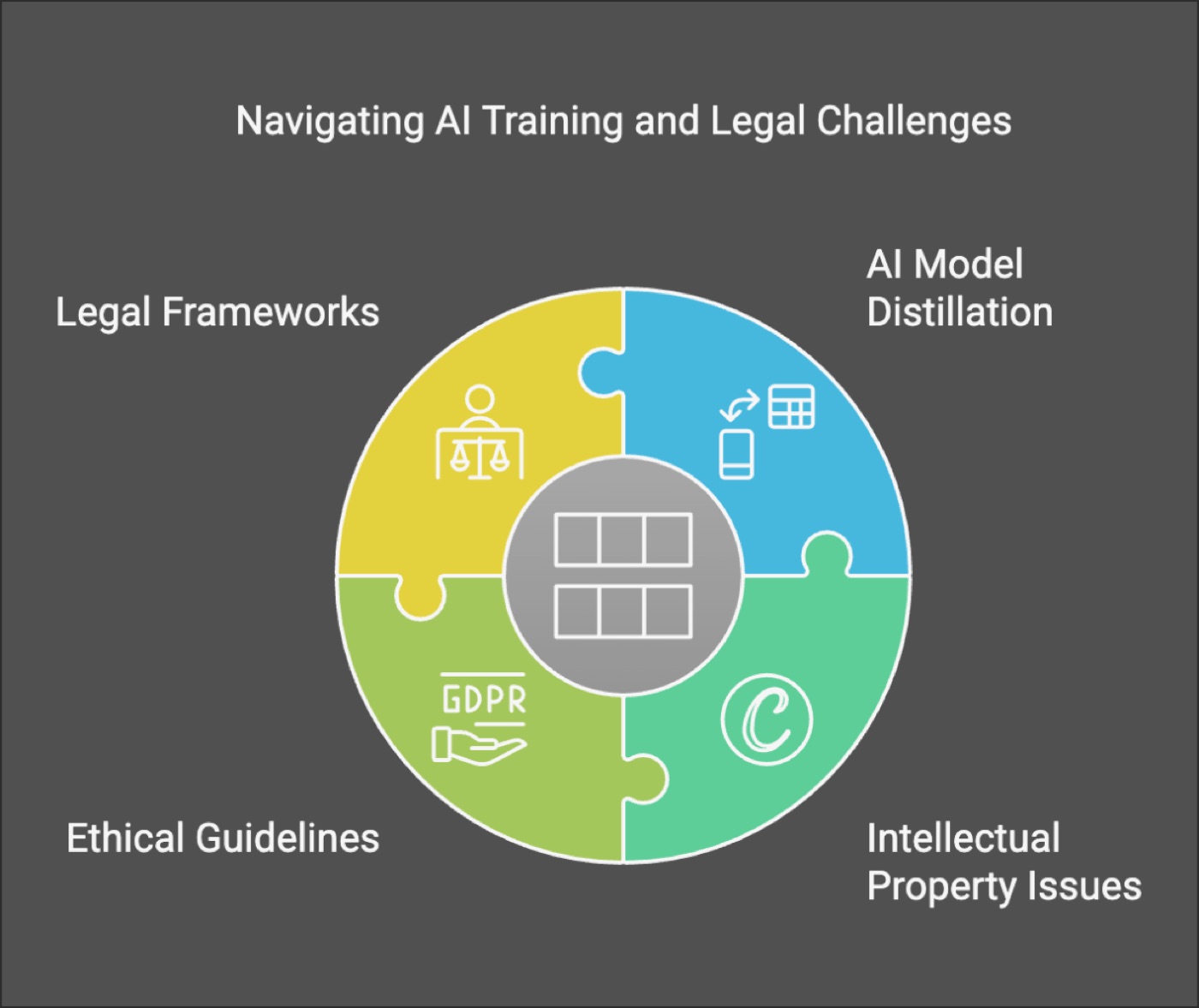
The implications of AI training AI are vast. As AI systems become more autonomous, the need for ethical guidelines grows. The industry must establish standards to govern the use of AI outputs. This will ensure fair practices and protect intellectual property rights.
Looking ahead, the landscape of AI development is set to change. Legal frameworks will likely evolve to address these new challenges. Companies must adapt to these changes to stay compliant. The future of AI depends on how well these issues are managed.
Fundamentals of AI Model Training and Distillation
Artificial Intelligence has revolutionized how we approach complex problems. At the heart of AI are models like ChatGPT, which learn from vast amounts of data. These models are trained to understand patterns and make predictions. However, as these models grow, they become resource-intensive. This is where model distillation comes into play.
Model distillation is a process that transfers knowledge from a large model, known as the teacher, to a smaller model, called the student. The goal is to retain the performance of the larger model while reducing its size. This process involves the student model learning to mimic the outputs of the teacher model. The result is a model that is not only smaller but also requires less computational power.
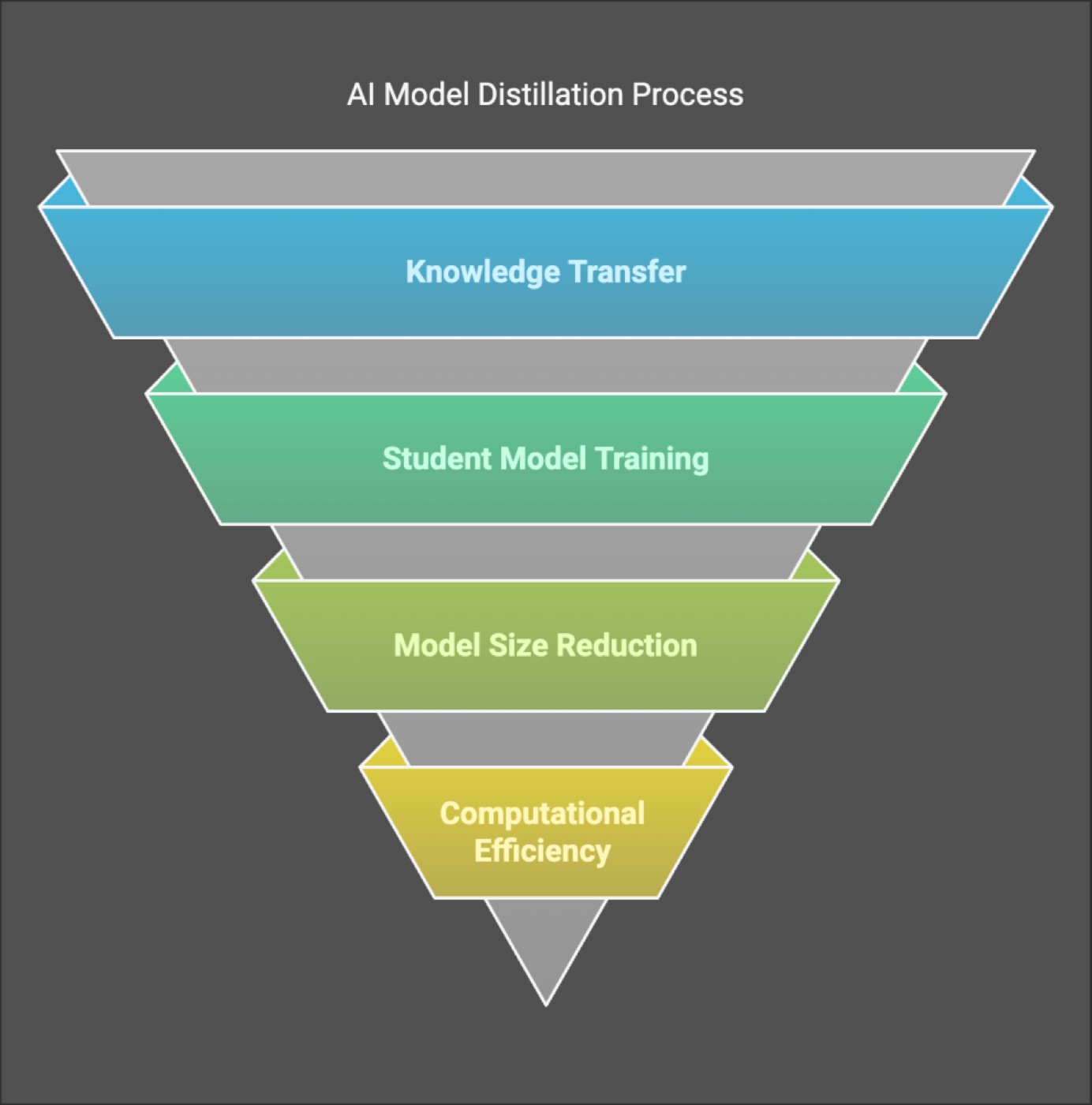
One of the main benefits of model distillation is the significant reduction in model size. Distilled models can be thousands of times smaller and faster than their original counterparts. This makes them ideal for deployment on devices with limited resources, such as smartphones and IoT systems. Additionally, these models consume less energy, leading to cost savings in operational expenses.
The distillation process ensures that the student model captures essential patterns from the teacher model. Although there might be a slight loss in accuracy, the performance is often comparable. The choice of training method, whether offline or online, can impact the efficiency of the distillation process. Offline distillation is common, where the student model learns from the outputs generated by the teacher model on a dataset. This method is efficient but might not capture dynamic data changes.
Understanding these fundamentals is crucial as AI continues to evolve. As more companies adopt model distillation, the implications for efficiency and scalability become more apparent. This technique is not just about making models smaller; it's about making AI more accessible and practical for real-world applications.
Advanced Aspects of AI Distillation
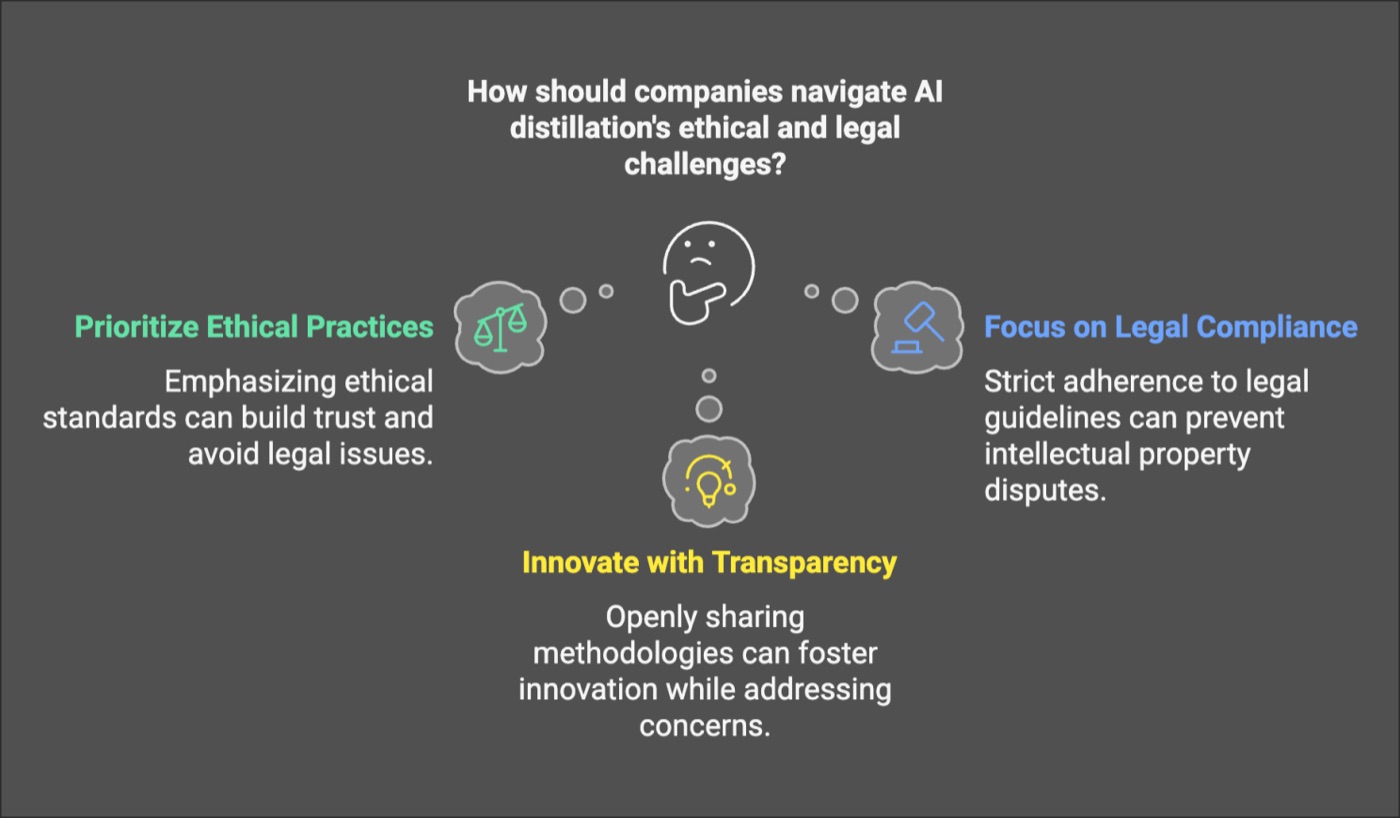
AI distillation is more than just shrinking models. It involves complex processes that replicate decision-making and mimic data patterns. This technique allows smaller models to learn from larger ones, capturing essential knowledge while reducing size and resource needs. However, the process is not without its challenges. One major concern is the ethical and legal implications, especially regarding intellectual property. The case of DeepSeek and OpenAI highlights these issues. DeepSeek's use of OpenAI's model outputs raises questions about ownership and rights. As AI continues to evolve, understanding these complexities becomes crucial. Companies must navigate these waters carefully to avoid legal pitfalls and ensure ethical practices.
Practical Examples and Real-World Scenarios
AI model distillation is reshaping how companies deploy technology. For instance, the unauthorized use of ChatGPT outputs highlights challenges in originality and ownership. When companies use model outputs without permission, it raises questions about who owns the resulting work. This can lead to legal battles over intellectual property rights.
Companies like OpenAI and DeepSeek are at the forefront of using model distillation. OpenAI has streamlined its models, making them more accessible across platforms. This allows them to reach a wider audience while maintaining performance. DeepSeek, although not detailed in specific outcomes, likely uses distillation to enhance its AI solutions. This approach helps in scaling AI applications efficiently.
Distillation is more than just copying outputs. It involves transferring knowledge and patterns from one model to another. This process ensures that smaller models can perform tasks with similar accuracy to larger ones. However, using another model's outputs without permission can lead to legal issues. It's crucial for companies to navigate these waters carefully to avoid potential lawsuits.
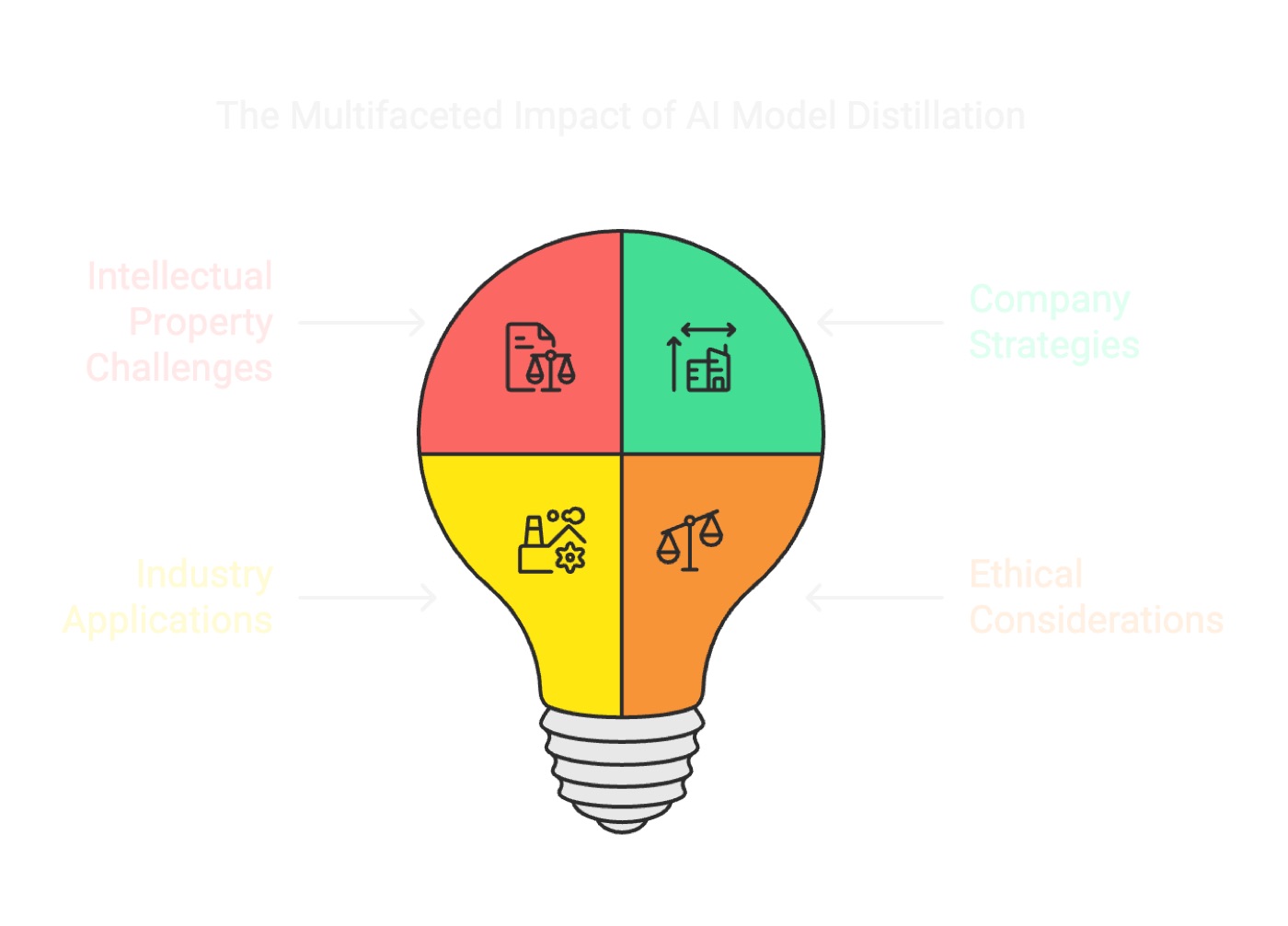
The impact of distillation is evident in various industries. In gaming, it enables real-time applications on consoles and mobile devices. In healthcare, it supports diagnostic tools in environments with limited resources. These examples show how distillation is making AI more adaptable and widespread.
Overall, model distillation is a powerful tool in AI development. It offers significant benefits but also comes with responsibilities. Companies must ensure they respect intellectual property rights while leveraging the advantages of distillation. This balance is key to advancing AI in a responsible and sustainable manner.
Addressing Common Misconceptions
Misunderstandings about AI model distillation often arise from oversimplification. It's not just about copying outputs from a larger model. Distillation involves transferring complex knowledge and patterns. This process ensures that the smaller model retains essential capabilities. It’s a sophisticated method that requires careful execution.
Legal constraints play a significant role in model distillation. Many believe that using another model's outputs is always permissible. However, this is not the case. Unauthorized use can lead to legal issues, including intellectual property violations. Companies must navigate these legal waters carefully to avoid repercussions.
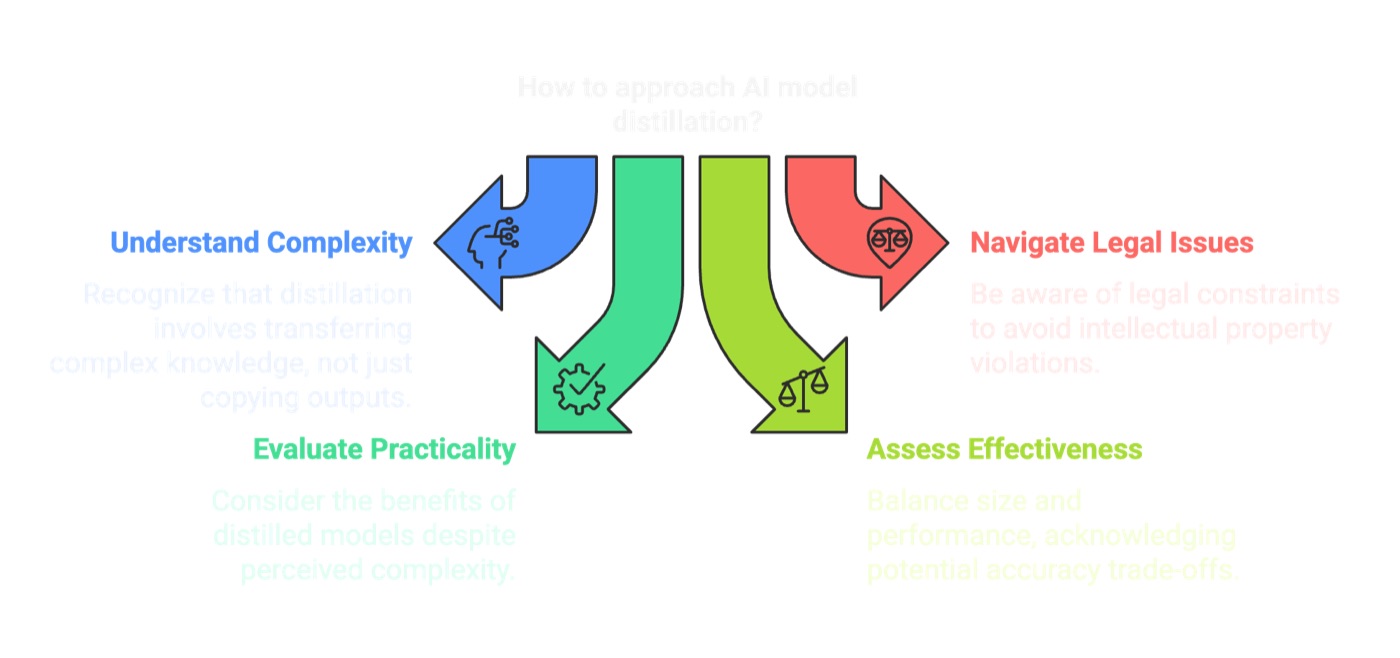
Myths surrounding the complexity of distillation persist. Some argue that it’s too complicated to be practical. Yet, the benefits often outweigh the challenges. Distilled models can achieve impressive performance levels. They maintain accuracy while being more manageable in size and resource usage.
Effectiveness is another debated topic. Critics claim that distilled models compromise on accuracy. While some loss can occur, many distilled models perform comparably to their larger counterparts. This balance between size and performance makes distillation a valuable technique in AI development.
Latest Developments in AI Distillation
Recent research highlights a growing emphasis on ethical data usage in AI. This focus is driven by the need to respect intellectual property rights and privacy. Regulatory bodies are actively working to establish guidelines to ensure fair practices. These efforts aim to address concerns about data ownership and usage in AI training.
The ongoing investigation into DeepSeek by OpenAI and Microsoft underscores these issues. This case highlights the importance of adhering to ethical standards in AI development. It serves as a reminder of the potential legal consequences of unauthorized use of model outputs. The outcome of this investigation could set a precedent for future AI practices.
Industry leaders are also stepping up. They are working to create standards that promote responsible AI development. These standards are crucial for fostering trust in AI technologies. As these efforts progress, they will likely influence how companies approach AI model distillation.
Emerging techniques in AI distillation are also gaining attention. Methods like zero-shot and few-shot learning are becoming more prevalent. These techniques allow models to perform tasks with minimal training data. They represent a shift towards more adaptable and efficient AI systems.
Self-distillation and cross-lingual distillation are expanding the possibilities further. These approaches enable models to learn from themselves or across different languages. Such advancements are paving the way for more versatile AI applications.
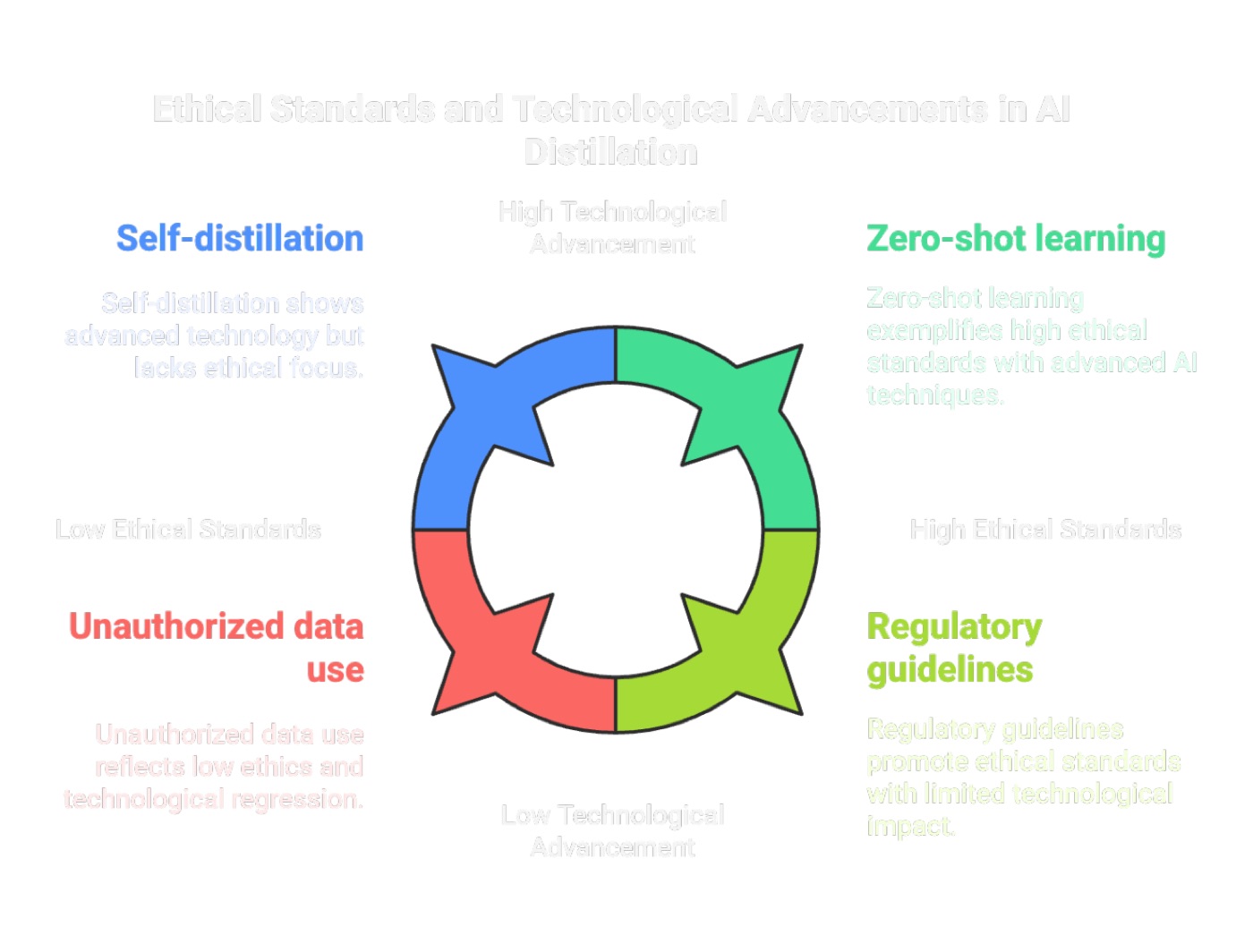
The future of AI distillation looks promising. As ethical standards and new techniques evolve, they will shape the landscape of AI development. Companies will need to stay informed and adapt to these changes to remain competitive in the field.
Future Outlook
Experts emphasize the critical role of data governance in AI development. Proper management of data ensures compliance with legal and ethical standards. This is crucial as AI systems increasingly rely on data from various sources. Collaboration among AI developers is encouraged to foster innovation and address shared challenges. Working together can lead to more robust solutions and advancements in AI technology.
Looking ahead, AI model distillation is expected to evolve significantly. Future trends may include more sophisticated methods for transferring knowledge between models. These advancements could improve the efficiency and adaptability of AI systems. Additionally, changes in legal frameworks are anticipated. These changes will likely address the complexities of intellectual property and data usage in AI training.
Industry practices will also adapt to these developments. Companies may need to implement new strategies to stay compliant and competitive. As AI continues to integrate into various sectors, understanding and navigating these changes will be essential. The ongoing investigation into DeepSeek by OpenAI and Microsoft highlights the importance of ethical standards. This case could set precedents for how AI models are developed and used in the future.